REVIEW · VENICE
Venice: Doge’s Palace Skip-the-Line Guided Tour
Book on GetYourGuide →Operated by Venice Boat Experience · Bookable on GetYourGuide
The Bridge of Sighs has a new angle. This guided tour gets you into Doge’s Palace faster and helps you read what you’re seeing as Venice’s power center, not just a pretty building. You’ll also get the chance to cross the Bridge of Sighs from the inside.
I love the practical win: skip-the-line entry. In Venice, that time saved is real freedom to look closely, not just shuffle forward, and the included audio receiver keeps you from straining your ears at the back of the group.
One thing to watch: the meeting point can feel a little tricky to spot at first. If you’re arriving right before the start, give yourself a few extra minutes to orient near Poste Italiane on Calle Larga de l’Ascension.
In This Review
- Key highlights worth your attention
- Skipping the line at Doge’s Palace: what you actually gain
- Where to meet on Calle Larga de l’Ascension (and not panic)
- First steps inside: how the guide sets up the palace
- The gold staircase and the palace’s main “wow” moment
- Art inside the palace: looking with a purpose
- The Bridge of Sighs from the inside: why it feels different
- Casanova’s escape angle: history gets personal fast
- Optional glass furnace: Venetian art beyond paintings
- How long is long enough? Timing tips that make the tour better
- Price and value: is $79 worth it?
- What kind of person should book this tour
- Possible drawback: pacing and finding the right flow
- Should you book the Doge’s Palace skip-the-line guided tour?
- FAQ
- How long is the Doge’s Palace skip-the-line guided tour?
- Where is the meeting point?
- What’s included in the price?
- What languages are offered?
- Is hotel pickup or drop-off included?
- Does the tour involve the Bridge of Sighs?
- Is the glass furnace visit included?
Key highlights worth your attention
- Skip-the-line access to Doge’s Palace so you can start seeing sooner
- A live local guide plus an audio receiver so the story stays clear while you move
- The gold staircase and the visual drama of the main rooms
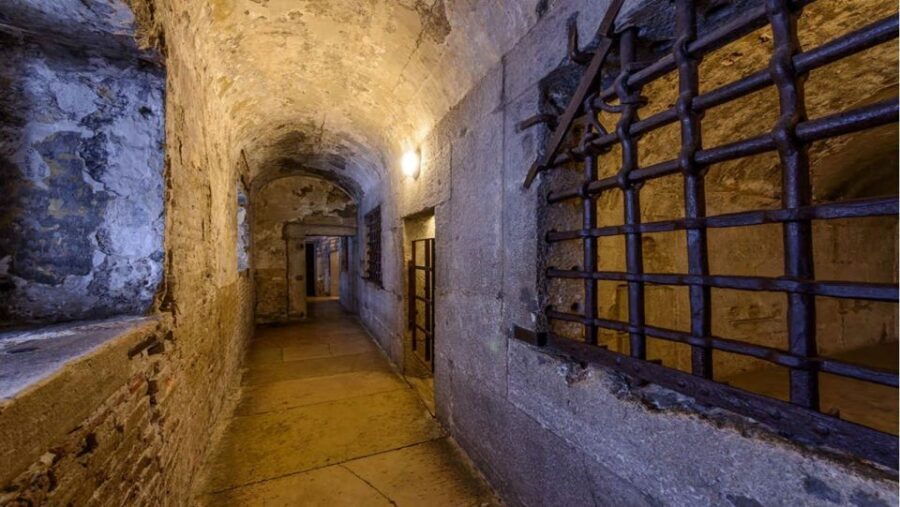
- Crossing the Bridge of Sighs from inside, with the prisoner story explained
- Casanova’s prison cells angle, which makes the politics feel painfully human
- Optional glass furnace visit for another side of Venetian art
Skipping the line at Doge’s Palace: what you actually gain
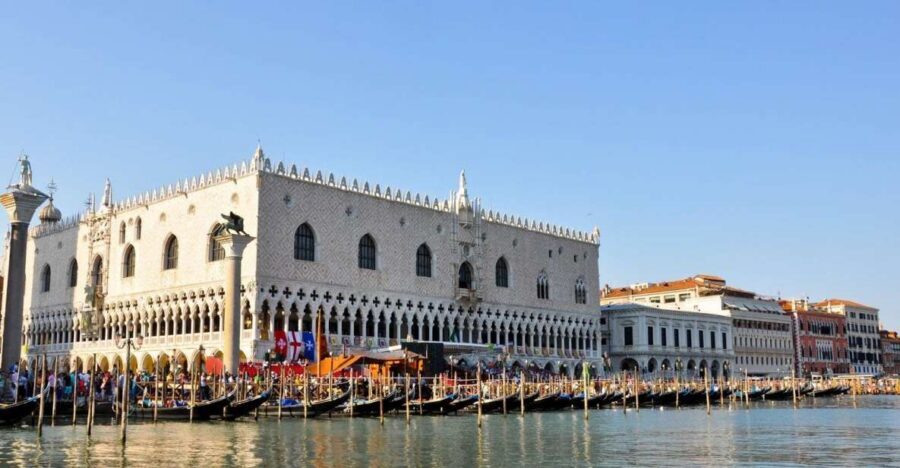
Doge’s Palace draws crowds for a reason, and the lines can eat up your day. Paying for a skip-the-line format buys you more than convenience. It buys you time inside the building, which is where this tour pays off.
You’re signing up for a guided visit that lasts about 75–135 minutes, so every minute matters. When you walk in without waiting at the ticket bottleneck, you can spend your energy on the rooms, stairways, and stories instead of watching other people form another line behind you.
You can also read our reviews of more guided tours in Venice



Where to meet on Calle Larga de l’Ascension (and not panic)
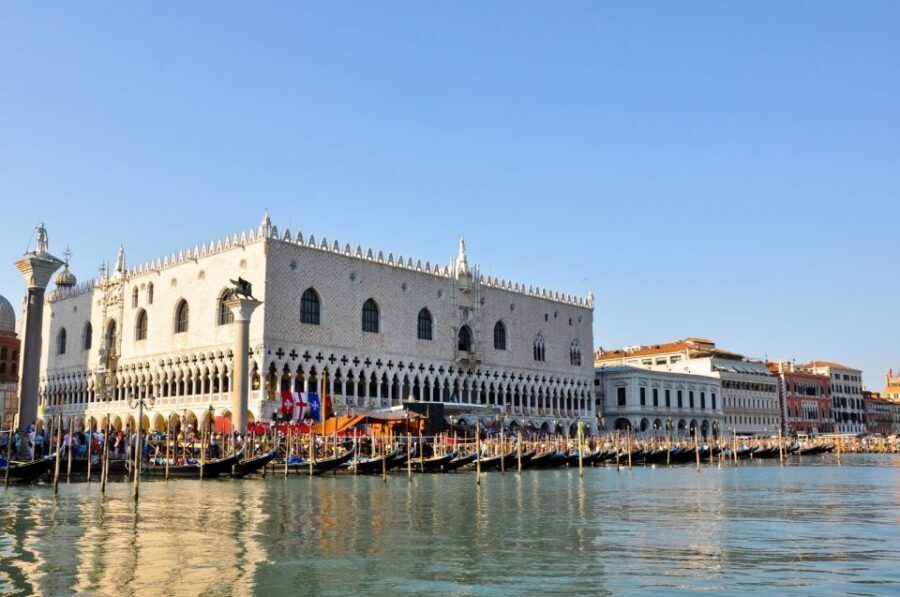
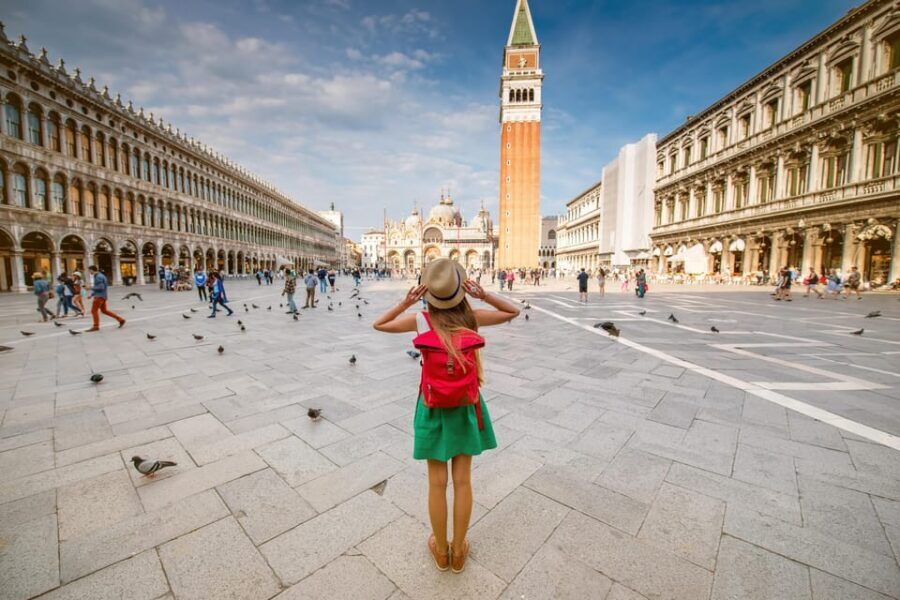
Your guide meets you on Calle Larga de l’Ascension, in front of the Poste Italiane office near St. Mark’s Square. That’s a solid landmark, but the tricky part is matching the guide to the right group quickly.
My practical advice: arrive early enough to confirm you’re in the right spot, not early enough to stress out. If you see multiple groups and staff, don’t be shy about checking in until you get a clear answer about your tour language and time.
Also note the tour language options: French, Spanish, German, and English. If your schedule is close to departure, double-check the language listed for your booking so you’re not scrambling once everyone starts moving.
First steps inside: how the guide sets up the palace
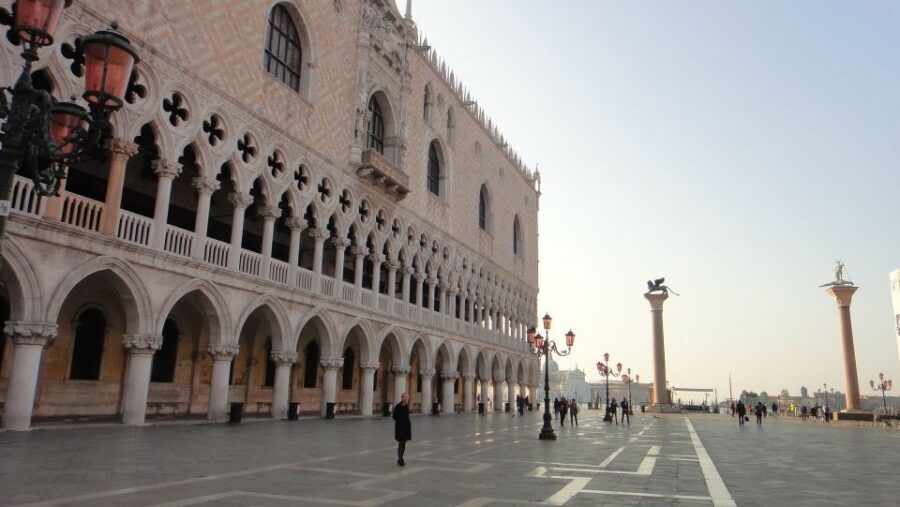
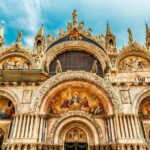
Once inside, the tour focuses on what the Venetian Republic was doing for more than 1,000 years. You’re not just looking at decorations. You’re learning how the palace functioned as the seat of political power, and why that matters for how you interpret the art and architecture.
This is where the audio receiver helps. Doge’s Palace has plenty of echoes, and groups naturally spread out when people slow down for details. With the receiver, you can keep up with the guide’s explanations while you still look at what’s on the walls and ceilings.
The gold staircase and the palace’s main “wow” moment

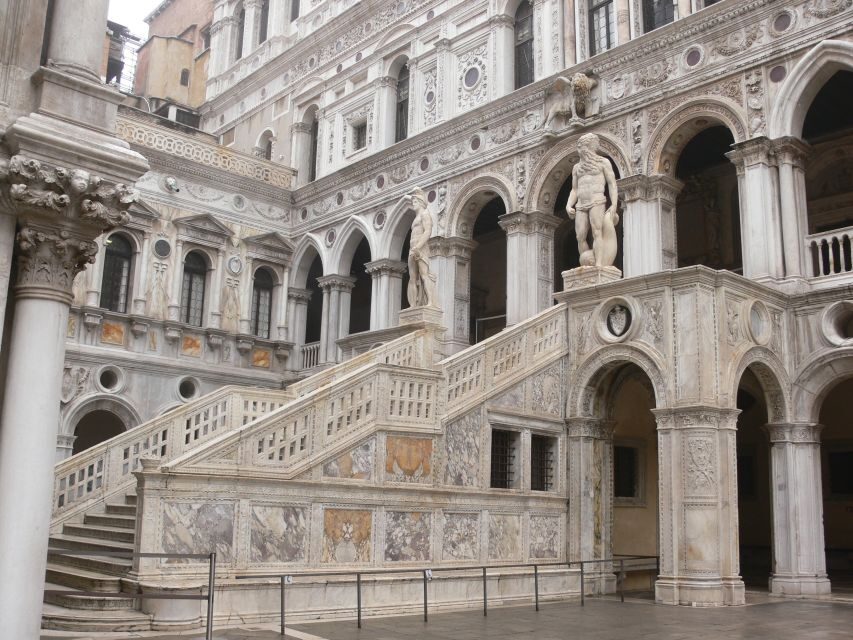
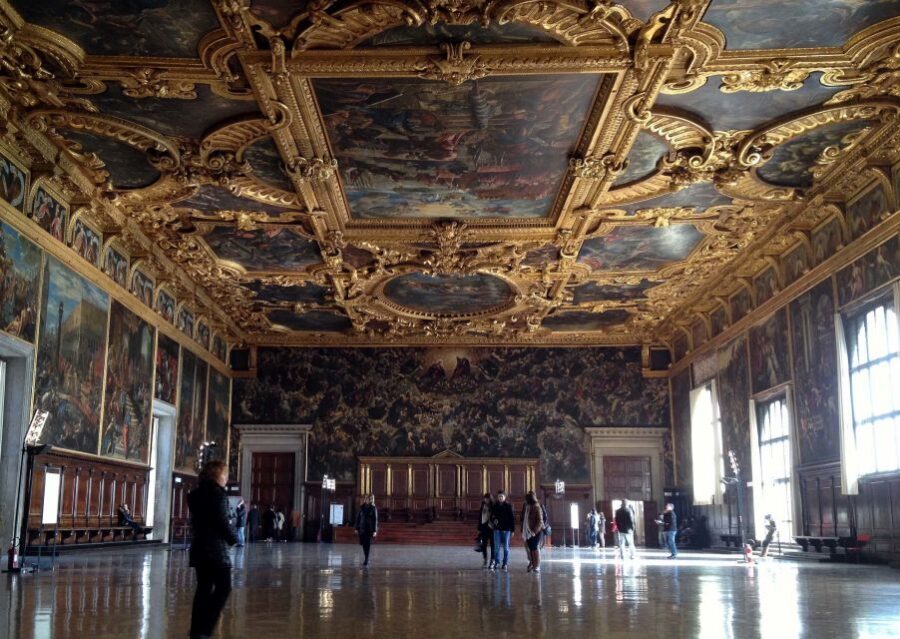
One of the most memorable parts is the walk through the splendid rooms, including the famous gold staircase. Even if you’ve seen photos before, the staircase tends to hit differently in person because you’re surrounded by scale and detail at the same time.
The guide’s story is key here. The tour describes how artists created scenes with a level of realism that pulls you into the building’s official world. If you slow down just a bit and let the guide’s context land, the rooms stop being generic “museum rooms” and start feeling like spaces built for authority, ceremony, and decision-making.
Art inside the palace: looking with a purpose
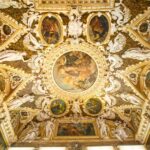
Doge’s Palace is known for masterpieces, and this tour specifically points you toward the fact that the building displays hundreds of artworks. But the real value is learning how to look: not only at what’s shown, but at what the scenes are doing for Venice’s image and messaging.
You’ll hear how the palace decorations connect to the broader story of governance and civic identity. That context helps you move from What is this painting? to Why did they put it here? It’s a small mental shift, yet it changes the whole experience.
You can also read our reviews of more tours and experiences in Venice


The Bridge of Sighs from the inside: why it feels different
The highlight that many people remember is crossing the Bridge of Sighs from the inside. From the outside, the bridge can look like a postcard moment. From the inside, it’s about passage and consequence.
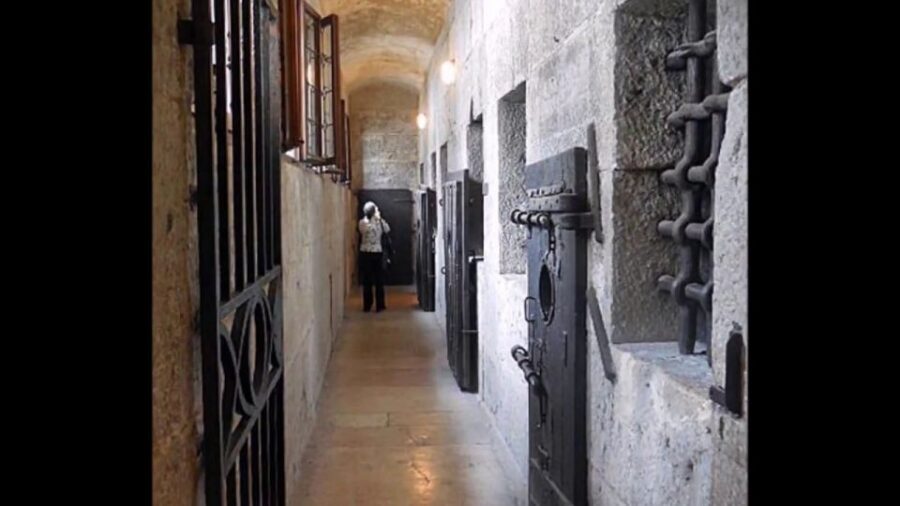
The tour explains the prisoner story tied to this route. You’ll hear about the anguish of prisoners crossing the bridge to enter gloomy cells, and the guide connects the building’s political power to the human cost of how that power was enforced.
If you like historical sites where you can feel the tension, this is the stop. It’s also a good moment to pause your phone camera obsession and really pay attention to what the guide is pointing out. This bridge segment is one of those times when the story carries almost as much weight as the view.
Casanova’s escape angle: history gets personal fast
Another stop that changes the tone is the visit that touches on the cells associated with Giacomo Casanova, who famously escaped from them. The palace becomes less abstract here.
You’re still in a “seat of power” building, but now you’re looking at the cost of power through a specific, recognizable name. Even if Casanova’s story is just a quick reference to you, the tour’s explanation helps you understand why those cells are part of Venice’s living folklore of the palace.
This is a thoughtful time to go slower. Don’t rush through. Look at the mood of the spaces and listen for how the guide frames the contrast between public ceremony and private confinement.
Optional glass furnace: Venetian art beyond paintings
The tour can end with an optional visit to a glass furnace. This isn’t just a random extra stop. It’s a chance to connect Venice’s art world to a craft tradition that helped define what “Venice” meant to outsiders.
Because the main palace tour includes art in rooms, the glass furnace acts like a practical follow-up: you move from curated masterpieces on walls to a living craft process tied to materials, technique, and Venetian identity. If you like hands-on or process-focused experiences, this add-on is one of the more satisfying ways to round out the day.
If you’re short on time or your energy is running low, the palace still stands strong as the core experience. The optional furnace is gravy, not the main course.
How long is long enough? Timing tips that make the tour better
The duration is listed as 75–135 minutes, which is a wide range for a reason: it depends on starting times, pacing, and how the group moves through rooms. I treat tours like this as a planning anchor. Plan for about two hours plus a little buffer to settle in.
One practical tip that can make a big difference: start early in the morning if you can. Doge’s Palace gets crowded quickly, and tighter crowds generally mean more breathing room for the guide’s explanations and your own looking time. If you go later, expect more group energy and less quiet attention in the rooms.
Price and value: is $79 worth it?
At $79 per person for a 75–135 minute guided visit, the value comes from three things working together: skip-the-line entry, a local guide, and audio receivers. The skip-the-line access is the obvious money saver, since waiting at the entrance is the kind of time loss that doesn’t feel like sightseeing at all.
The guide value is less visible on paper, but you feel it in the details. The tour doesn’t only point at art; it frames the palace as the seat of political power and ties in stories like the prisoners’ route and Casanova’s connection. That added interpretation is what helps you leave with real understanding instead of just photos.
If you’re the type who likes to read a site rather than just walk through it, this price usually makes sense. If you prefer total independence, you might question paying for guidance. For most people, though, the pairing of time saved plus storytelling makes the cost reasonable.
What kind of person should book this tour
This tour is a good fit if you want:
- Skip-the-line access because you hate waiting in crowds
- A guided narrative about Venice’s political power and how art fits that story
- A strong focus on the Bridge of Sighs interior and prisoner-related history
- Help with attention, through an audio receiver, as you move between rooms
It’s also a decent choice if you like architecture and art, but you get more out of sites when someone helps you connect the dots. The palace is gorgeous, yes, but it’s also dense. Guidance makes it feel like a coherent experience instead of a maze.
Possible drawback: pacing and finding the right flow
Even with a great guide, palace tours can vary in pacing because groups need to move and everyone has different energy levels. One concern to keep in mind is that sometimes more time can get spent at certain points while other areas may feel shorter.
The best way to protect your experience is simple: arrive early, be ready to follow the guide’s rhythm, and don’t expect unlimited wandering time. If you’re the kind of person who needs lots of solo exploring, consider pairing this with a little extra independent time before or after the tour.
Should you book the Doge’s Palace skip-the-line guided tour?
I’d book it if you want the highest odds of a smooth visit: skip-the-line entry, audio support, and a live guide who can connect the palace’s art, politics, and prisoner story in the same sitting. The Bridge of Sighs from inside plus the Casanova cell angle are the kind of experiences that reward paying attention, not rushing.
Skip it only if you’re comfortable doing Doge’s Palace on your own and you don’t care much about guided interpretation. Otherwise, this is one of those Venice choices that trades some cost for real time, real context, and a much better sense of what you’re actually looking at.
FAQ
How long is the Doge’s Palace skip-the-line guided tour?
The duration is listed as 75 to 135 minutes, depending on starting time and tour flow.
Where is the meeting point?
Meet your guide on Calle Larga de l’Ascension, in front of the Poste Italiane Office near St. Mark’s square.
What’s included in the price?
Included are the skip-the-line entrance ticket to Doge’s Palace, an audio receiver device per person, and a local guide.
What languages are offered?
The tour is offered in French, Spanish, German, and English.
Is hotel pickup or drop-off included?
No. Hotel pick-up and drop-off are not included.
Does the tour involve the Bridge of Sighs?
Yes. The highlights include crossing the Bridge of Sighs from the inside.
Is the glass furnace visit included?
An optional visit to a glass furnace is included as part of the experience end, where you can learn about a major Venetian art form.