REVIEW · VENICE
Venice: Walking Tour with Native Venetian Guide
Book on GetYourGuide →Operated by ShoMe Venice Tours · Bookable on GetYourGuide
Venice changes when a local shows you shortcuts. This 2-hour walking tour with a native Venetian guide takes you into Cannaregio and other calmer corners, where the city feels lived-in instead of staged. I love how the guide connects you to Venice’s quieter districts, then uses legends and traditions to make the past feel tangible as you walk. I also love the practical pay-off: you finish with ideas for what to look for next, not just facts you’ll forget.
There’s one catch to plan around: this is real walking through old streets, so it’s not recommended for limited mobility and it runs rain or shine. If you’re comfortable on uneven ground for a couple of hours, you’ll likely have a great time. If you want everything paved and effortless, you might prefer a slower or more accessible option.
In This Review
- Key reasons this walk is worth your time
- A 2-hour local lesson through Cannaregio, Rialto Bridge, and San Polo
- Meeting at Hotel Antiche Figure near San Simeon Piccolo
- Cannaregio: small canals, locals, and the legends you don’t see on postcards
- Back to the 1400s: Venetian Republic secrets in walking form
- Rialto Bridge, but from the trade-center perspective
- San Polo and the mascareri who still work for Carnival
- What you’re paying for: value at $46 per person
- The guide experience: native storytelling that’s funny and easy to follow
- Practical tips: shoes, rain-or-shine walking, and comfort planning
- Who should book this walking tour (and who should skip it)
- Should you book it?
- FAQ
- How long is the Venice Walking Tour with a Native Venetian Guide?
- How much does the tour cost?
- Where do I meet the guide?
- What’s included in the price?
- Is food or drinks included?
- What languages are available for the live guide?
- Does the tour run in bad weather?
- Is this tour suitable for people with limited mobility?
- What should I bring?
Key reasons this walk is worth your time
- A native Venetian guide who can explain the city in multiple languages
- Cannaregio’s small canals and local legends in the quieter, traditional parts of town
- Venice in the 1400s with stories tied to the Venetian Republic
- Rialto Bridge from the trade-center angle instead of the usual photo stop
- San Polo and working mascareri who still follow Carnival-mask traditions
- A city map with local tips included per person
A 2-hour local lesson through Cannaregio, Rialto Bridge, and San Polo
This tour is built for people who want Venice with fewer tour-group moments. It’s not trying to hit every landmark. Instead, it takes you through places where locals still move through daily life, so the city feels less like a theme park.
The pace is perfect for a first or second day in Venice. Two hours is long enough for real context, but short enough that you won’t feel drained afterward. You get the kind of storytelling that helps you start reading Venice like a puzzle—canals mean something, street corners mean something, and even market areas can make more sense when someone frames them for you.
You’ll also notice the structure: it starts in quieter districts, then moves toward big-name sights, and ends in San Polo where a tradition you can actually see in action still exists. That flow matters. You don’t just arrive at famous spots; you understand why they mattered.
You can also read our reviews of more walking tours in Venice

Meeting at Hotel Antiche Figure near San Simeon Piccolo
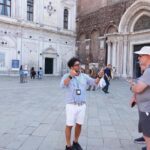
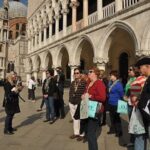
Your starting point is easy to miss if you show up late. Meet in front of HOTEL ANTICHE FIGURE, next to San Simeon Piccolo Church, and the guide will hold a board with the tour name. Plan to be there about 10 minutes early so you can find the right group and settle your shoes before the walk begins.
One practical tip: Venice mornings can shift fast—people spill onto bridges and sidewalks without warning. Arriving early gives you a buffer to orient yourself, especially if you’re carrying a camera bag or a small backpack.
Also, this tour is designed around walking, so it helps to travel light. Comfortable shoes are the real “gear” here. Everything else is optional.
Cannaregio: small canals, locals, and the legends you don’t see on postcards
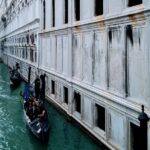
If you want the Venice that feels less polished, Cannaregio is where this tour starts to pay off. You’ll admire the city’s small canals, and the guide will point out the kinds of details that usually slip past you when you’re just trying to get from A to B.
More than scenery, the best part of Cannaregio here is the way the stories connect to the neighborhood. You hear legends tied to how Venice used to work, and you start seeing why certain corners feel quieter or more traditional than the rest of the city.
This is also where the tour’s “unknown and mysterious places” idea becomes real. Venice has well-known routes, sure. But once you’re in a calmer district, the mood changes. The city feels more like a set of living streets than a corridor of attractions.
Possible drawback: if you’re expecting big views every five minutes, Cannaregio may feel more subtle than some famous viewpoints. The trade is atmosphere and meaning, not constant postcard spectacle.
Back to the 1400s: Venetian Republic secrets in walking form
A big part of the tour’s value is that the guide doesn’t treat history like a lecture. The experience is described as taking you back to the 1400s, during the time of the Venetian Republic, with stories full of secrets and mysteries.
You’ll hear how traditions and power shaped daily life, and that’s important because Venice isn’t just old—it’s old in a way that still affects what you see. When you understand the Venetian Republic angle, markets, bridges, and even certain street patterns start making more sense.
What I like about this approach is that it turns “I read something once” into “I can picture it.” Even if you don’t remember every detail, the connections stay. The city becomes easier to navigate mentally, because you’re no longer just guessing.
If you’re the type who enjoys stories with a sense of place—legend plus street plus meaning—this hour connecting to the 1400s can be one of the most memorable parts of your Venice trip.
Rialto Bridge, but from the trade-center perspective
Rialto Bridge is famous, so you’re probably used to it being treated like a photo stop. This tour takes a different angle. You’ll reach Rialto Bridge, and your guide will show you the old trade center from another perspective.
That shift matters. When you hear about Rialto as a place of commerce and movement—rather than just an iconic crossing—you start noticing the broader area differently. You understand why people gathered, why certain routes mattered, and why the area became so central.
This stop also acts like a bridge between eras. Earlier, you absorbed quieter districts and 1400s context. Now you see how the city’s identity ties to work and exchange. It’s the kind of framing that helps you connect Venice’s past to the present layout.
Practical note: Rialto-area walking can be crowded on many days. Your guide’s job is to keep the experience moving without losing the story thread, so listen for what they emphasize and don’t get stuck photographing every corner.
You can also read our reviews of more guided tours in Venice




San Polo and the mascareri who still work for Carnival
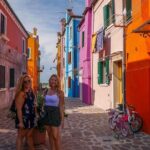
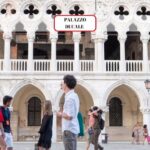
The tour ends with an exploration of San Polo, and that’s where it gets delightfully specific. You’ll hear about the oldest mascareri, the creators of Carnival masks, who are still working following traditions said to go back centuries.
This part is valuable because it’s not only about history—you can connect it to a living craft. You’re not just seeing Venice as a museum. You’re seeing how a tradition continues, which changes the way the whole city feels.
San Polo also tends to feel more “real neighborhood” than some of the most tourist-saturated zones. The guide’s storytelling helps you notice the links between art, celebration, and everyday life.
One consideration: this is a walking tour, so you’ll want to pace yourself. If you’re planning a big dinner afterward, you’ll likely feel fine, but take care not to stack too many activities in the immediate follow-up hour.
What you’re paying for: value at $46 per person
At $46 per person for a 2-hour guided walk, you’re paying mainly for something harder to DIY in Venice: a native guide who knows how to connect places to stories and local traditions. In Venice, that kind of help can save you time and reduce the frustration of wandering without context.
You also get a practical extra: a map per person that includes all the best local tips. That’s not just a souvenir. It’s useful because it gives you a short list of what to do next, how to approach areas, and what to look for while you’re still in that neighborhood-focused mindset.
From a value standpoint, this tour holds up best if you want context. If you only want scenery and don’t care about explanations, you might feel it’s pricier than a self-guided walk. But if you enjoy stories, local perspective, and learning how Venice works, the cost starts to feel like what it actually is: buying time with a guide who can read the city for you.
The guide experience: native storytelling that’s funny and easy to follow
The tour is offered in several languages, including English, French, Russian, Spanish, and Italian, and that matters because good storytelling depends on comprehension. If you’re choosing based on language comfort, this tour gives you flexibility.
The guide style also seems consistent in how people describe it: engaging, well-prepared, and sometimes funny. Names you might see associated with the experience include Nicolas, Nicoló, Sebastiano, and Natala. More than the names, the theme is that the guide can keep history lively without turning it into a textbook.
If you’re traveling with kids or teens, there’s also a hint that the guide can adapt explanations so younger listeners aren’t lost. If that’s your situation, it’s worth keeping an eye out for a guide’s comfort level with adjusting pacing and vocabulary.
Practical tips: shoes, rain-or-shine walking, and comfort planning
Bring comfortable shoes. Venice isn’t built for slick sandals or thin soles, and you’ll be walking through traditional streets for the full 2 hours.
This tour runs rain or shine, so plan clothing accordingly. A light rain jacket beats a heavy coat that limits movement. If you’re carrying a bag, keep it close so you’re not constantly adjusting straps while stepping on uneven ground.
The tour also isn’t recommended for limited mobility, and it’s not suitable for people with mobility impairments. That’s not about discomfort alone—it’s about the walking environment typical of Venice’s older streets and lanes.
If you’re worried about stamina, do this tour earlier in your trip, when your legs are fresh. Then use the map to pick lighter activities afterward.
Who should book this walking tour (and who should skip it)
This tour is a strong match if you want:
- A native Venetian guide and neighborhood-focused storytelling
- Legends, traditions, and Venetian Republic context
- An alternative take on famous areas like Rialto Bridge
- A craft-based end stop in San Polo with mascareri and Carnival mask traditions
It may not be ideal if:
- You need wheelchair-friendly routes or worry about uneven walking surfaces
- You want mostly sightseeing with minimal explanation
- You strongly prefer indoor or sheltered activities due to rain
If you like being outside, okay with walking, and curious about the Venice beyond the main routes, this is one of the easier ways to get real local color without wasting a day.
Should you book it?
I’d book it if your Venice trip includes at least one time you want to understand the city, not just photograph it. The combination of quieter districts like Cannaregio, an era-focused story thread about the 1400s, and a meaningful finish in San Polo with working mascareri makes it feel purpose-built rather than generic.
Also, the included map with local tips is a small thing that helps you keep momentum after the tour ends. If you’re the type who likes to wander, a good guide note can keep your wandering from turning into aimless walking.
Skip it only if mobility is an issue for you, or if you’d rather buy time by sitting and watching instead of walking and listening.
FAQ
How long is the Venice Walking Tour with a Native Venetian Guide?
It lasts 2 hours.
How much does the tour cost?
The price is $46 per person.
Where do I meet the guide?
Meet in front of HOTEL ANTICHE FIGURE, next to San Simeon Piccolo Church, and look for the guide with a board showing the tour name. Arrive about 10 minutes early.
What’s included in the price?
You get one city map per person that includes the best local tips.
Is food or drinks included?
No. Food and drinks are not included.
What languages are available for the live guide?
The tour offers live guiding in English, French, Russian, Spanish, and Italian.
Does the tour run in bad weather?
Yes. It takes place rain or shine.
Is this tour suitable for people with limited mobility?
It is not recommended for people with limited mobility, and it is not suitable for people with mobility impairments.
What should I bring?
Wear comfortable shoes. That’s the main advice given for what to bring.