REVIEW · VERONA
Verona: City Highlights Private Tour
Book on GetYourGuide →Operated by Citywalkers · Bookable on GetYourGuide
Verona clicks fast when you have a guide. This private 2-hour walking tour strings together Roman landmarks, medieval power, and the Shakespeare stories that put Verona on the map as a UNESCO world heritage site.
I especially like two things: I love the straightforward start at the Arena, because it gives you instant scale for the city’s Roman footprint. And I love the way the walk ends at Juliet’s balcony, where you can actually read the wishes pinned beneath and add your own lover’s note if you want.
One thing to plan around: it is a walking tour, and the details include both wheelchair accessible and a note that it is not suitable for people with mobility impairments. If that applies to you, check with the provider before you book.
In This Review
- Key Things You’ll Remember
- A 2-Hour Private Walk Through Verona’s Key Sights
- Starting at Piazza Bra: Getting Oriented at the Arena
- Roman Roots and a Clear Story From Antiquity
- Scaliger Tombs: Power, Prestige, and Stone Memorials
- Piazza delle Erbe: A Central Square Where Life Still Happens
- Piazza dei Signori: The Student Hub Feeling (Especially in the Evening)
- Juliet’s Balcony and the Love-Note Wall Underneath
- How the Licensed Guide Changes the Experience
- Price and Value for a Private Group Up to Two
- Walking Comfort, Pace, and Who This Tour Fits
- Practical Tips for Your Own Day After the Tour
- Should You Book This Verona Highlights Private Tour?
- FAQ
- How long is the Verona highlights private tour?
- Where does the tour start and end?
- What’s included in the price?
- Is food and drink included?
- What language is the live guide?
- Is the tour wheelchair accessible?
Key Things You’ll Remember
- A licensed local guide who keeps the story clear, practical, and question-friendly
- Arena + Scaliger Tombs to see Verona’s power shift from Romans to medieval rulers
- Piazza delle Erbe with its colorful market vibe and classic central-square energy
- Piazza dei Signori as a student hangout in the evening, adding local rhythm to the sights
- Juliet’s balcony and love-note wall for a Verona-famous moment you can participate in
- Private group pacing, so you can move at a human speed instead of getting swept along
A 2-Hour Private Walk Through Verona’s Key Sights
This tour is built for people who want the highlights without the mental spreadsheet. You get a focused route in about two hours, guided by a licensed English-speaking professional, and you don’t waste time trying to figure out what matters first.
The best part is the way the guide frames what you see. Verona can feel like a pretty backdrop if you only look at buildings. Here, the walk gives you a timeline from the Romans to the Middle Ages, then brings you back to everyday city life in the central squares. If you like to understand what you’re looking at, that context is the whole point.
It’s also private. That matters more than it sounds. You can ask questions at your own pace, and the guide can slow down if something catches your interest—whether it’s architecture details, family history, or why a square looks the way it does today.
You can also read our reviews of more city tours in Verona


Starting at Piazza Bra: Getting Oriented at the Arena
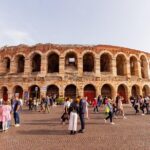
You begin next to the Vittorio Emanuele II Statue in Piazza Bra (Piazza Bra, 13). If you’ve ever arrived in a new city and felt turned around immediately, this start is a win. Piazza Bra is the kind of open space that helps your brain map Verona quickly.
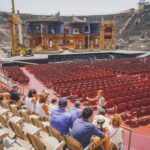
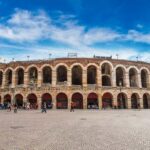
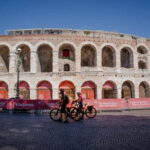
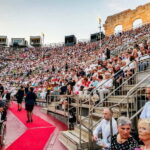
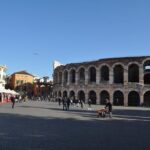
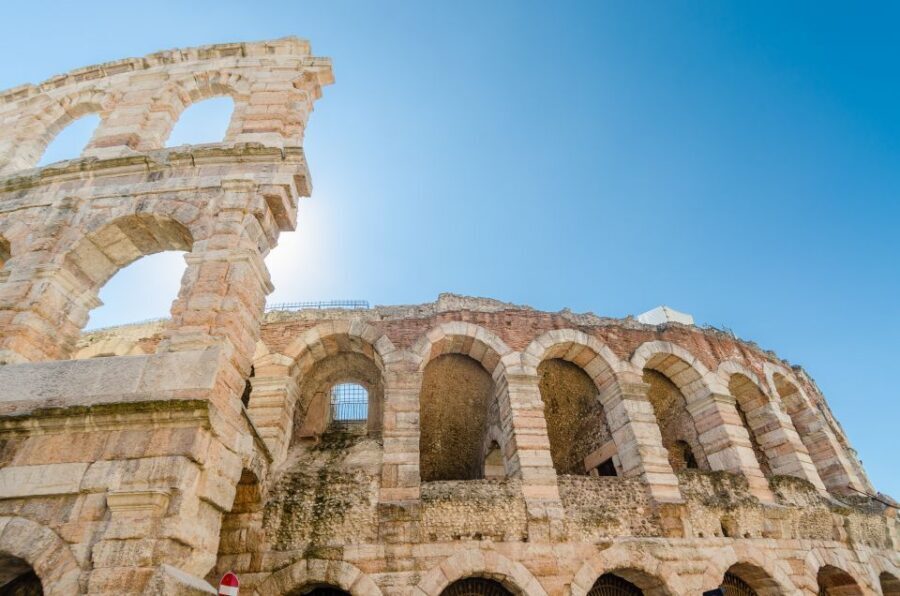
From there, the guide takes you to the Arena, Verona’s famous amphitheater built more than 2000 years ago. Even if you’ve seen photos, you’ll understand why the Arena is such a big deal once you’re standing near it. It’s not just a sight; it’s a yardstick for the city’s scale and its Roman roots.
Why this first stop works: it sets the frame. You learn to read Verona from the outside in—what Roman engineering looked like, and how later eras built their own identity around it. That makes the next stops feel connected, not random.
What to watch for: the tour starts with a landmark you can actually orient around. Still, show up on time so you don’t feel rushed at the beginning. Two hours goes fast when you’re also listening closely.
Roman Roots and a Clear Story From Antiquity
One of the tour’s strengths is its storytelling arc. You’re not just walking from photo spot to photo spot. The guide leads you through time—Romans first, then the Middle Ages—so Verona’s architecture becomes legible.
The Romans are the opening act, and the Arena is your proof. From there, you move toward the evidence of medieval Verona: power symbols, tombs, and public spaces. The guide ties those elements together so you don’t miss the big idea—that Verona’s buildings aren’t separate chapters. They’re a continuous conversation across centuries.
I like that this structure suits different travel styles. If you love history, you’ll get enough detail to feel satisfied. If you don’t, you’ll still walk away with a clear sense of why the city looks the way it does.
Scaliger Tombs: Power, Prestige, and Stone Memorials
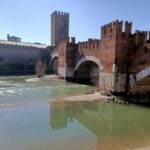
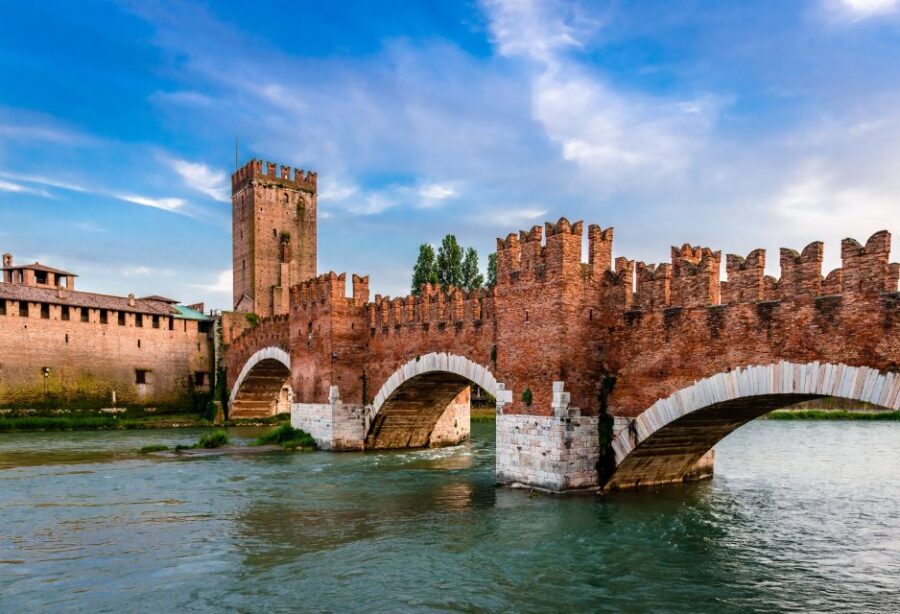
After the Arena, you’ll head to the Scaliger Tombs. This is where the medieval story really becomes tangible. The Scaliger family ruled Verona in the 13th and 14th century, and their presence is carved into the city’s landscape.
This stop works because it’s not just about names. Tombs tell you what a ruling family wanted the city to remember: authority, permanence, and status. When you’re standing close, you can see how memorials functioned as public statements, not only private mourning.
A practical note: tombs and stone monuments can be visually similar from a distance in a busy city. Having a licensed guide here helps you sort out what you’re looking at, what matters, and how to connect it back to the time period.
Piazza delle Erbe: A Central Square Where Life Still Happens
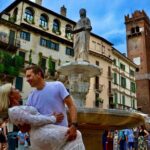
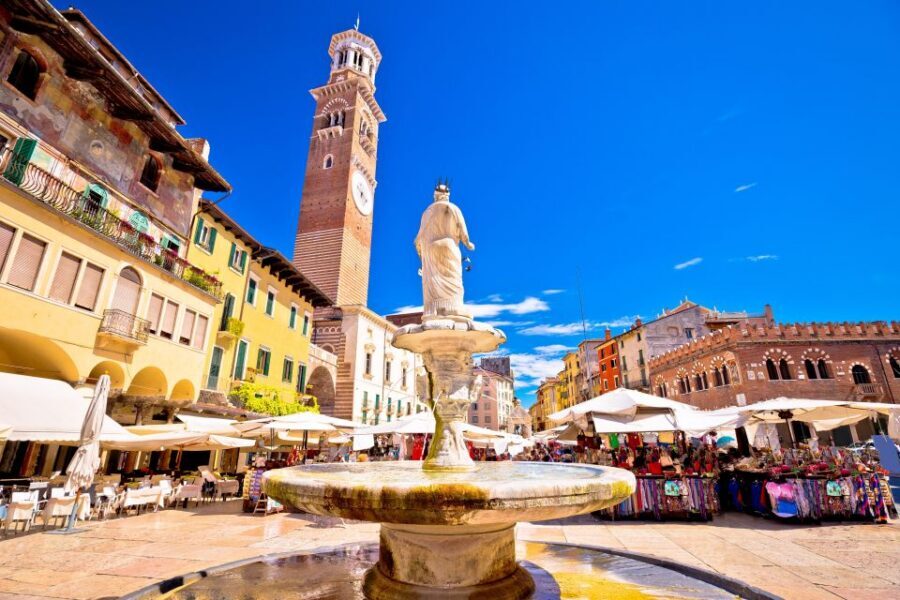
Then the tour shifts to a very Verona moment: Piazza delle Erbe. This square is known for historic buildings and sculptures, and it also houses a colorful market overflowing with fresh fruits and vegetables.
If you only ever see Verona from viewpoints, you miss this. Markets are where cities reveal themselves. They show daily habits—what locals buy, how they move, and how the square is used throughout the day. During your walk, you’ll get a taste of contemporary life inside the historic center, not something staged.
Why you’ll enjoy this stop: it’s a contrast point. You’ve just been in a more monumental, historical zone. Now you’re in a public space where the city’s rhythms still operate. The guide’s explanation helps you notice details in the architecture and then snap back into what people are doing around you.
Keep expectations realistic: this isn’t a food tour and there’s no food included. You’ll still have plenty to look at, but if you want to eat, you’ll need to plan that on your own after the walk.
You can also read our reviews of more private tours in Verona




Piazza dei Signori: The Student Hub Feeling (Especially in the Evening)
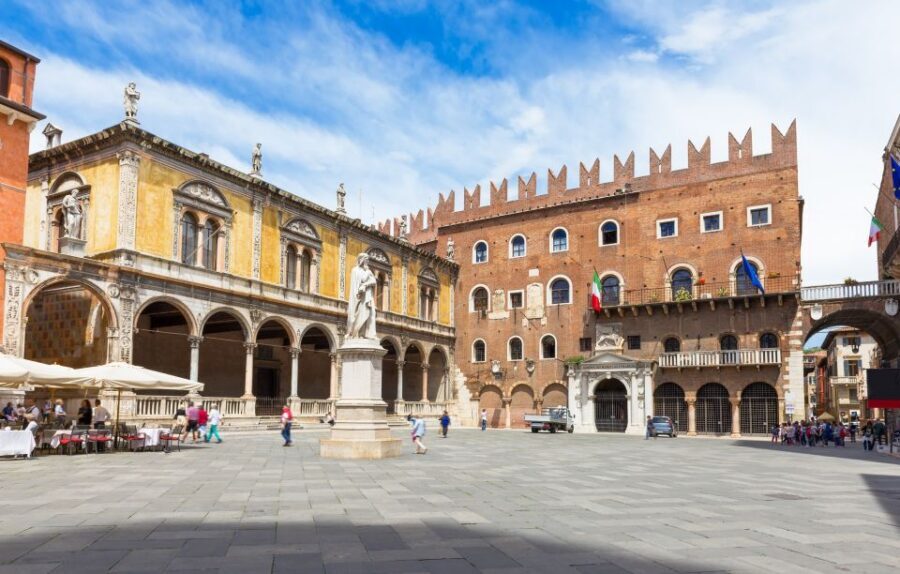
Next comes Piazza dei Signori, described as the hub of university students in the evenings. Even though you may not time your walk perfectly to late-night energy, it’s useful context. Knowing what a square is used for changes how you read it.
This stop helps you understand Verona as a living city, not a museum. Students shape how spaces feel. Their presence gives older architecture a new layer—conversation, movement, and a different tempo than the daytime.
Tip for your brain: when you reach this square, pay attention to edges—where people gather, where the open space pulls you in, and where sightlines lead. The guide’s perspective makes it easier to notice those human patterns.
Juliet’s Balcony and the Love-Note Wall Underneath
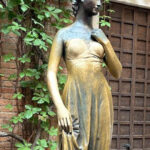
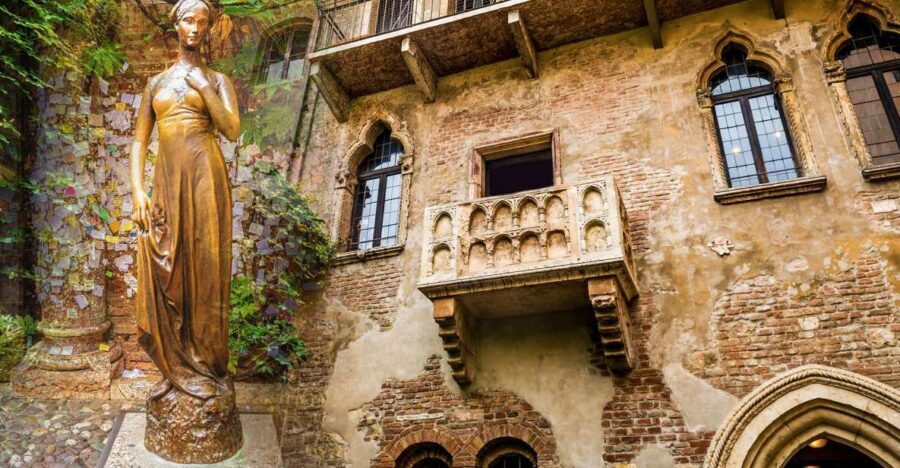
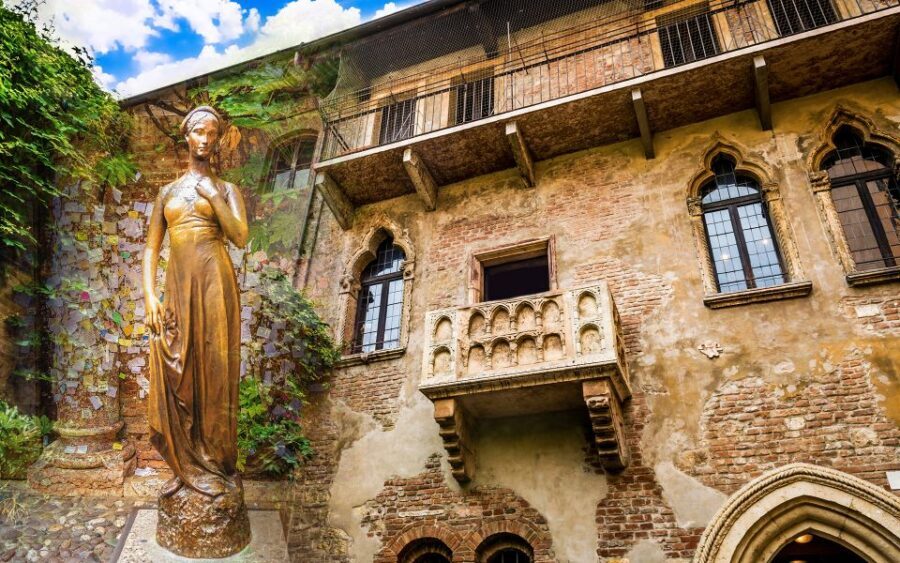
The tour ends at the famous Juliet balcony. This is the part of Verona that most people recognize instantly from stories and souvenirs. But the tour approach makes it better than a quick photo stop.
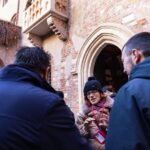
Your guide also points out the love notes left by lovers pinned to the wall beneath the balcony. You can even leave your own lover’s note, as the tour description suggests. That small act turns a famous landmark into something more personal and memorable.
Why this ending lands: it’s participatory. Earlier stops give you the city’s timeline and power story. This one gives you the emotional folklore. Together they make Verona feel complete: stone, people, and story.
One practical consideration: it’s a busy, famous site. Plan to take your time even if you see a crowd. The value here is not just getting the shot. It’s understanding what you’re seeing and using the moment as your last, satisfying piece of the itinerary.
How the Licensed Guide Changes the Experience
The tour includes an expert and licensed tour guide, and that’s the difference between a walk and an experience. You’re getting more than directions. You’re getting explanations that help you look better.
This is where the guide quality really shows in the feedback tied to named guides like Mauro and Alessandra. Mauro gets praised for knowing everything and answering questions, even on a rainy day. Alessandra is highlighted as informative and passionate about Verona’s history.
That matters because Verona’s details can be subtle. A licensed guide helps you connect what looks like decoration to what’s actually meaning: who ruled, how public spaces were used, and why certain buildings ended up where they did.
Rain-proof takeaway: one review noted that even in rain, the tour stayed fantastic. That suggests the guide keeps momentum and storytelling strong, rather than waiting for sunny weather to make it work.
Price and Value for a Private Group Up to Two
The price is listed at $304.74 per group for up to 2 people, for a duration of about two hours.
On the surface, that can feel like a splurge. Here’s how I’d judge the value:
- You’re paying for a licensed guide rather than joining a larger group and getting less attention.
- You’re getting a tight route that covers multiple major zones—Arena, Scaliger Tombs, Piazza delle Erbe, Piazza dei Signori, and the Juliet balcony—without you having to plan the sequence.
- Because it’s private, it can actually be cost-effective for couples or friends, since the guide time is the same regardless of how many people are in your group (up to the limit).
If you’re traveling solo, the cost per person is higher in a traditional sense. If you’re traveling as two, it tends to feel more reasonable because you’re sharing the guide time.
Walking Comfort, Pace, and Who This Tour Fits
This is a walking tour, and comfortable shoes are a must. Wear weather-appropriate clothing because you’ll be outside for most of the experience.
The tour is marked with a note that it is wheelchair accessible, but it also includes a line saying it is not suitable for people with mobility impairments. That inconsistency is exactly why you should double-check details with the provider if accessibility affects you.
In terms of who it suits best, I’d put it this way:
- Great for couples who want highlights in a short window.
- Great for first-timers who want the clearest “what to see and why” route.
- Great if you like architecture, plaques, symbols, and storytelling tied to real places.
- Not ideal if you can’t handle walking in an older historic center for a continuous couple of hours.
Also note the meeting point and end point. It starts at Piazza Bra near the Vittorio Emanuele II Statue and ends back at that same meeting point. That makes it easier to build the rest of your day afterward.
Practical Tips for Your Own Day After the Tour
Once you finish at Juliet’s balcony area and return to the meeting point, you’ll be positioned in the heart of Verona. From there, you can keep the day flexible.
Since food and drink aren’t included, treat the tour as your orientation + story time. Then pick a meal based on your preferences. The guides are praised for offering tips on food and places to go, so if you want guidance, ask the guide while you’re still with them.
If you’re planning your next stop, give yourself a little buffer. The historic center is easy to love and easy to wander. A couple of extra minutes will help you enjoy it, not just rush through it.
Should You Book This Verona Highlights Private Tour?
Book it if you want a guided, high-value hit list in two hours—Arena to Scaliger Tombs, then central squares, then Juliet’s balcony—with explanations that help the city click. The private format is a big plus for couples or anyone who hates feeling rushed.
Skip it or check carefully if walking is a problem for you, or if you need stronger accessibility certainty. Also be aware that this is not a meal-focused tour, so you’ll want your own food plan.
If you’re aiming to understand Verona fast and leave with both the facts and the atmosphere, this is a smart way to spend your time.
FAQ
How long is the Verona highlights private tour?
The tour is listed at 2 hours.
Where does the tour start and end?
It starts next to the Vittorio Emanuele II Statue in Piazza Bra, 13, 37121 Verona VR, Italy. It ends back at the meeting point.
What’s included in the price?
The included item is an expert and licensed tour guide.
Is food and drink included?
No. Food and drink are not included.
What language is the live guide?
The live tour guide is English.
Is the tour wheelchair accessible?
The activity notes it is wheelchair accessible, but it also says it is not suitable for people with mobility impairments. If accessibility is a concern, confirm details before booking.