Verona reads differently when you walk with a local. This is a private, 2-hour stroll that strings together the city’s big landmarks and smaller story spots, so you get history plus atmosphere without burning a whole day. You’ll move from Roman Verona to medieval power centers, then end with river and hillside views.
What I like most is how the tour turns sight-seeing into noticing. I love the way the guide points out small visual clues in the stone—like fossils in marble—that you’d almost certainly miss on your own. I also like the flexible pacing, including smart adjustments when weather shifts, so you still hit the key sights calmly.
One consideration: the price is $337.90 per group (up to 15), so it can feel steep if it’s just two or three of you. Also, the Arena stop is viewed from the outside and its ticket isn’t included, so you won’t get inside that Roman amphitheater.
In This Review
- Key highlights you’ll feel on the walk
- A private Verona walk that makes the city click fast
- Piazza Bra start: where your bearings get set
- Arena di Verona from the outside: Roman power without extra tickets
- Casa di Giulietta: myth, symbols, and why people keep coming back
- Piazza delle Erbe: market square energy and stone stories
- Piazza dei Signori and Dante statue: politics in the open
- Arche Scaligere: the Della Scala tombs up close
- Portico osterias, river-and-hillside views, and the Roman entrance
- The pink marble staircase and the old wool market
- How the guide makes the two hours actually work
- Price and value: is $337.90 per group worth it?
- Who this tour suits best (and who should skip it)
- Should you book this Verona private walking tour?
- FAQ
- How long is the Hidden and fascinating Verona private walking tour?
- What’s the meeting point for the tour?
- Does the tour end back at the meeting point?
- Is this a private tour?
- Is the tour offered in English?
- Is admission included for the Arena di Verona stop?
- Is there an entry fee for Casa di Giulietta?
- What areas of Verona will the tour cover?
- What happens if the weather is poor?
- Can I cancel for a full refund?
Key highlights you’ll feel on the walk
- Roman scale on your first stop: the Arena di Verona seen from outside, quick and easy to access
- Juliet’s balcony and statue in a short, high-impact visit
- Two contrasting squares: Piazza delle Erbe (market energy) and Piazza dei Signori (political stone)
- Della Scala tombs at Arche Scaligere: ornate power and legacy you can actually see
- Street-level Verona details: porticoes with osterias, river views, and that famous pink marble staircase moment
- A guide who can shift: the pace works for mixed ages, including teens and kids
A private Verona walk that makes the city click fast
If you’re short on time, Verona can be tricky. It’s easy to see the postcard stuff and still miss the “how this city became this city” thread. This tour solves that problem by building a clear route in a short window: Roman edges first, then medieval and Renaissance identity, then a bit of scenic Verona at the end.
Because it’s private, your guide can keep the timing comfortable and adapt on the go. That matters in Verona. Streets can be lively, shade can be scarce, and weather can change quickly—so having someone who can shift the plan is a real quality-of-life upgrade.
Also, the route is designed to keep you walking through places, not just pausing like a checklist. You get story context at each stop, plus visual cues so you know what you’re looking at.
You can also read our reviews of more walking tours in Verona

Piazza Bra start: where your bearings get set
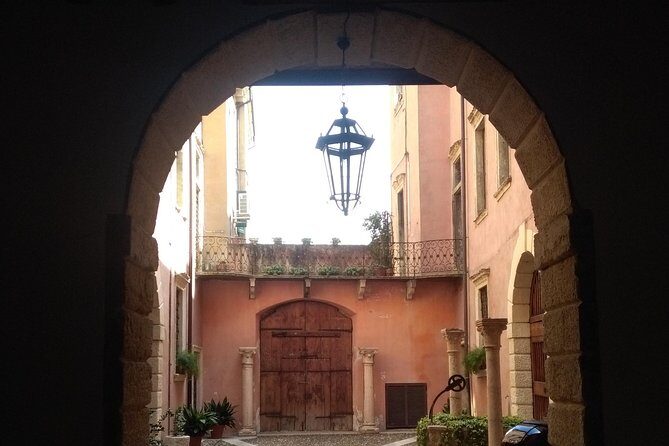
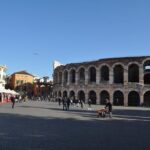
You’ll meet at Piazza Bra, which is the practical sweet spot for a first taste of Verona. It’s central, easy to find, and it puts you in “beginning of the journey” mode: Roman Verona is right nearby, but you’re also close to the later medieval core.
From the start, the tour feels like a guided orientation. You don’t just hear facts—you learn how the city’s different eras sit on top of each other. That makes later stops land harder, because you understand what you’re seeing instead of just recognizing it.
If you’re the type who likes to wander after a tour, this start is useful. You’ll know where you are and why you’re walking.
Arena di Verona from the outside: Roman power without extra tickets
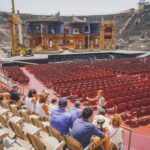
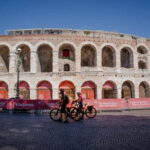
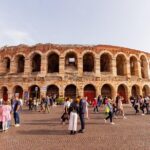
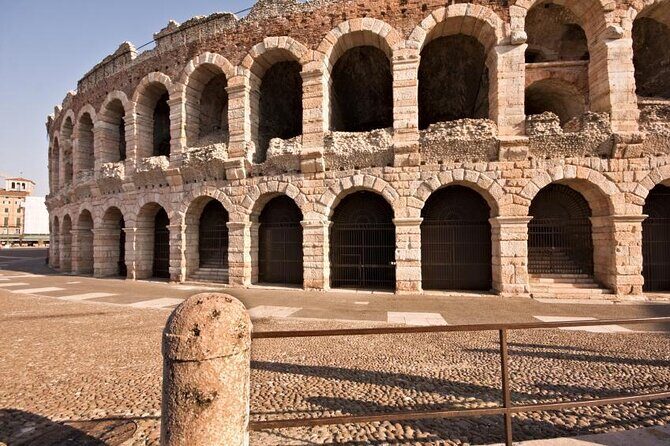
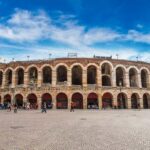
Stop one is Arena di Verona, and you’ll see it from outside for about ten minutes. The key point here: admission isn’t included, and you’re not going inside during this tour.
Still, that outside viewing is a smart move. The Arena’s scale is the point. Even from the street, it’s a reminder that Verona wasn’t always the pastel, romantic version you might imagine. It was built to host crowds, and you can feel that design language in the way the architecture dominates the space.
Practical tip: bring your phone for photos, but also slow down for a second and look at how the façade relates to the surrounding streets. After this stop, you’ll start spotting Roman logic in later parts of town.
Casa di Giulietta: myth, symbols, and why people keep coming back
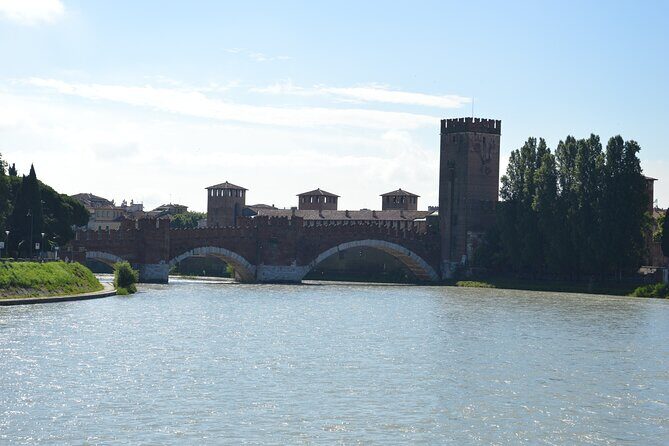
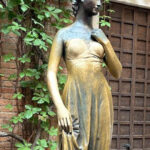
Next you’ll visit Casa di Giulietta, with a look at the world-famous Juliet balcony and the Juliet statue. This is another short stop, around ten minutes, and it’s built for impact rather than deep museum time.
You might wonder why Juliet gets so much attention in a city that has real Roman and medieval monuments. Here’s the value: the Juliet story acts like a cultural magnet. It shows how Verona markets itself, how legends attach to place, and how visitors and locals alike keep the city’s identity alive through symbols.
The tour keeps it efficient. You won’t feel dragged through a long stop, and you’ll leave with context so it doesn’t feel like just a photo line.
Piazza delle Erbe: market square energy and stone stories
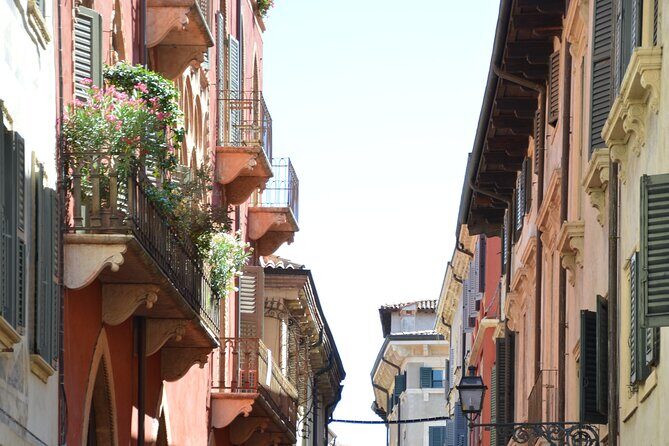
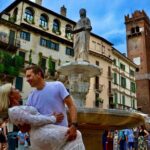
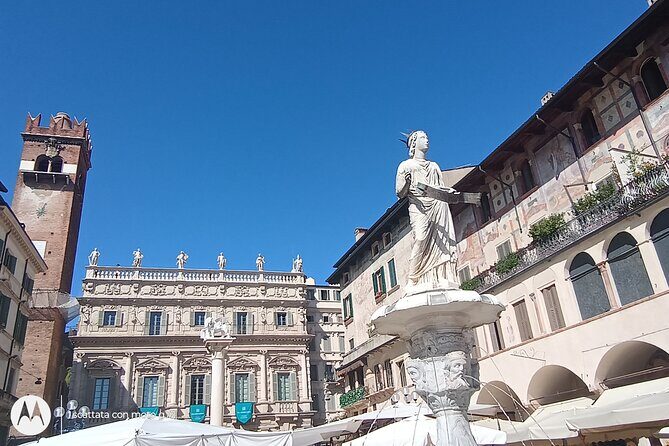
Then you’ll walk through Piazza delle Erbe, a colorful market square stop for about ten minutes. This is where Verona turns from monument-mode into everyday-life mode.
Piazza delle Erbe is useful because it teaches you how the city uses public space. You’ll see the kind of square where people shop, talk, and linger—exactly the kind of place where history continues, not just history gets displayed.
What to pay attention to: look outward as much as you look at buildings. Squares like this are social architecture. When you understand that, Verona stops feeling like a museum and starts feeling like a place people actually live in.
You can also read our reviews of more private tours in Verona




Piazza dei Signori and Dante statue: politics in the open
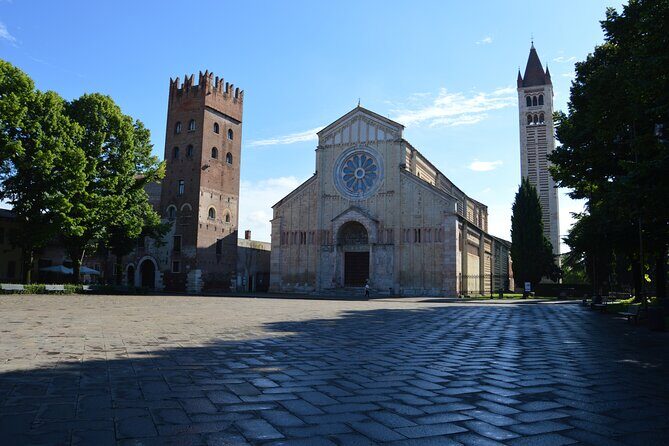
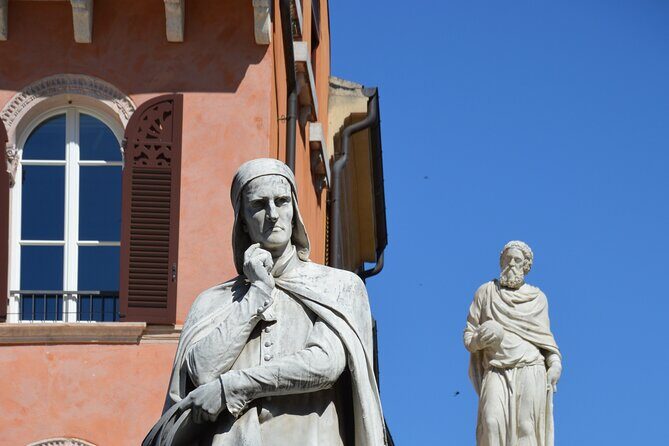
After that comes Piazza dei Signori, also around ten minutes. Here you’ll be in front of the Dante statue and surrounded by striking architecture tied to political power.
This stop works especially well if you like history that isn’t trapped behind glass. You’ll learn how authority showed itself in buildings and how a public square became a stage for decisions, wealth, and influence.
A practical advantage of having a guide here: you know what details matter. The buildings can look impressive, but the stories behind them make them readable. You’ll walk through the square with a mental map instead of just taking in the view.
Arche Scaligere: the Della Scala tombs up close
Next is Arche Scaligere, where you’ll stop in front of the decorated tombs of the Della Scala family. Again, the timing is tight—about ten minutes—but the design density is high, so you’ll get plenty to look at.
This is one of the most visually rewarding moments on the route because you see how a ruling family turned burial space into identity. The detail isn’t subtle. The decoration is part of the message.
If you’re a details person, this is where you’ll appreciate the guide’s habit of pointing out what you might miss. That same attention that helps with things like stone textures and small markings carries here too.
Portico osterias, river-and-hillside views, and the Roman entrance
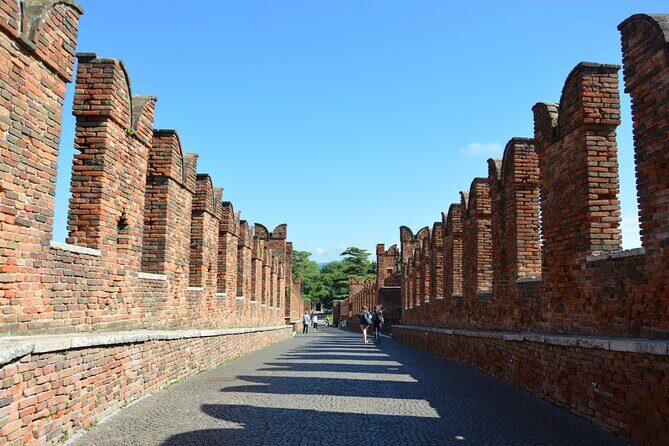
The tour continues with a set of street-level moments that, frankly, are why Verona feels like Verona.
You’ll walk under a medieval portico through the area with tables of typical Italian osterias. This is a nice shift after the more “named monument” feeling of earlier stops. Even if you don’t sit down for a full meal, you get the texture of how the city feeds itself: food culture in real outdoor rhythm.
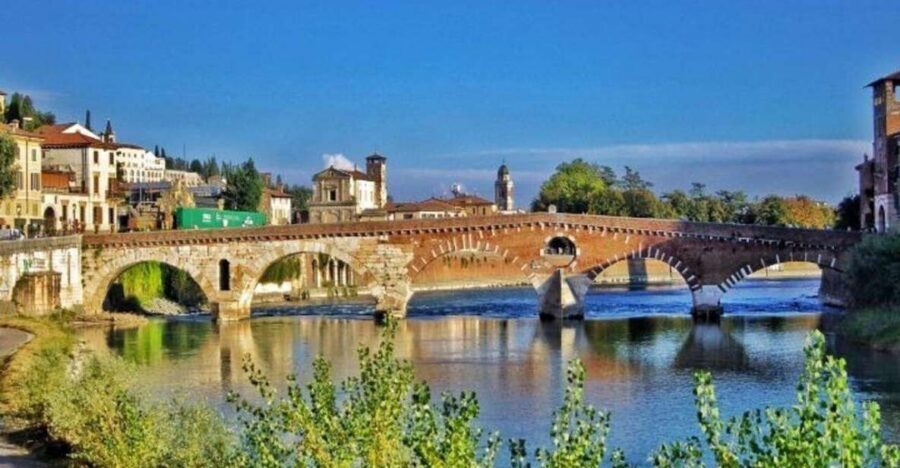
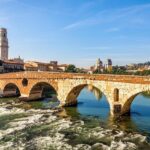
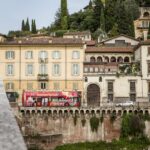
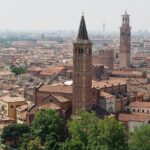
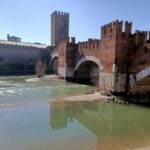
Then you’ll admire views on the Adige river and the surrounding hillside. This part helps you connect the architecture to the geography. Verona isn’t flat and uniform; the hills and the river shape sightlines, weather, and movement.
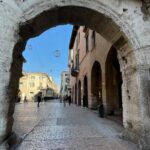
After that, the route includes passing under the Roman main entrance to Verona. This is the kind of stop that works because it’s simple: you walk through a threshold and suddenly you get the layering of eras. It makes the whole trip feel like one continuous story instead of disconnected landmarks.
The pink marble staircase and the old wool market
Later you’ll step on a pink marble staircase and then see the old wool market. These stops are short, but they’re memorable because they’re not just famous names—they’re physical quirks of the city.
The pink marble matters because it’s a visual signature. You remember it, and that helps anchor the rest of what you’ve learned during the walk. The wool market matters because it points to how Verona earned wealth and built its urban life—trade made the city, and the spaces for that trade still shape your route.
If you like photos, this is prime time. If you like understanding cities, this is prime time too. Both are true here.
How the guide makes the two hours actually work
A good walking tour isn’t about collecting stops. It’s about keeping the visit coherent. This one tends to work because the guide’s delivery seems to land on real-world travel needs: families, mixed ages, different energy levels, and changing conditions.
From what you’ll experience, the guide approach includes:
- Clear context early, so later stops feel connected
- Flexible timing when the weather turns, so you don’t spend the walk stressed
- Easy communication in English, so you don’t lose details halfway through
- A pace that fits kids and teens, with engagement that keeps people listening rather than just following
One extra value point: many guides on private routes also help with the “what next” question. In this case, the tour often ends with practical ideas like where to eat and what local foods to try afterward, so you keep the momentum.
And yes, if you’re celebrating something—like a birthday—this style of tour can be thoughtful about making the moment special. That’s not something you should expect as a guarantee, but the overall approach is the kind that notices these details.
Price and value: is $337.90 per group worth it?
Let’s talk money honestly.
The price is $337.90 per group (up to 15 people) for about two hours. That means your real cost per person depends entirely on group size. Here’s the math so you can decide without guessing:
- If you’re a group of 15, it’s roughly $22.50 per person. That’s strong value for a private guide.
- If you’re 2 people, it’s about $169 per person, which is a different category. It can still be worth it if you want maximum personalization and you really value guided context for a short stay.
- If you’re a small family or a small group, you’re usually in a middle zone where private time feels worthwhile, especially if you’re trying to hit key sights efficiently.
Why this feels like value (even when it’s not cheap): the tour compresses the most important parts of Verona into a single coherent story arc, with a guide who helps you notice details and makes adjustments along the way.
If you’re the kind of traveler who hates feeling rushed in your own vacation plan, private time is also a type of value, not just a sightseeing convenience.
Who this tour suits best (and who should skip it)
This tour fits best if:
- You have limited time in Verona and want a guided route that covers major landmarks in one shot
- You want context—Roman, medieval, and power-story explanations—without reading a guidebook for hours
- You’re traveling with kids or teens who need more engagement than a quiet audio tour
- You prefer a flexible itinerary instead of a rigid, high-volume schedule
You might think twice if:
- You’re happy doing Verona solo and you mainly want to wander at your own rhythm
- You don’t care about historical context and only want photo stops
- Your group is very small and you feel the per-person cost isn’t worth it compared with other options
For many people, the sweet spot is: you arrive for a day, you want a strong orientation, and you use what you learn to explore more later.
Should you book this Verona private walking tour?
I’d book it if you want a fast, guided “make sense of Verona” experience—and especially if you care about details and pacing. The route hits real Roman presence, major legend landmarks, the market square vibe, and the Della Scala tomb area, then wraps with scenic moments like the Adige views and the pink marble staircase. That blend is exactly what a short trip needs.
I’d hold off if you’re traveling as a tiny party and you’re budget-tight. In that case, compare your priorities: either pay for personalized guidance, or save money and build your own walking loop.
FAQ
How long is the Hidden and fascinating Verona private walking tour?
The tour is about 2 hours.
What’s the meeting point for the tour?
The meeting point is Piazza BraP.za Bra, Verona VR, Italy.
Does the tour end back at the meeting point?
Yes, it ends back at the meeting point.
Is this a private tour?
Yes. It’s private, and only your group participates.
Is the tour offered in English?
Yes, it’s offered in English.
Is admission included for the Arena di Verona stop?
No. You’ll see the Arena di Verona from outside, and an admission ticket is not included.
Is there an entry fee for Casa di Giulietta?
Admission is listed as free for the Casa di Giulietta stop.
What areas of Verona will the tour cover?
You’ll stop around Arena di Verona, Casa di Giulietta, Piazza delle Erbe, Piazza dei Signori (with the Dante statue), Arche Scaligere (Della Scala tombs), plus additional street-level stops including porticoes, views of the Adige and hillside, a Roman main entrance, a pink marble staircase, and the old wool market.
What happens if the weather is poor?
This experience requires good weather. If it’s canceled due to poor weather, you’ll be offered a different date or a full refund.
Can I cancel for a full refund?
Yes. Free cancellation is available if you cancel at least 24 hours in advance for a full refund.