REVIEW · VERONA
Tour to discover the Unique History of Verona, the City of Art
Book on Viator →Operated by Guide in Verona · Bookable on Viator
Verona can feel like a movie set. This tour turns the stones into stories, from Roman Verona to the medieval power plays that shaped the city you walk through today. You’ll move at a comfortable pace through famous landmarks like the Arena and Piazza delle Erbe, with an explanation that makes the why behind each stop feel real.
I especially like two things: the small group size (max 15) and the way guide Eugenio uses humor and accuracy to connect art, politics, and everyday life. It’s also easy to picture what’s happening in each plaza, because the route steadily builds toward the city center and ends at Casa di Giulietta.
One drawback to consider: a few church moments can depend on what’s going on that day (events, weddings, or closures). Also, the meeting area near I Portoni della Bra can be a little tricky to spot at first, so I’d suggest arriving early and using your phone map.
In This Review
- Key highlights you’ll care about
- Verona’s Art Comes With a Side of Drama
- Price and Logistics: What $70.14 Really Buys You
- Arena di Verona: The Monument That Sets the Tone
- Scaligero Bridge and Arco dei Gavi: Medieval Style, Roman Stiffness
- San Lorenzo, Porta Borsari, and Santa Anastasia: Three Ways to Read the City
- Chiesa di San Lorenzo – Verona
- Porta Borsari
- Basilica di Santa Anastasia
- Arche Scaligere and Romeo’s House: Love Stories With Teeth
- Piazza dei Signori and Piazza delle Erbe: Where the City Breathes
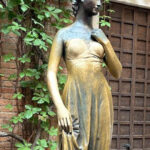
- Casa di Giulietta: The Perfect Ending, Even If It’s Crowded
- Practical walking tips for this Verona route
- Who This Tour Fits Best (and who might want a different plan)
- Should You Book This Verona City History Walk?
- FAQ
- How long is the Verona city history tour?
- What language is the tour offered in, and how big is the group?
- Is pickup available?
- Are tickets included for all stops?
- Where does the tour start and end?
- Can I get a refund if I cancel?
Key highlights you’ll care about
- A 2.5–3 hour route that hits Roman, medieval, and art-history Verona without rushing you
- Free or included admission at many stops (with one notable paid exception)
- Guide Eugenio’s approach: clear storytelling, witty tone, and lots of answering questions
- Small group (max 15 travelers), which means you’re not just herded past monuments
- End near Casa di Giulietta, so you finish where the emotions peak
Verona’s Art Comes With a Side of Drama
This walk-through Verona is built like a good story. It starts with a massive monument, steps into Roman architecture, then climbs into medieval power, and only at the end do you land in Juliet-land. That order matters. You don’t just see things. You learn how the city became the Verona people romanticize today.
The tour is also a good length for first-time visitors. At about 2 hours 30 minutes to 3 hours, you’re getting a full arc of the city without sacrificing your whole day. And with a maximum of 15 people, you can actually ask questions instead of shouting into the crowd.
Language is English, and you’ll be walking around major sights mostly in the central area. If you’re the type who likes details—political context, art clues, why a building looks the way it does—you’ll be happy with how the route connects the dots.
You can also read our reviews of more city tours in Verona

Price and Logistics: What $70.14 Really Buys You
The price is $70.14 per person, and the value isn’t only the guide. A big part of the cost balance comes from the included/covered admissions at multiple stops. For example, the Arena di Verona stop lists admission as free, and several other key points are free on the plan (like the Scaligero Bridge, Arco dei Gavi, Porta Borsari, Arche Scaligere, and more).
There’s also a practical layer: mobile ticket, pickup offered, and group discounts. Pickup can be a real relief in a city where a wrong turn can cost you time and patience. And the mobile ticket makes it easier to show up smoothly, especially if you’re trying to fit this tour into a busy Verona itinerary.
If you’re wondering about timing: the tour operates on days that cover Monday through Sunday, with time windows listed between 9:30–11:30, 12:00–2:00, and 2:30–4:30. That means you can usually pick a slot that doesn’t wreck your lunch plans.
One more useful clue: this experience is booked about 50 days in advance on average. So if your dates are fixed, don’t wait until the last minute.
Arena di Verona: The Monument That Sets the Tone
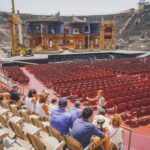
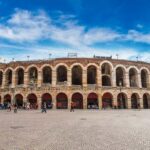
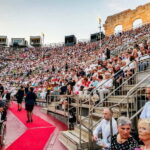
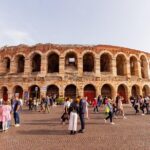
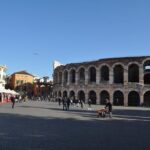
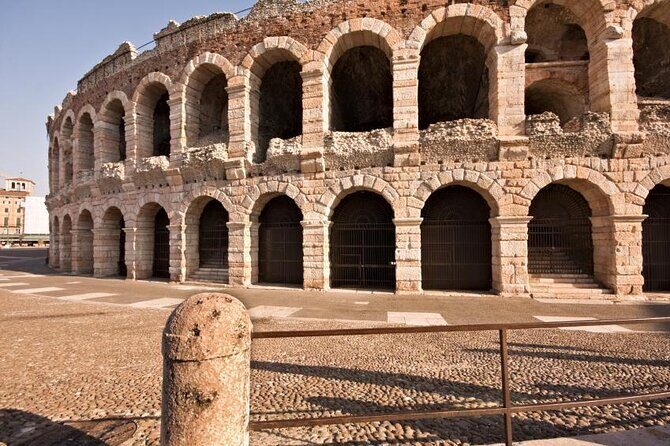
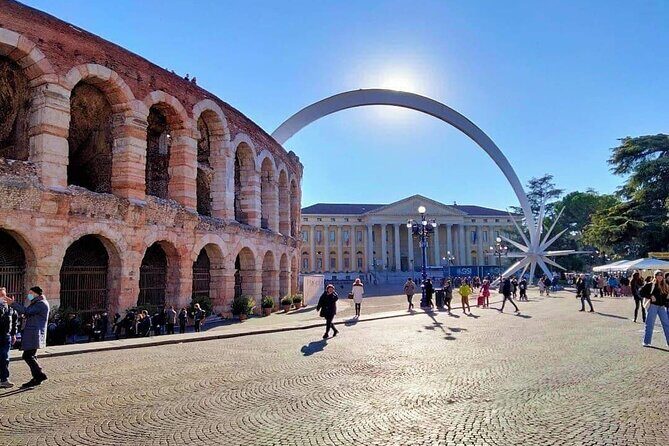
Your first stop is Arena di Verona. This is one of the most recognizable monuments in Italy, but the tour doesn’t treat it like a postcard. You’ll hear the secret history angle—how this arena fits into Verona’s bigger story, not just its famous stage role.
Even better: the plan lists admission ticket free for this stop. That’s rare in most guided routes, and it helps you get your money’s worth fast. You’ll start strong, which is exactly what you want at the beginning of a walking tour—confidence before you hit the smaller architectural details.
Practical tip: since you’re outdoors at the start, bring water and wear something comfortable. Verona can get hot, and you’ll likely be glad you did.
Scaligero Bridge and Arco dei Gavi: Medieval Style, Roman Stiffness
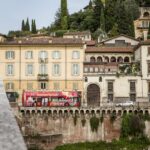
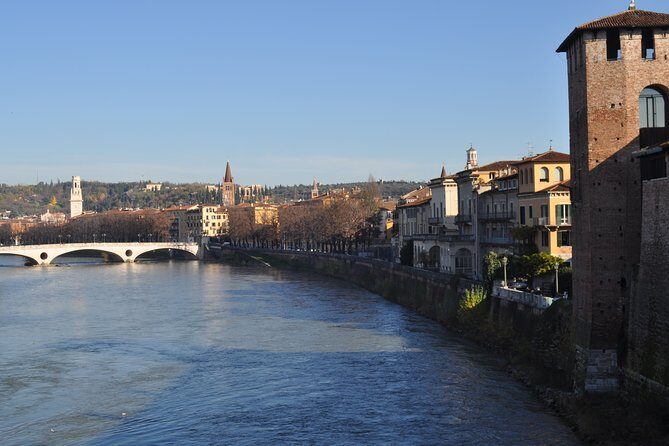
From the Arena, you’ll head to Scaligero Bridge. You’ll spend about 8 minutes here, and admission is included. This bridge is famous for a reason: it looks like medieval architecture meant to last forever. The photo angle is obvious, but the value is in what you learn about how it was built and why it mattered.
Next comes Arco dei Gavi, a Roman triumphal arch. Expect around 10 minutes. This isn’t one of those places you accidentally stumble onto without noticing. You’ll be guided to see it as part of Roman Verona’s statement-making. Admission here is free in the tour plan.
This pair of stops is smart because it contrasts two eras in a short span:
- Scaligero Bridge helps you read medieval design choices.
- Arco dei Gavi anchors you to the Roman habit of using stone to communicate power.
If you like that “aha” feeling—seeing the city’s layers instead of just stacking landmarks—this section usually hits.
San Lorenzo, Porta Borsari, and Santa Anastasia: Three Ways to Read the City
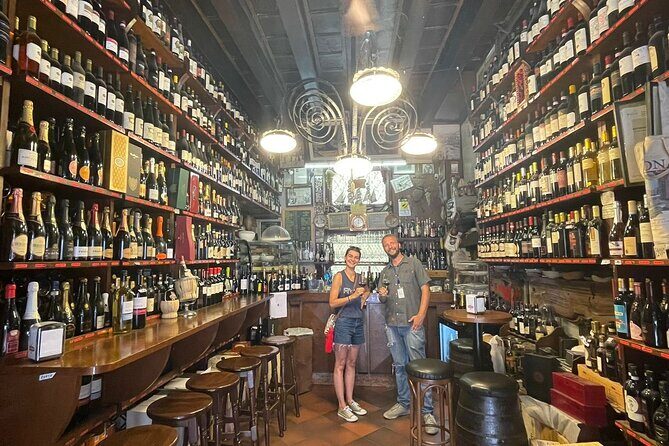
Then you move into churches and city gates, which is where Verona really rewards attention. You’re not only looking at religious art; you’re also reading how Verona organized itself.
You can also read our reviews of more historical tours in Verona

Chiesa di San Lorenzo – Verona
Stop: chiesa di San Lorenzo – Verona, around 15 minutes. Admission is included. The church is described as one of a kind romanic and from the 12th century. That matters. Romanesque architecture has a different mood than the later styles people expect—heavier forms, stronger structure, and details that make you slow down.
Porta Borsari
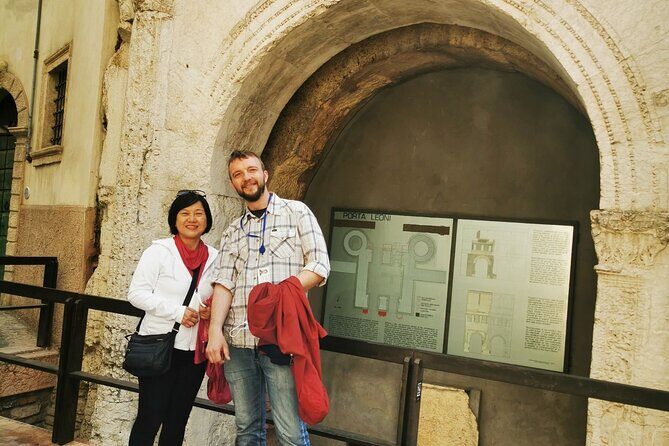
Next: Porta Borsari, about 10 minutes. This is marked as a World Heritage Site and described as the entrance to Roman Verona. Admission here is free. Gates are more than entrances. In a walled city, gates are checkpoints for trade, control, and who gets to move where. Porta Borsari gives you that “you’re walking on history” feeling in a very literal way.
Basilica di Santa Anastasia
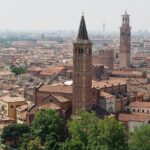
Stop: Basilica di Santa Anastasia, about 10 minutes. Admission is not included. This is the city’s biggest church, so even if you don’t go inside for free, it’s still a strong visual anchor. If you’re the kind of traveler who hates surprise costs, this is the one place where your wallet might need a little extra planning.
This stop cluster is a great reminder: Verona isn’t just monuments. It’s systems—religion, infrastructure, and the way the city protected itself and organized daily life.
Arche Scaligere and Romeo’s House: Love Stories With Teeth
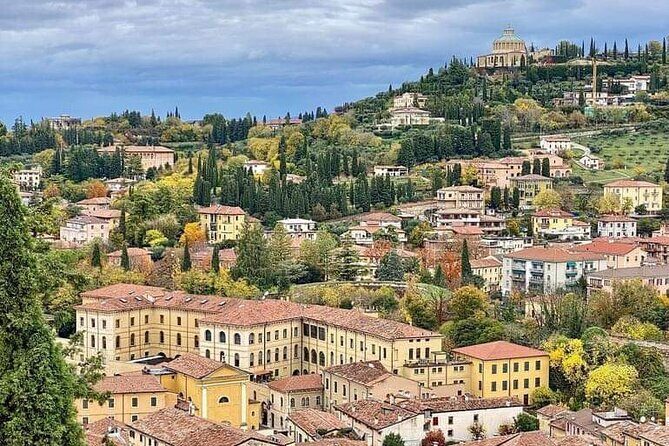
Now the tour shifts toward the medieval heart and the stories Verona sells. First comes Arche Scaligere, about 15 minutes. Admission is free. This is described as the most representative medieval place in the city. If you care about art and symbolism, you’ll likely appreciate how tomb spaces reflect what a ruling family wanted to project—authority, memory, and permanence.
Then it’s Romeo’s House (Casa di Romeo) for about 5 minutes, with admission listed as free. This is the tour’s setup for the next emotional step. You’re not just visiting a location tied to a famous play. You’re being guided on how that story connects back to the city’s identity and how Verona turns literature into place.
Even if you know the basic plot of Romeo and Juliet, this section often changes your perspective. You start noticing how Verona uses story as an interpretation of real history. It’s not only romance. There’s politics and class texture under the drama.
Piazza dei Signori and Piazza delle Erbe: Where the City Breathes
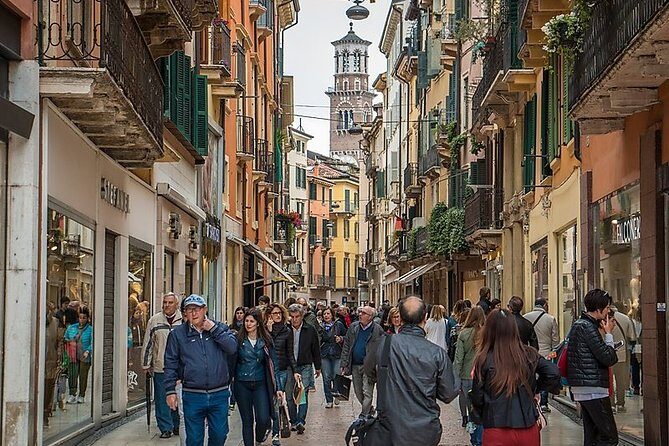
You’ll spend around 20 minutes at Piazza dei Signori. It’s described as the political center of Verona, and the word “magical” comes up because this square is more than a viewpoint. It’s a stage where civic power was once visible in architecture and public space. Even today, when you stand there, you can feel how it would have worked as a place where decisions played out.
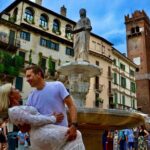
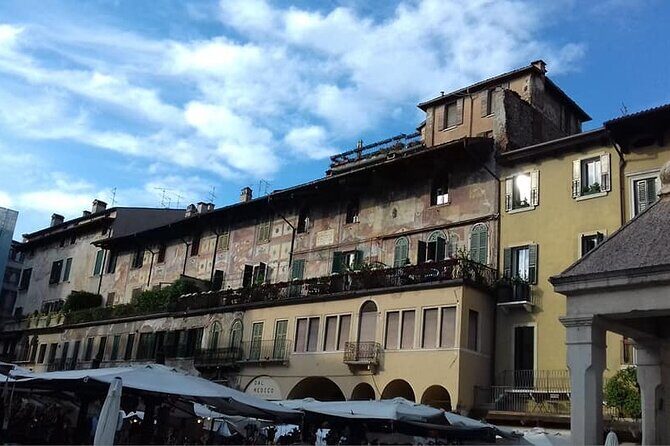
Next up: Piazza delle Erbe, also about 20 minutes. This is the city center where you’re likely to find plenty of life and choice for food and people-watching. The tour keeps it open enough that you can take in the atmosphere rather than treating it as another quick photo stop.
If you’re planning your day, this is a smart moment to take a breath. Your feet will thank you, and you’ll get a feel for where you might want to snack later. One review mentioned taking time for a drink due to heat, which is exactly the kind of practical pause that works well here.
Casa di Giulietta: The Perfect Ending, Even If It’s Crowded
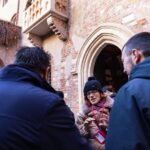
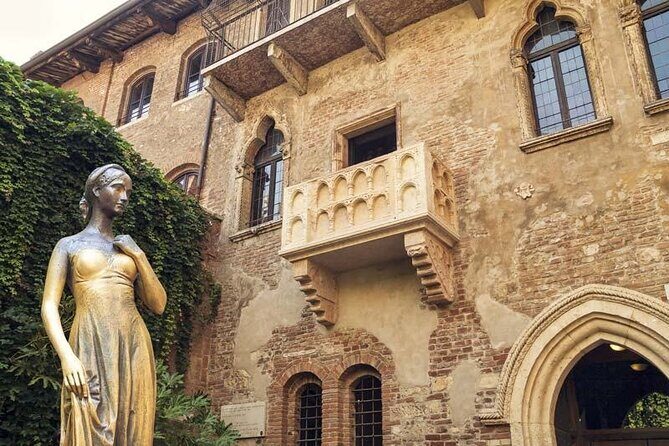
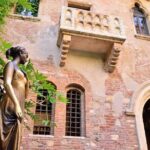
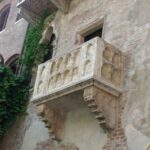
The tour ends at Casa di Giulietta, with about 20 minutes at the site and admission listed as free. The timing is intentional. You finish where the emotion peaks, and you can then keep exploring at your own pace.
A quick reality check: the Juliet area can be busy. But finishing here still works because you’ve earned it. Earlier stops give you context, so the ending lands with meaning rather than feeling like a separate tourist zone.
Also, this is near your drop-off point: Via Cappello, 23, 37121 Verona VR, which keeps you close to a lot of central sightseeing after the tour.
Practical walking tips for this Verona route
- Wear comfy shoes. You’re doing a lot of city-walking in one session.
- Plan for church closures. Some church moments can be affected by weddings or events, so don’t be surprised if you can’t enter everywhere exactly as expected.
- Arrive a few minutes early. The meeting point is I Portoni della Bra, Corso Porta Nuova, 2. If there’s construction or you’re not used to navigating with a phone, it can take longer than you’d hope.
- Bring water and a light layer. Heat is real in summer, and pauses matter.
- Ask questions. One of the strengths of this tour is that the guide can answer in detail and adjust to what your group wants to focus on.
Who This Tour Fits Best (and who might want a different plan)
This tour is a great fit if you want:
- a clear, chronological sense of Verona’s layers (Roman → medieval → the stories people associate with today)
- a guide who’s comfortable mixing art, politics, and real context
- a route that includes major landmarks plus smaller, architectural stops you might miss alone
It might be less ideal if you:
- need a strict schedule with no surprises at all (church availability can vary)
- hate crowds around Juliet (you’ll end there)
- prefer tours where you don’t pay attention to politics and power—this one does, and it uses that to explain the city
Should You Book This Verona City History Walk?
If you’re trying to understand Verona fast—without just taking pictures—this is a strong choice. You get a tight route, a small group, lots of stops with free or included admissions, and an ending that makes sense after you’ve seen the city’s evolution.
I’d book it if:
- you want a guided explanation in English
- you like detailed context and question time
- you’re okay with a few stops that depend on what’s happening inside churches that day
I’d skip or swap plans if:
- you have zero flexibility and every stop must be guaranteed entrance-to-entrance
- you’re already overburdened by history tours and want only a light walk
FAQ
How long is the Verona city history tour?
It runs about 2 hours 30 minutes to 3 hours.
What language is the tour offered in, and how big is the group?
The tour is offered in English and has a maximum group size of 15 travelers.
Is pickup available?
Yes. Pickup is offered, and the tour also lists that it’s near public transportation.
Are tickets included for all stops?
Not all. Several stops are listed as free or admission ticket included, but Basilica di Santa Anastasia is listed as admission ticket not included.
Where does the tour start and end?
It starts at I Portoni della Bra, Corso Porta Nuova, 2, 37122 Verona VR and ends near Casa di Giulietta, Via Cappello, 23, 37121 Verona VR.
Can I get a refund if I cancel?
Yes. Free cancellation is offered if you cancel at least 24 hours in advance of the experience start time.