REVIEW · VERONA
Verona Classic Walking tour
Book on Viator →Operated by Citywalkers · Bookable on Viator
Verona hits you fast, even on foot. This 2-hour classic walk strings together the city’s biggest name sights in a smart order, so you’re not bouncing around all day. You’ll see Roman Verona in action, medieval power signs, and the Shakespeare story that keeps Verona booked.
I like the small group size (max 16). It makes it easier to hear the guide and keep moving without getting swallowed by crowds. I also like how the route balances famous landmarks with places that feel local, like the piazzas where students and shoppers actually show up.
One thing to keep in mind: entry costs aren’t included. You’ll still need to plan for on-site tickets at the stops, and that can add time and expense if you weren’t budgeting for it.
In This Review
- Key highlights you’ll feel right away
- A fast, focused Verona loop that saves your feet
- Arena di Verona: Roman scale, still doing its job
- Piazza dei Signori: power in daylight, happy hour at night
- Arche Scaligere: Gothic tombs with a stair motif
- Casa di Giulietta: the romance story, rooted in real feuds
- Piazza delle Erbe: Roman forum foundations plus everyday life
- Price and value: $58.88 for a smart hit list
- Who should book this classic walking tour
- Should you book the Verona Classic Walking Tour?
- FAQ
- FAQ
- Where does the tour start?
- Where does the tour end?
- What time does the tour begin?
- How long is the tour?
- Is the tour offered in English?
- Is admission included to the sights?
- What’s the group size limit?
- How do I get the ticket?
- Can I cancel for a full refund?
Key highlights you’ll feel right away
- Arena di Verona in use today: a first-century open-air amphitheater built to host huge crowds, still used for concerts and events
- Piazza dei Signori’s two roles: formal daytime political/administrative space and a lively student meet-up at happy hour
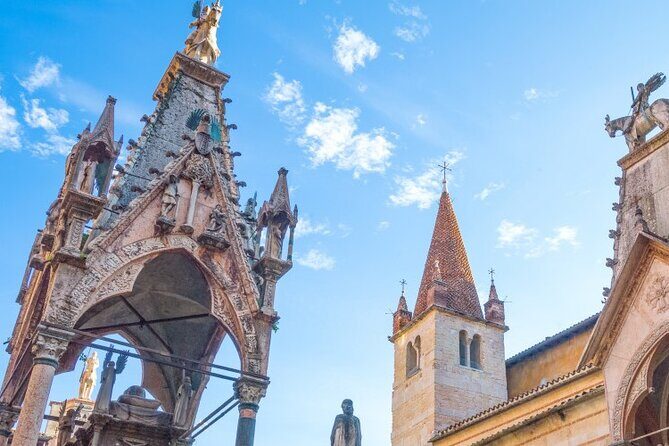
- Arche Scaligere’s Gothic tombs: Scaliger family funerary monuments with a wrought-iron enclosure and a stair-themed motif
- Casa di Giulietta as a 1300s inspiration: the Shakespeare romance tied to Verona’s family rivalry and forbidden love
- Piazza delle Erbe where Romans started the forum: cafés, major buildings, and weekday morning fruit-and-veg market energy
A fast, focused Verona loop that saves your feet
This tour is built for people who want the Verona “greatest hits” without turning the day into a logistics puzzle. It runs about 2 hours, starts at Via Teatro Ristori, 7 at 10:00 am, and finishes at Piazza delle Erbe. That end point matters: Piazza delle Erbe is one of the easiest places to keep exploring on your own after the walk.
The format also fits the way Verona works. The city center is compact, and these stops are close enough that you’ll spend your energy looking at things, not crisscrossing streets. Plus, you’re in a group capped at 16 people, which is a sweet spot for a walking tour. Big enough to feel lively. Small enough to stay sane.
Language is English, and the tour uses a mobile ticket, so you’re not scrambling for paper. Near public transportation, too, which helps if you’re arriving from the train/bus area. Service animals are allowed, and most people can participate—so this is a pretty “works for many” kind of tour.
The only real catch is that admission tickets are not included at the stops. That’s not a dealbreaker, but it changes how you should plan your time and money.
You can also read our reviews of more walking tours in Verona

Arena di Verona: Roman scale, still doing its job
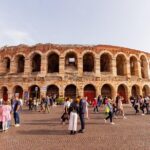
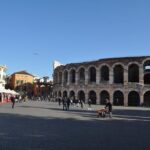
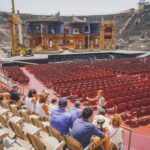
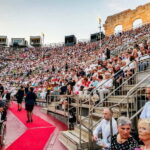
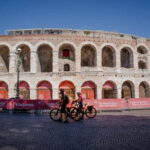
Your first stop is the Arena di Verona, an open-air Roman amphitheater originally built in the first century. What makes it more than a photo spot is that it’s still fully in use today. This is not a ruin you view from behind a fence and then move on. It’s an active venue that can seat around 30,000 people.
The guide angle here is simple: you’re seeing how Roman design created a machine for crowds and sound—then watching that same idea power modern entertainment. The Arena hosts operas and also pop music concerts, which makes the place feel less like a museum and more like a living stage.
Practical tip: even if you don’t plan to attend a performance, arrive with the mindset of a venue. Look at how the structure frames the space. It helps you understand why it became such a cultural magnet.
Watch-outs: admission is not included. So if you want access inside or special areas, plan for tickets on-site. Also, this is a big landmark—meaning it can be busy. Bring your patience and expect you’ll spend a bit of time absorbing the scale rather than sprinting through.
Piazza dei Signori: power in daylight, happy hour at night
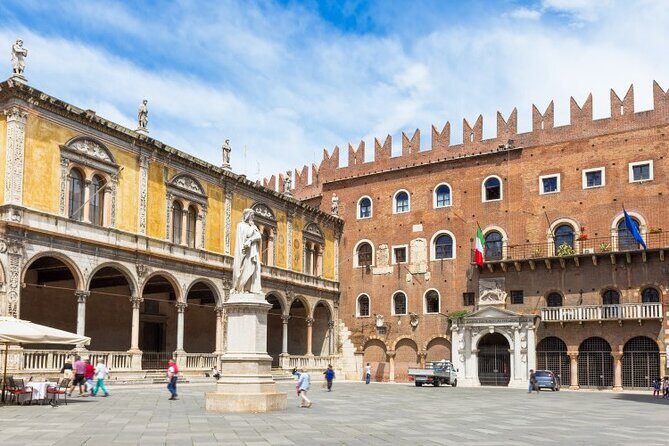
Next up: Piazza dei Signori, one of Verona’s most recognizable squares. The key detail I’d highlight is that it still serves political and administrative functions during the day. That means it’s not just scenery. It has real civic importance.
Then the mood shifts. This is also a natural meeting place for the university crowd during happy hour. So you get this double personality: formal Verona in the daytime, social Verona later. The Renaissance palazzi ringing the square reinforce the contrast—polished façades, but life happening right in the middle.
This stop is valuable because it teaches you how to read a piazza. In Italy, squares often aren’t just “pretty spaces.” They’re a social system: where people pass time, argue about things, meet friends, and reset their day.
What to do while you’re here: slow down for a minute and watch how the square organizes movement. If you’re shopping later, Piazza dei Signori is also a good “orientation” stop—like a hub that points you toward where the city’s energy is headed.
Consideration: again, admission isn’t included, so there’s nothing you’re missing by not buying tickets at this stop. This is more about street-level understanding.
Arche Scaligere: Gothic tombs with a stair motif
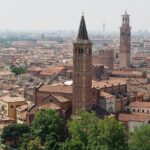
Now you walk into a quieter, more intense corner of Verona: the Arche Scaligere funerary tombs, dedicated to the Scaliger family, who ruled Verona in the 13th and 14th centuries. If you like architecture that carries a message, this is where the guide can help you read the symbols instead of just seeing stone.
These tombs are described as a key monument of Gothic art. You’ll also notice the tombs sit within an enclosure of wrought iron grilles decorated with a stair motif. That motif ties directly to the family name: della Scala, meaning of the stairs in Italian.
That’s the kind of detail worth knowing because it turns “cool tombs” into “oh, Verona is spelling itself out.” The ironwork isn’t random decoration. It’s identity made visible.
Practical tip: bring a moment of calm here. This is not a quick glance-and-go stop, even though the tour times it. Look at the ironwork pattern, then look at the tombs again. The second pass is usually when it clicks.
Consideration: admission is not included, so if you want full access, budget for on-site tickets. Also, this part of town can feel more solemn—so keep your pace steady and don’t rush your photos.
Casa di Giulietta: the romance story, rooted in real feuds
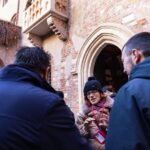
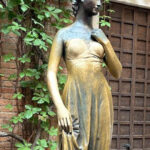
The tour’s most famous pull is Casa di Giulietta. If you’ve heard the Shakespeare story, you already know why people come. This is the stop that most visitors consider the “main event” of the route.
Here’s the angle you should carry with you: the romantic tale isn’t presented as pure fantasy. Shakespeare drew inspiration from a story tied to Verona in the 1300s—family rivalry, forbidden love, and feuding. In other words, Verona’s mythology has a historical edge.
Even if you don’t care about Shakespeare specifically, the stop works because it shows how literature becomes part of a city’s identity. People don’t just visit buildings here. They visit a story that stuck.
What to expect: you’ll likely want time to look around and absorb the place without treating it like a theme park. The best approach is to treat it as cultural history plus crowd theater: it can be both.
Consideration: admission tickets are not included. If you want to go inside, plan for tickets. Also, this is a famous stop, so crowding is possible.
Piazza delle Erbe: Roman forum foundations plus everyday life
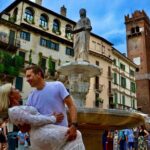
The tour ends at Piazza delle Erbe, a square that originally served as a Roman forum. That’s a big deal because it means you’re not only walking through Renaissance Verona. You’re stepping onto older civic ground that shaped how the city functioned.
You’ll see it surrounded by cafés and some of Verona’s most sumptuous buildings. The square has that “hold on, this is actually happening” quality—people work, eat, meet, and linger.
There’s also a timing bonus: if you’re there on weekdays (Monday to Friday), you can catch a morning fruit and vegetables market. Even if you’re not a shopper, a market changes the whole mood. It makes the square feel less like a postcard and more like a working neighborhood center.
Practical tip for after the tour: since you’ll end here, this is a smart place to eat or keep exploring without changing locations. Once the walking portion ends, you’ll already know where you are and what kind of square it is.
Consideration: no admission is included for this stop either, so if you’re expecting ticketed access, confirm what’s actually needed once you get there.
Price and value: $58.88 for a smart hit list
At $58.88 per person, you’re paying for a guided walk that bundles five major stops into about two hours in English, with a small group limit of 16 and a mobile ticket system.
Is it worth it? For me, it’s a yes if you want an efficient route. You’re getting context: why each stop matters, not just what it looks like. That’s where the money goes—into interpretation, timing, and saving you from having to piece it together yourself in the heat of the day.
But I’d be honest about the cost reality: admission tickets are not included at each stop. So your final total may be higher once you add on-site entry. Plan for that, especially if you want access at the Arena, the tombs, or Casa di Giulietta.
One more value note: the tour provider is Citywalkers. The overall rating is 4.4 from 8 reviews, which suggests the experience usually lands well. Still, there is at least one serious complaint included in the provided info about a guide not showing up at the meeting point. The safest move is simple: arrive early, be at the exact start point, and keep the operator contact info ready in your phone in case anything feels off.
Who should book this classic walking tour
This one fits you if:
- You want a tight, two-hour overview of Verona’s top sights.
- You prefer guided context over wandering with an app.
- You like walking in small groups and moving at a human pace.
It also works well for first-timers because the route touches the big identities of the city: Roman public power (Arena), civic space (piazzas), medieval rule (Scaligers), and literary fame (Juliet). You’ll leave with better mental map skills, not just a set of selfies.
If you’re the type who loves spending long hours inside one museum or church, this may feel short. Also, if you hate dealing with extra tickets, you might want to plan those entries before you go or be ready to pay on-site.
Should you book the Verona Classic Walking Tour?
I’d book it if you want a practical introduction to Verona that doesn’t swallow your whole day. The route is coherent, the group size is capped, and the stops cover a good mix of big names and place-based meaning.
Skip it or rethink it if you’re expecting everything to be included, since admission tickets are not included at the stops. And if you’re traveling on a schedule with zero wiggle room, build in some buffer. Walking tours are usually smooth, but the provided info includes an example of a guide no-show, so staying alert at the start is smart.
FAQ
FAQ
Where does the tour start?
It starts at Via Teatro Ristori, 7, 37122 Verona VR, Italy.
Where does the tour end?
It ends at Piazza delle Erbe, Piazza Erbe, 37121 Verona VR, Italy.
What time does the tour begin?
The start time listed is 10:00 am.
How long is the tour?
The duration is approximately 2 hours.
Is the tour offered in English?
Yes, it’s offered in English.
Is admission included to the sights?
No. Admission tickets are not included at the stops.
What’s the group size limit?
The tour has a maximum of 16 travelers.
How do I get the ticket?
You receive a mobile ticket.
Can I cancel for a full refund?
Yes. Free cancellation is available, and you can cancel up to 24 hours in advance for a full refund.