REVIEW · VERONA
2-hour Private Guided Walking Tour of Verona
Book on GetYourGuide →Operated by Veronatours · Bookable on GetYourGuide
Verona can feel like a small city with huge stories. This private 2-hour walking tour is a smart way to connect the Roman bones of town with the medieval drama everyone comes for, including Juliet’s balcony. You’ll start at the Roman Arena area, then move through classic squares that locals actually use, not just pose in.
Two things I really like: the Roman-era focus (including the well-preserved Arena and nearby Roman Theater) and the way the guide turns landmarks into clear context, not random trivia. I also appreciate that it’s a private group, so questions don’t get swallowed by the loudest person in line.
One drawback to consider: at just 2 hours, it’s built to hit key sights (Arena, Roman Theater area, Piazza Erbe, Juliet’s house/balcony, plus the Piazza dei Signori vibe), not to fully explore every corner of Verona. If you’re hoping for a slow, long stroll with lots of sidetracks, you may want more time.
In This Review
- Key things to know before you go
- Starting at the Arena: Verona’s Roman heartbeat
- Capulet house and Juliet’s balcony: romance with real context
- Piazza Erbe: the marketplace that keeps working
- Piazza dei Signori: Verona’s living-room energy
- Roman Theater and the Roman-era excavations angle
- What you’ll be doing in 2 hours (and how to use the time)
- Private group format: when it’s worth paying for
- Weather-proof walking: rain or shine
- Who this tour fits best
- Practical details that affect your experience
- Should you book the 2-hour Verona private walking tour?
- FAQ
- How long is the private guided walking tour of Verona?
- Where does the tour start?
- Does the tour include Juliet’s balcony?
- What are the main sights covered?
- Is the tour private?
- What language is the guide?
- Is the tour wheelchair accessible?
- Does the tour run in bad weather?
- What should I bring?
- What’s included in the price?
- What is the cancellation policy?
Key things to know before you go
- Roman Arena is the starting point: you begin where Verona’s ancient story is hardest to miss.
- Juliet’s story gets explained: you’ll learn why Juliet captures attention so much more than Romeo.
- Piazza Erbe is prime “old Verona”: it’s described as one of the world’s oldest continuously functioning marketplaces.
- Piazza dei Signori feels like the city’s living room: statues, poets, knights, and that central-square energy.
- You get a real local guide: it’s a licensed, English-speaking guide, with examples of guides like Lorella earning high praise.
- Gentle pacing with time for photos: reviews highlight a non-rushed flow and even optional coffee breaks.
Starting at the Arena: Verona’s Roman heartbeat
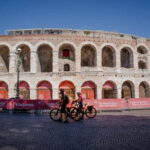
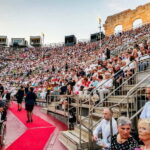
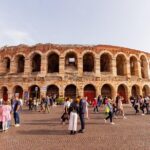
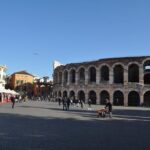
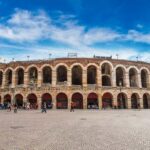
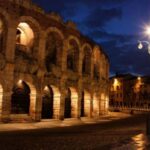
The tour kicks off at Piazza Bra by the statue of King Vittorio Emanuele on Horse. From there, you’re in position to understand why the Roman Arena is the real “center of gravity” for Verona’s old core. Even if you’ve seen Roman ruins elsewhere, this amphitheater has a way of feeling practical, not museum-distant. You can stand there and picture the scale without needing special imagination tricks.
What I like about starting here is simple: once you see the Arena’s sheer presence, the rest of the walk makes more sense. The medieval and Renaissance layers don’t feel random. They feel like Verona built its later life on top of an older foundation, then kept using the same important spaces.
If your guide is Lorella (a name that came up in strong feedback), you’ll likely get a calm, informative rhythm and little “look-at-this” moments that you’d skip on your own. One review specifically praised how she pointed out old flood markings/engraving details on a building—exactly the kind of street-level evidence that turns history into something you can actually spot with your eyes.
You can also read our reviews of more walking tours in Verona
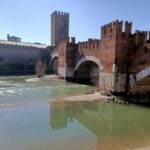

Capulet house and Juliet’s balcony: romance with real context
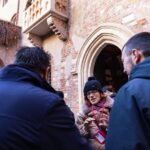
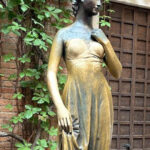
Next comes the Capulet house area, where the tour connects Verona’s famous love story to what you can still see today. You’ll have a chance to ponder why Juliet ended up vastly more popular than Romeo, and you’ll also hear about Juliet’s Club—details that help the balcony experience feel less like a quick photo stop and more like a cultural phenomenon.
Here’s the practical angle: this isn’t just about standing in front of a balcony. The guide’s job is to give you the “why” and the “how” behind the legend. That matters because otherwise Verona can feel like a checklist: Arena, Juliet, done. With a guide, the story lands as part of Verona’s identity, not just pop-culture wallpaper.
One caution: since the entire tour is only 2 hours, you’ll want to decide early how much time you spend at Juliet’s balcony versus moving on quickly. If you’re traveling with a group, you might even agree on a quick plan like: a few minutes for photos, then let the guide continue—so nobody feels like they missed their moment.
Piazza Erbe: the marketplace that keeps working
After the romance stop, the tour shifts back into everyday Verona with Piazza Erbe. This is the kind of square where you can imagine daily life in motion—because it still functions that way. The tour highlights Piazza Erbe as most likely the oldest, continuously functioning marketplace in the world, and that’s exactly the right way to frame it.
Why this matters: when a square remains a marketplace over centuries, it tells you something about the city’s priorities. Verona wasn’t just building monuments. It was trading, eating, bargaining, and gathering. With a guide, you’re not only “seeing” the square; you’re understanding why it still has its purpose.
In the flow of the walk, Piazza Erbe also works as a natural reset. You’re no longer focused on Roman architecture or a dramatic balcony. Instead, you get the relaxed feel of a real city center—ideal for taking a breath, grabbing a snack later, or simply slowing your pace for a few minutes.
Piazza dei Signori: Verona’s living-room energy
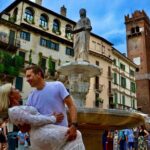
From Piazza Erbe, the route continues into the adjacent Piazza dei Signori, described as the city’s living room. This is where you’ll feel Verona’s social rhythm more strongly—statues, open space, and that “people actually hang out here” quality.
The tour notes elegant statues of poets and knights. That detail sounds decorative, but it’s really about civic identity. Verona’s public art isn’t random; it’s a way of signaling what the city admired, honored, and wanted to remember.
If you’re the type who likes architecture but also likes people-watching, this stop is a good match. It’s also a smart place to ask questions, because you’re standing still and the guide can explain how this cluster of squares fits together historically and culturally.
Roman Theater and the Roman-era excavations angle
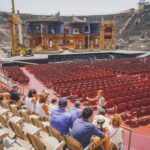
One of the tour highlights is visiting Roman-era excavations and sites connected to the Arena and Roman Theater. The key word here is “connected.” Your guide isn’t sending you from one unrelated attraction to the next. They’re helping you see Verona’s ancient layout as a system.
Even if you’ve read about Roman entertainment cities before, Verona tends to feel different because so much is still visible in the urban fabric. You’re walking through a living city, not stepping into a sealed archaeological park. That’s a big reason this tour earns such a strong rating: it turns sightseeing into understanding.
A practical note for your feet: Roman-era spots tend to come with uneven surfaces and changes in terrain. Bring comfortable shoes, and you’ll enjoy the stops more. If you show up in slick shoes or sandals, you’ll end up watching the ground instead of enjoying the sights.
You can also read our reviews of more guided tours in Verona



What you’ll be doing in 2 hours (and how to use the time)
This is a compact tour, so it’s not about covering everything in Verona. It’s about covering the right things in the right order so your brain links the dots.
A solid mental timeline looks like this:
- Start at the Arena area to set the Roman context.
- Move through the Capulet/Juliet area to connect legend and place.
- Relax your pace in Piazza Erbe, then finish in Piazza dei Signori’s central square vibe.
The best advice for getting value from short tours is simple: travel with fewer priorities. If you try to do every other Verona plan the same day, you’ll feel rushed and you won’t absorb what your guide is explaining.
One review praised the pacing as gentle, informative, and not rushed, with time for questions and photos. I’d treat that as a sign the guide expects you to engage. So don’t be shy—ask questions as you go. In a private group, the guide can tailor answers to your interests without breaking rhythm for a larger crowd.
Private group format: when it’s worth paying for
The price is $335.32 per group (up to 20 people) for a 2-hour guided walking tour. That sounds high at first glance, but private tours often shift value from per-person cost to control and quality of time.
Here’s how to think about it:
- If you’re traveling as a small family or a couple, you’re paying for a dedicated guide and a smoother experience than the big-bus model.
- If you have a group up to 20, the cost spreads out in a way that can become genuinely reasonable for a licensed guide.
Also, private tours usually mean you can match your pace. Reviews highlighted the chance to take your time at places of interest and even stop for a coffee if you want. That flexibility matters in a city like Verona where the most fun often happens when you pause—watching people, noticing details, and grabbing a quick local break.
Weather-proof walking: rain or shine
This tour runs rain or shine, so plan for real weather. Bring the right gear for a damp day if you’re visiting in shoulder season, and don’t assume you’ll have a “backup indoor plan.” You’ll be outside.
The face-mask note is also practical: the tour asks you to bring a face mask or protective covering. Even if you don’t normally carry one, this is the kind of small prep that prevents last-minute stress.
Who this tour fits best
This walking tour is ideal if:
- You want a fast, high-impact introduction to Verona’s Roman + medieval mix.
- You prefer local guidance over reading plaques in silence.
- You’re traveling with people who have different interests—Roman architecture folks and Juliet romantics can both feel satisfied.
- You need a tour that’s paced well enough to ask questions and take photos without feeling hurried.
It’s less ideal if you’re the type who wants to wander freely without a plan. A guide is the point here, and the route is designed to hit core landmarks efficiently.
Practical details that affect your experience
You’ll meet at I-37121 Verona, Piazza Bra, by the statue of King Vittorio Emanuele on Horse. The tour ends back at the meeting point. It’s wheelchair accessible, and it’s a private group format with an English-speaking live guide.
If you’re planning photos, wear shoes you trust. The stops include Roman-area sights and lively squares, so you’ll likely end up taking more pictures than you planned once you spot good angles.
Should you book the 2-hour Verona private walking tour?
Book it if you want the most important Verona highlights connected into a story you’ll remember: Arena, Juliet’s balcony/Capulet house, Piazza Erbe, and Piazza dei Signori—with a licensed English guide to explain what you’re seeing and why it matters.
Skip it (or add extra time) if you already know you want a long, slow day of Verona wandering. This tour is designed for focus, not for covering every street.
If your schedule is tight—and you want to feel oriented in Verona fast—this is a strong choice.
FAQ
How long is the private guided walking tour of Verona?
The tour lasts 2 hours.
Where does the tour start?
It starts in I-37121 Verona, Piazza Bra, by the statue of King Vittorio Emanuele on Horse.
Does the tour include Juliet’s balcony?
Yes. The tour includes visiting Juliet’s balcony and the Capulet house area.
What are the main sights covered?
The tour covers the Roman Arena, Roman Theater area, Piazza Erbe, Piazza dei Signori, and Juliet’s balcony (plus the Capulet house area).
Is the tour private?
Yes. It’s a private group experience.
What language is the guide?
The live tour guide is English.
Is the tour wheelchair accessible?
Yes, the activity is wheelchair accessible.
Does the tour run in bad weather?
It runs rain or shine.
What should I bring?
Bring comfortable shoes and a face mask or protective covering.
What’s included in the price?
You get a licensed, professional English-speaking guide.
What is the cancellation policy?
Free cancellation is available up to 24 hours in advance for a full refund.