REVIEW · VERONA
Verona Walking Tour with Audio and Written Guide by a Local
Book on Viator →Operated by Walking Cap · Bookable on Viator
Verona clicks into place when you walk it. This self-guided experience gives you a local audio and written tour so you can move at your own pace, with enough story to make stops feel meaningful. I especially like the photo-friendly Castelvecchio Bridge moments and the way you can step into the Castelvecchio Museum courtyard and garden for free. The only real catch: you need a smartphone with internet, and headphones are not included.
For the price, this is a smart way to get oriented in a couple hours. You get a digital written guide plus audio in several languages (English included), and you can hear the narration through your phone speakers if you want. One thing to consider is that some people run into audio or link issues on their device, so keep your phone charged and be ready to troubleshoot fast if the audio won’t load.
You’re also not stuck with a big-group vibe. The route hits the main Verona highlights—Roman gates, bridges, squares, Juliet’s area, and the Arena—without forcing you into a fixed walking tempo. If you prefer controlling breaks (or rereading when your brain wants details), this format fits well.
In This Review
- Key highlights worth planning for
- Price and timing: a low-cost way to cover Verona highlights
- The route starts and ends at Arena di Verona (and that matters)
- How the digital audio and written guide actually works
- Castelvecchio Bridge: the best early photo payoff
- Museo di Castelvecchio courtyard and garden: history without a full museum day
- Porta Borsari: Roman Verona’s main entrance story
- Ponte Garibaldi and the 7-bridge idea
- Duomo di Verona plus Ponte Pietra: big views, quick stops
- Piazza dei Signori and the “drawing room” feeling
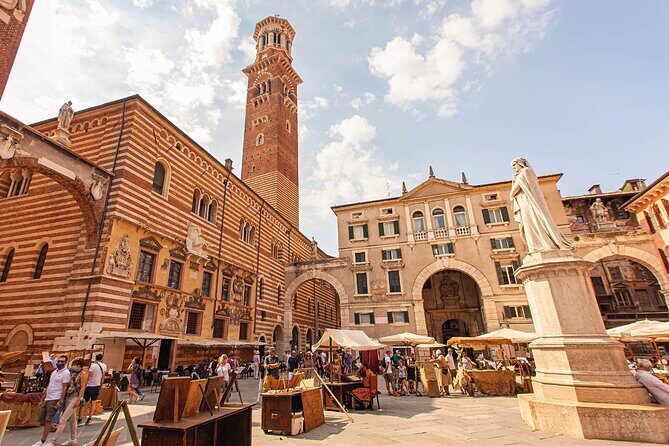
- The 84-meter tower stop for a real skyline break
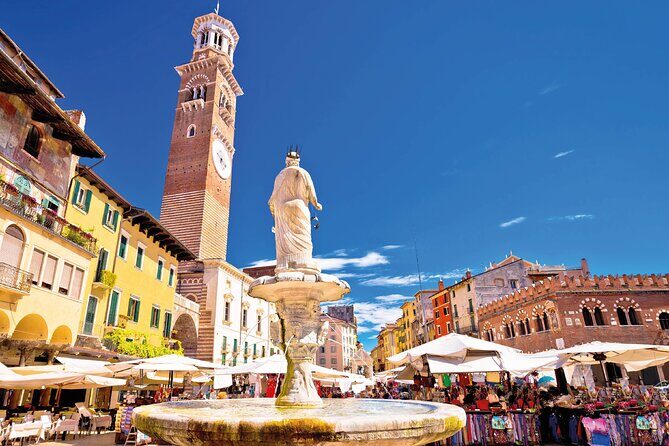
- Piazza delle Erbe: oldest square and the Roman Forum level
- Casa di Giulietta: the iconic balcony from the outside
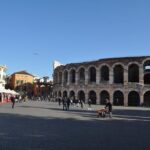
- The grand finish at Arena di Verona
- Who this tour fits best (and who might want a different format)
- What to do if audio or links misbehave
- Final verdict: should you book this Verona walking tour?
- FAQ
- How long is the Verona walking tour?
- Where does the tour start and end?
- Is the tour in English?
- Do I need headphones?
- What do I need to access the audio and written guide?
- Can I cancel for a full refund?
Key highlights worth planning for
- Photo stops on Scaliger Bridge (Castelvecchio Bridge) where the river views do a lot of the work
- Free courtyard and garden time at Museo di Castelvecchio, so you get more than a quick look
- Roman-era sights in sequence, from Porta Borsari to Ponte Pietra, so the city’s layers feel connected
- Piazza dei Signori and Piazza delle Erbe, Verona’s famous squares with strong “walk-and-look” energy
- Casa di Giulietta from the outside, including a focus on the story behind the balcony you can see for free
- Finish at Arena di Verona, so your walk naturally ends at the city symbol
Price and timing: a low-cost way to cover Verona highlights
At $7.86 per person for about 2 to 3 hours, this is priced like a snack, not a big production. The value comes from coverage: you’re not buying a ticket for one landmark. You’re buying a way to understand several key spots in one walking loop.
Also, it’s designed for real life. You can stop when you want, restart audio when you miss a line, and spend extra time where you’re curious (or hungry). That’s a big deal in Verona, where the “right” pace depends on whether you’re photo-first, story-first, or gelato-first.
One practical note: the Arena di Verona is listed with long daily opening hours for the period shown. That helps if you want to end your walk with the Roman amphitheater even later in the day.
You can also read our reviews of more walking tours in Verona

The route starts and ends at Arena di Verona (and that matters)
Your meeting point and tour end point are both at Arena di Verona, at Piazza Bra (P.za Bra, 1). That makes logistics simpler because you’re not hunting for a separate pickup or scramble across town at the end.
The way the route is laid out also helps you “stitch” Verona’s story together. You begin near the city’s most famous Roman landmark, then you work through river bridges, Roman structures, civic squares, and finally back into the old-city vibe at the end. If your day in Verona feels short, this kind of loop is exactly what you want.
The tour format is also meant for mobile use: you receive a mobile ticket, and the audio/written guide is delivered digitally. With a maximum group size of 99, it’s still not a traditional guided group walk—your movement is mostly yours, guided by the prompts on your phone.
How the digital audio and written guide actually works
You’ll use your smartphone for everything. You’ll need internet connection to access the digital guide, and the activation steps are included in your voucher. Once you’re on the route, you can listen through your phone speakers, or use headphones if you have them (headphones are not provided).
I like this setup for two reasons. First, you can control the audio—pause it, restart it, and keep walking. Second, the guide includes written text as well as audio, which helps if you hit noisy streets or you want to read the story while you look at the view.
The common “gotchas” are simple and solvable:
- Keep enough battery for both navigation and audio.
- If audio stalls, try a quick refresh of the page (the operator’s suggested fix).
- If you rely on Google Maps links, don’t assume they’ll load instantly on weak mobile data.
Castelvecchio Bridge: the best early photo payoff
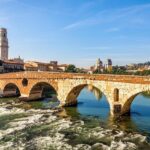
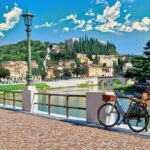
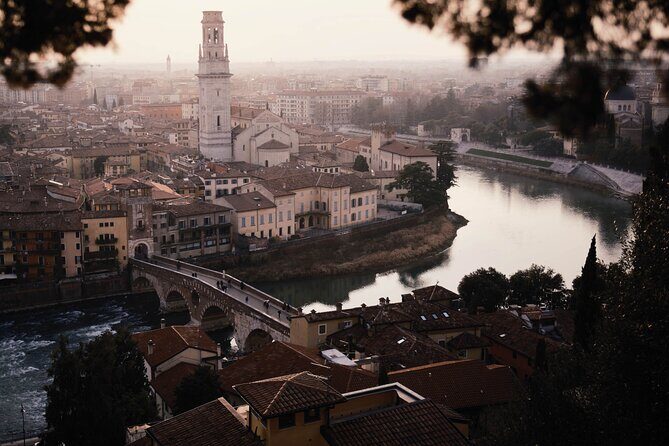
Your first stop is Castelvecchio Bridge (also tied to the Scaliger Bridge story). This is a strong opener because it’s immediately visual—you’re looking out over the river and Verona’s layers start clicking into place.
The guide’s angle here is the “why” behind what you see. You get a city-introduction type of story, not just a description of stone and arches. And yes, it’s also a practical photography stop. Expect it to be one of the places you naturally slow down, because the view gives your camera something to do.
Plan about 15 minutes. If you’re traveling light and your phone camera is ready, you can take a few photos fast, then move on without losing the rhythm of the loop.
Museo di Castelvecchio courtyard and garden: history without a full museum day
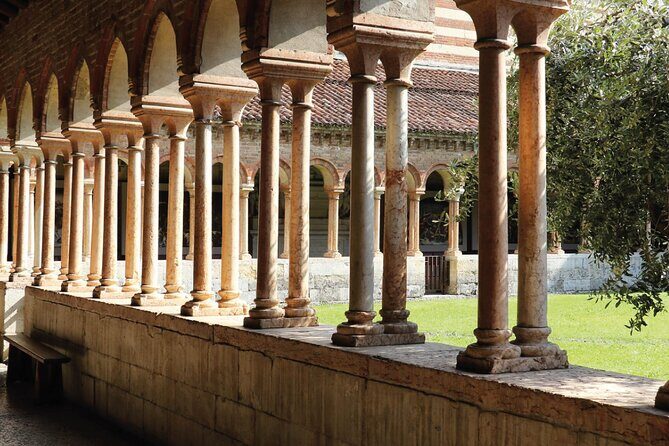
Next you reach Museo di Castelvecchio. The guide frames it as a symbol tied to one of Verona’s key families, so you understand why this complex matters beyond what you can see from the outside.
What makes this stop particularly practical is the free access portion. You can enter the courtyard and garden for free, which means you’re not paying extra just to get a bit of atmosphere. It’s a nice way to “taste” the museum setting even if you don’t want to spend a full day inside.
Give it around 15 minutes. This is a good stop for people who like a short pause with good visuals and a little context, without turning the whole tour into a museum marathon.
You can also read our reviews of more guided tours in Verona


Porta Borsari: Roman Verona’s main entrance story
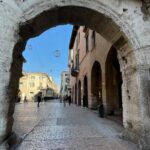
At Porta Borsari, you hit the Roman layer in a direct way. This is described as the main entrance to Verona in Roman times, and the guide’s focus is on the small, curious story behind the monument.
For you, that means this isn’t just a “look at an old gate” moment. It’s a chance to connect Verona’s later layout to what was here before. Roman gates can look similar across Italy, but the best tours tell you what makes this one Verona-specific—and that’s the point of the audio/written narration here.
Keep it quick—about 10 minutes is enough to read/listen, take a look, and get your bearings for the next bridge.
Ponte Garibaldi and the 7-bridge idea
Then comes Ponte Garibaldi, another quick bridge stop. The guide frames it as one of the city’s seven bridges, and it includes a special trick that was once used to cross it.
That “trick” detail is exactly the kind of thing that makes self-guided tours feel more than app-driven trivia. It turns a bridge into a story, and a story into something you remember.
Give this stop about 10 minutes. It’s not a long stay location; it’s a moving hinge in the route.
Duomo di Verona plus Ponte Pietra: big views, quick stops
Now the pace gets more “look up and around.”
You’ll visit the city’s most important church with interesting paintings—this aligns with Duomo di Verona being included in the route. Church stops can be tricky on a phone tour because crowds and sound mix. That’s where having both audio and written guide helps: if you can’t hear well, you can still read.
After that, you move to Ponte Pietra, a Roman-built bridge. The bonus here is the view, including St. Peter’s Hill. This stop is described as quick, about 10 minutes, but it’s the type that rewards even a short pause because you get a wide-angle feeling.
If you’re prone to skipping viewpoints, don’t. Even ten minutes here can make the rest of your walk feel more connected.
Piazza dei Signori and the “drawing room” feeling
Piazza dei Signori is where Verona starts feeling theatrical. The guide describes it as the city’s drawing room of Verona, tied to the way the buildings frame the space and the perspectives you get as you walk the edges.
This isn’t a stop where you just stand still. It’s better to take a slow circuit: walk a few steps, look back, then turn again. The audio helps, but the square itself does half the job.
Keep it around 10 minutes. If you’ve got time and good weather, you might linger—but don’t let it steal too much from the next square, which is a bigger story moment.
The 84-meter tower stop for a real skyline break
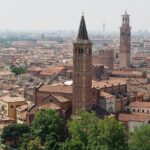
From Piazza dei Signori, you’ll reach the tallest building in the city at 84 meters. The guide promises a stunning view from the top.
I’m glad this is included because it’s an easy “reset” during a walking tour. When you’ve been on bridges and in streets, the tower gives your brain a clean overview—what areas you’ve covered, what’s still ahead, and how Verona’s compact shape works.
How long you should allocate depends on the tower access flow, but treat this as a key highlight rather than a quick photo op. If the lines are slow, your time here matters more than any other stop.
Piazza delle Erbe: oldest square and the Roman Forum level
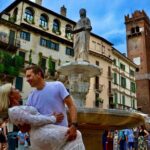
Then it’s Piazza delle Erbe, described as Verona’s oldest square and located above the area of the Roman Forum. This is where you’ll likely start noticing patterns in your walking: Roman power underneath, civic Verona above.
The guide also leans into curiosities—small facts and story snippets that make the square more than a pretty place to sit. This is a good stop for a longer pause because you can read and look at the architecture from multiple angles.
Plan about 20 minutes. It’s a perfect timing stop if you’re mixing the tour with snacks, since the square naturally invites a break.
Casa di Giulietta: the iconic balcony from the outside
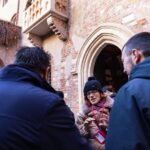
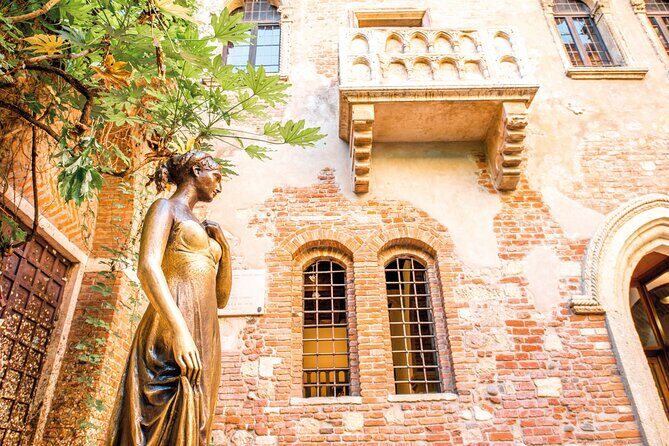
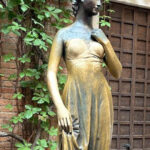
Next is Casa di Giulietta, one of Verona’s most iconic monuments. The balcony is visible from the outside for free, so you don’t have to pay just to get the classic view.
What I like about the guide’s approach is that it points you toward the story behind the famous house—something more curious than the quick postcard version. Even if you’ve heard Shakespeare-adjacent Verona claims before, a guided narrative helps you notice details you’d otherwise gloss over.
Allow about 20 minutes. It’s enough time to look, read/listen, take a few photos, and move on without getting stuck in a single corner.
The grand finish at Arena di Verona
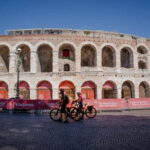
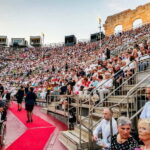
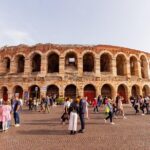
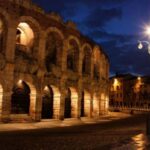
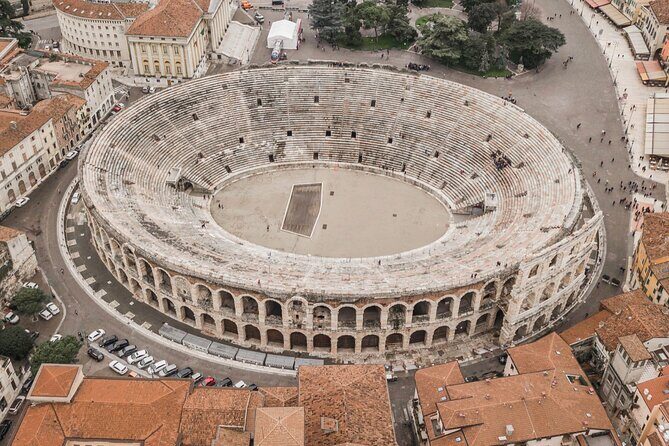
Your route ends back at Arena di Verona, the Roman amphitheater that closes the walk. Finishing here works because it gives your day a clear “final scene” and a physical anchor to everything you’ve walked through.
If you’re ending at a time when the area is active, you can use the open space to check your photos, review the written notes from earlier stops, and decide what else you want to add later (extra churches, wandering streets, or a slow dinner).
Who this tour fits best (and who might want a different format)
This is a strong fit if you want:
- Autonomy: pause, restart, and set your own pace.
- Short, story-based stops rather than long guided speeches.
- A low-cost way to cover Verona’s headline sites in one loop.
It may feel less ideal if you:
- Don’t want to rely on a smartphone with internet (the guide is digital).
- Prefer a human-led pace where you’re not managing audio yourself.
- Have device issues with loading pages or media (the operator’s fixes can help, but you still need your phone to cooperate).
If you’re the type who loves quick orientation plus optional “go deeper later,” this tour format fits nicely.
What to do if audio or links misbehave
A few practical rules will save your day.
First, keep your phone battery healthy. The guide uses internet and you may also use mapping links, and either can drain power if the connection is weak. A small power bank is a simple insurance policy.
Second, if audio won’t load, try a refresh of the page as the operator suggests. Don’t waste ten minutes standing there—refresh, reconnect, then move on.
Third, if the audio seems to pause when your screen goes dark, keep the screen awake. Some people found playback depends on the screen setting, so plan for that.
Final verdict: should you book this Verona walking tour?
If you want a smart, budget-friendly way to see Verona’s core highlights in 2 to 3 hours, I’d book it. The best value is the mix of audio + written guide, the free courtyard/garden time at Castelvecchio, and the fact that the route hits Roman-era structures through Verona’s famous squares and ends at the Arena.
I’d skip or reconsider if you strongly prefer a fully offline guide, hate smartphone navigation, or expect perfect audio playback with zero troubleshooting. For everyone else, this is one of the easier ways to get your bearings fast and still feel like you’re traveling with control—not on rails.
FAQ
How long is the Verona walking tour?
The tour is listed as about 2 to 3 hours.
Where does the tour start and end?
It starts and ends at Arena di Verona, Piazza Bra (P.za Bra, 1, 37121 Verona VR, Italy).
Is the tour in English?
Yes. The guide is offered in multiple languages, including English.
Do I need headphones?
Headphones are not included. You can listen through your phone’s speakers, or use your own headphones.
What do I need to access the audio and written guide?
You need a smartphone with an internet connection. Activation and access details are provided in your voucher.
Can I cancel for a full refund?
Yes. Cancellation is free up to 24 hours in advance for a full refund, and within 24 hours there’s no refund.