REVIEW · VERONA
From Venice: Private Tour of Verona
Book on GetYourGuide →Operated by Keys Of Italy / Milan and Venice · Bookable on GetYourGuide
Verona feels close when the plan starts with speed. This private Venice to Verona day trip pairs a fast train ride with a focused walking tour, so you’re not spending your limited time in transit.
Two things I really like: the high-speed rail gets you moving quickly, and the private guide attention means you can ask questions as you walk. One consideration: food and drinks aren’t included, so you’ll want to plan lunch on your own.
In This Review
- Key highlights at a glance
- High-speed train from Venice to Verona: the time-saver that matters
- Meeting point in Venice: start clean at Stazione di Venezia Santa Lucia
- Verona orientation with a private guide: how the walking part comes to life
- Juliet’s Balcony and a 14th-century gothic mansion: the Shakespeare connection with context
- Piazza delle Erbe: where Verona’s daily energy meets centuries of buildings
- Roman Verona and the Roman Bridge (100 BCE): why it feels so solid
- Basilica of San Zeno: a 10th-century start with a lot to notice
- The return ride back to Venice: why the day ends smoothly
- Price and value: what you’re really paying for
- What to expect in the real experience: pacing, group size, and comfort
- Who should book this Venice to Verona private tour
- Should you book this Private Tour of Verona?
- FAQ
- How long is the Venice to Verona tour?
- Where do I meet the guide in Venice?
- What’s included in the price?
- Is food included?
- Is this tour private?
- What languages are offered?
- Do I need a passport or ID?
- Is there an express security check?
Key highlights at a glance
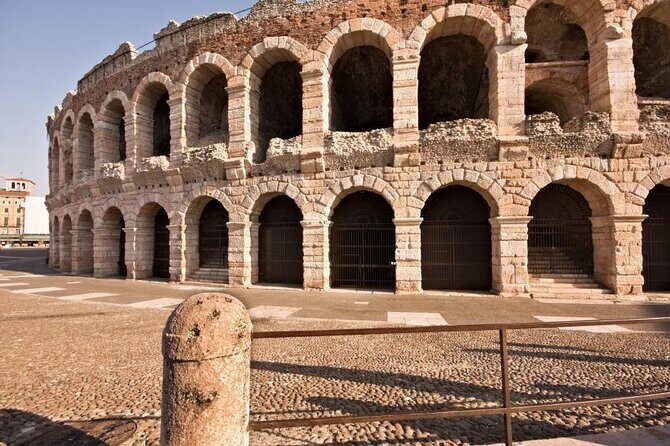
- High-speed train, about 1 hour each way, covering roughly the 75-mile stretch fast
- Private, headset-supported guide (headsets help you catch every detail on cobblestones)
- Shakespeare link at Juliet’s Balcony, tied to a 14th-century gothic building said to have inspired the story
- Roman Verona focus, including the Roman Bridge dating to 100 BCE
- Piazza delle Erbe and medieval landmarks like the Basilica of San Zeno, started in the 10th century
High-speed train from Venice to Verona: the time-saver that matters
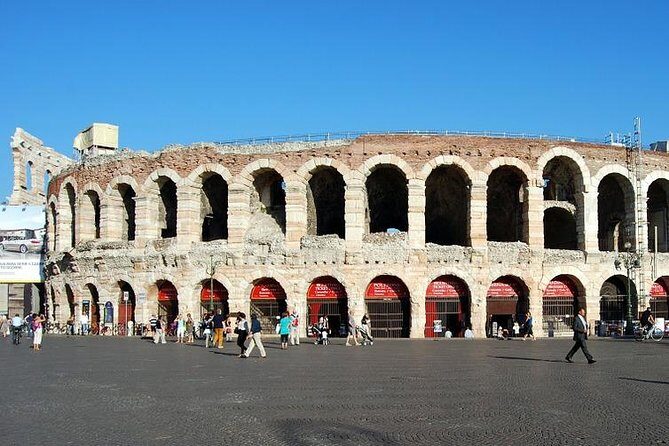
This is the kind of day trip where the logistics are doing you a favor. You take a rapid train for the short hop from Venice Santa Lucia to Verona, then meet your guide at Verona’s main station. The whole idea is simple: spend your energy on streets, squares, and monuments, not waiting around.
The schedule is built around two big blocks:
- About 1 hour by train to get you into the historic core
- Around 3 hours walking with your guide once you arrive
For me, that balance is the sweet spot. Verona’s center rewards slow attention, but you’re also only in town for a day. This format helps you see the real highlights without feeling like a checklist.
Also, the tour includes round-trip tickets, so you’re not juggling schedules or trying to figure out platform logistics in two different cities. Your day has less friction, and that’s what makes it feel enjoyable instead of rushed.
You can also read our reviews of more private tours in Verona


Meeting point in Venice: start clean at Stazione di Venezia Santa Lucia
Your tour begins inside Stazione di Venezia Santa Lucia, right in front of the shop Kiko Milano. Plan to arrive 15 minutes early. That buffer matters here. Stations can be hectic, and you don’t want to be sprinting for the correct meeting spot with your day already stressed.
This meeting point detail is useful because you don’t need to guess which entrance, which side, or which part of the station your guide team is operating from. When a day trip is this tight, clarity at the start makes the whole thing work.
Verona orientation with a private guide: how the walking part comes to life
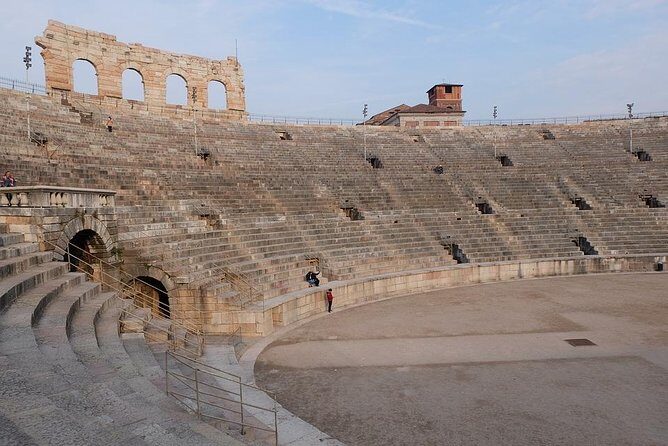
Once you meet at the station, your private guide takes over with a real in-the-field explanation of how Verona fits together. You’ll spend roughly 3 hours moving through narrow lanes and old streets, with your guide shaping what you see into one story.
The route is built around famous stops, but it’s not only about posing for photos. The best moments are the bits between them: the way your guide points out details in architecture and street layout, so you start noticing how the city changed across centuries.
A nice touch is headsets. Verona’s old streets can be echoey, and you’ll be talking while walking. Headsets keep the guide’s voice clear, so you don’t miss the key points.
In one example of how this plays out, guide Claudia met at the Verona station and helped get things moving quickly with a short taxi to the center before settling into the walking tour. Even if you’re starting with a train-station arrival, that kind of on-the-ground problem-solving helps the day flow.
Juliet’s Balcony and a 14th-century gothic mansion: the Shakespeare connection with context
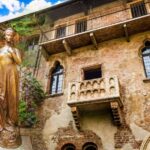
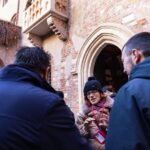
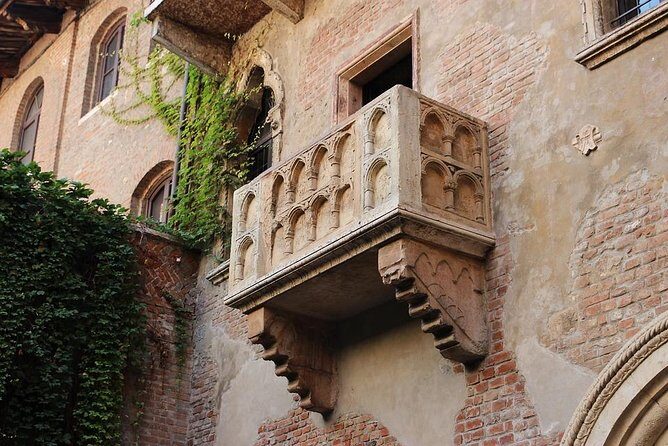
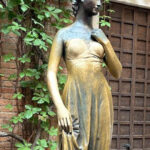
This stop is usually what people come for, and it’s easy to see why. You’ll learn about Juliet’s Balcony, which sits on a 14th-century gothic building that’s said to have inspired Shakespeare’s Romeo and Juliet.
But the real value here isn’t only the “Shakespeare link.” It’s how your guide uses the story to explain what you’re actually looking at:
- Why the building is linked to the gothic era
- How Verona became part of the famous cultural imagination
- What you should notice once you’re standing there, not just what you’ve read about it
Even if you aren’t a theater person, this angle makes the site more meaningful. It turns a landmark people crowd around into a place with layers you can interpret.
If you want the best experience, slow down for a few minutes around the balcony area and use your guide’s cues. A private setup makes it easier to ask, wait, and look—without feeling like you’re holding up a large group.
Piazza delle Erbe: where Verona’s daily energy meets centuries of buildings
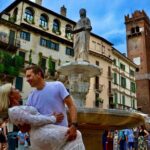
From there, your tour moves into Piazza delle Erbe, Verona’s main square. This is the kind of place where history and everyday life share the same real estate.
Your guide helps you “read” the square:
- What makes it the center of the city
- How the square has played multiple roles over time
- Which nearby buildings matter and why
It’s also a practical break in the walk. Squares give your feet a moment to recover, and they’re where you can quickly recalibrate for the next stretch. If you decide you want to grab a drink or plan lunch, this is typically one of the easiest places to do that because you’re in the heart of the action.
Roman Verona and the Roman Bridge (100 BCE): why it feels so solid
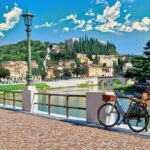
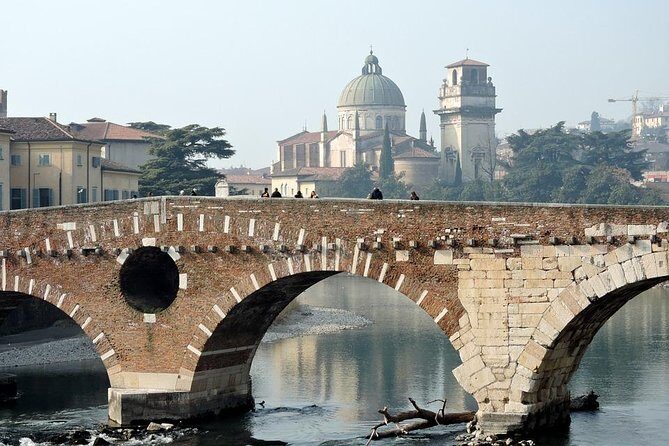
Verona doesn’t only do medieval. It also does Roman in a big way. You’ll get the perspective of 2 millennia of Roman and Italian history as you gaze at the Roman Bridge dating back to 100 BCE.
This stop is powerful because Roman architecture often has that calm, heavyweight feel. When your guide connects what you see to the age of the bridge, it changes the way you experience it. Suddenly you’re not just looking at a scenic structure; you’re seeing something that’s survived political shifts, changing urban priorities, and centuries of wear.
One reason this works well on a private tour: your guide can calibrate your pace. If you’re the kind of person who likes to understand how a structure was used, you can ask. If you’d rather just enjoy the view, the guide keeps the explanation tight and relevant instead of turning it into a lecture you can’t act on.
Basilica of San Zeno: a 10th-century start with a lot to notice
Your tour also includes a stop at the Basilica of San Zeno, which broke ground in the 10th century. That alone gives you the big-picture value—this is old enough that it sits at the intersection of multiple eras.
Here’s how this stop tends to land when you do it with a guide:
- You start noticing architectural clues that signal the time period
- You learn what’s distinctive about the church’s development
- You connect the building to Verona’s wider story, not just to the idea of a church
Even if you’re not trying to become a church scholar by the end of the day, this is one of the stops where having someone point things out makes the experience feel “earned.” You’ll leave with a sense of why it matters, not just that it’s famous.
Tip for your own comfort: wear shoes you trust. Verona’s streets are cobbled and uneven, and you’ll be walking as part of the guided flow.
The return ride back to Venice: why the day ends smoothly
After your time in Verona, you hop back on the train to Venice. Return tickets are included, so you don’t have to solve that part of the day while you’re tired and hungry.
There’s also an extra bit of value in how the experience is managed. In one described experience, the tour operator (Keys of Italy / Milan and Venice) offered a choice of departure times for the trip back and promptly sent the train tickets. That reduces the stress of trying to time everything perfectly, especially if you want to linger for a bit in the square or step away for a meal.
This matters because Verona is easy to get distracted by. A smooth return plan helps you enjoy the city instead of constantly checking the clock.
Price and value: what you’re really paying for
At $317.20 per person for a 7-hour day (including train time and city walking), this isn’t a “cheap and cheerful” outing. You’re paying for three core things:
- The private guide for your group
- The round-trip train tickets
- Comfort upgrades like headsets (so you hear the guide clearly)
The value question is simple: will you use the private-guide advantage? If you like asking questions, getting practical context, and moving at a pace that suits your interests, this format can feel worth it fast.
If you’re the type who just wants to wander without structure, you might find a self-guided approach cheaper. But if your goal is to understand Verona quickly and thoroughly—without wasting time figuring things out—then the price makes more sense.
For a day trip from Venice, pairing speed with a guide is one of the most efficient ways to do it. The biggest “value win” is how little you have to manage on your own.
What to expect in the real experience: pacing, group size, and comfort
This is a private group tour, which means your guide is focused on you rather than juggling lots of people. That changes the vibe. You’re more likely to get:
- Clear explanations tied to what you’re seeing
- Flexibility to pause, look again, and ask questions
- Better audio control thanks to headsets
Duration is listed as 7 hours, and the itinerary structure is straightforward: train out, guided walking tour in Verona, then train back. Because the city time is around 3 hours, you should expect a curated experience rather than an everything-in-one-day marathon.
Comfort-wise, you’ll want comfortable shoes. You’re moving through cobblestoned streets and staying on your feet for most of the walk portion.
Who should book this Venice to Verona private tour
This trip fits best if you:
- Want a high-speed day out of Venice without losing half the day to transit
- Like learning context—Roman, medieval, and literary connections—while you walk
- Prefer a private guide who can respond to your questions in real time
- Need help hearing details clearly with headsets
It’s also a good choice if you’re visiting Verona for the first time and don’t want to spend your energy planning which sights to prioritize. You’ll hit the big Verona names—Juliet’s Balcony, Piazza delle Erbe, Roman Bridge, and San Zeno—without feeling like you missed something obvious.
Should you book this Private Tour of Verona?
I’d book it if your goal is a smart, guided day where you get the major Verona landmarks plus the “why this matters” behind them. The combination of train efficiency, a private guide, and headsets makes the day feel organized instead of chaotic.
I would hesitate only if you hate structured walking or you’re hoping for long free time for your own wandering and meals. Since food and drinks aren’t included, you’ll need to handle lunch on your own, and that takes a bit of planning.
If that sounds like your style, this is a strong way to do Verona in a single day while still feeling like you actually understood the place.
FAQ
How long is the Venice to Verona tour?
It’s listed as 7 hours total. The train ride is about 1 hour each way, with about 3 hours for the guided walking tour in Verona.
Where do I meet the guide in Venice?
You meet inside Stazione di Venezia Santa Lucia, in front of the shop Kiko Milano. Arrive 15 minutes before the start time.
What’s included in the price?
Included are round-trip train tickets between Venice and Verona, a local guide, and headsets so you can hear the guide clearly.
Is food included?
No. Food and drinks aren’t included, so you’ll want to plan your own lunch or snacks during the day.
Is this tour private?
Yes. It’s a private group experience.
What languages are offered?
The live guide is available in English, French, Italian, and German.
Do I need a passport or ID?
Yes. You should bring a passport or ID card.
Is there an express security check?
The tour includes skip-the-line through express security check.