REVIEW · VERONA
Guided Walking Tour in Verona
Book on GetYourGuide →Operated by Slow Travel · Bookable on GetYourGuide
Verona can feel like a postcard. This tour makes it make sense. In 1.5 hours, you’ll connect Roman traces, medieval power, and Renaissance art through a walk that hits 9+ iconic landmarks in central Verona.
I especially like the way the route starts in Piazza Erbe and keeps pointing out what was where centuries ago. I also like that your guide doesn’t treat sights as isolated photos, but ties them to stories you can carry into the rest of your trip.
One possible drawback: it’s a steady walking tour with short stops (about 10 minutes each). If your back needs more frequent breaks, this may not be your best match, even though the tour is wheelchair accessible.
In This Review
- Key highlights worth caring about
- A fast 1.5-hour route that links Rome, rulers, and the Duomo
- Finding the meeting point at Colonna di San Marco (Piazza Erbe 38a)
- Piazza Erbe frescoes and the Roman forum vibe
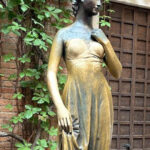
- Juliet’s House, but with real-city context
- Piazza dei Signori and Dante’s statue in the open air
- Arche Scaligere tombs: Scaligeri power carved in stone
- Ponte Pietra and a Roman-bridge walk with big Verona views
- Verona Cathedral (Duomo) and finishing at Cattedrale di Santa Maria Matricolare
- Traditions you’ll hear about: Carnival to Christmas
- Price, pace, and who this tour fits best
- Should you book this Verona guided walking tour?
- FAQ
- How long is the guided walking tour in Verona?
- What is the price per person?
- Where do we meet the guide?
- Where does the tour end?
- What language is the tour guide?
- How many landmarks will we see?
- Is the tour wheelchair accessible?
- Is the tour suitable for people with back problems?
- Is there free cancellation and can I reserve without paying now?
Key highlights worth caring about
- Colonna di San Marco start point that makes it easy to orient yourself in Piazza Erbe
- Piazza delle Erbe frescoes on historic facades right where the Roman forum once thrived
- Juliet’s House quick stop that places the legend inside the real city layout
- Dante Alighieri in Piazza dei Signori with political stories tied to stone monuments
- Arche Scaligere tombs of the Scaligeri dynasty, built for memory and power
- Ponte Pietra and the Duomo finale for Roman arches and a meaningful end near Biblioteca Capitolare
A fast 1.5-hour route that links Rome, rulers, and the Duomo
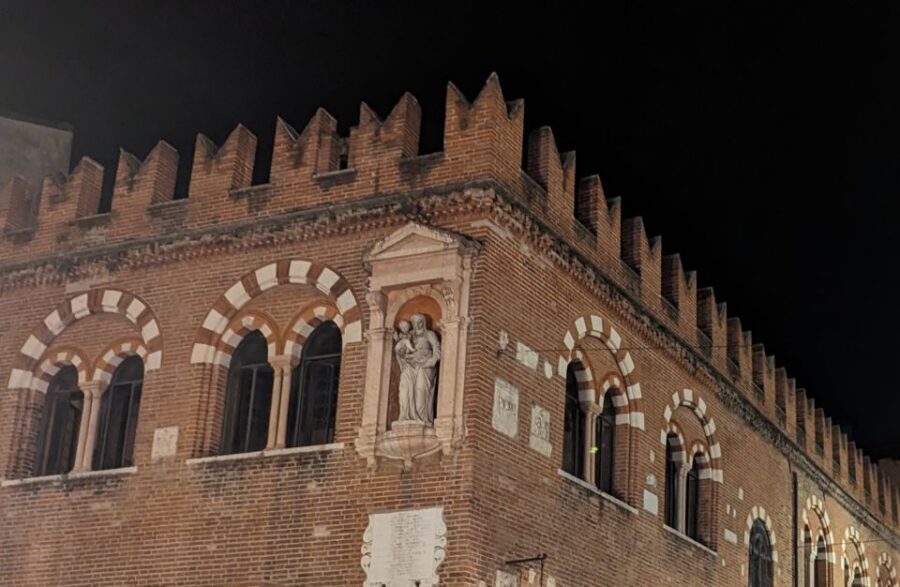
This is the kind of tour that works when you want Verona’s highlights without getting lost in the details. The walk is set up for a quick-but-solid overview: you’ll see squares, tombs, bridges, and the main church area, all led by an English-speaking local guide.
The value here is how the guide connects the dots. Verona isn’t just pretty streets. You’ll hear how the city’s identity shifts as you move from Roman-era spaces into medieval dynasties and then toward the church-and-city-center vibe that dominates today’s experience.
At $40 per person, what you’re paying for is simple: a guided storyline you can’t easily piece together on your own in the same time. You get 9+ landmarks, plus local context and traditions (including seasonal stories from Carnival to Christmas).
You can also read our reviews of more walking tours in Verona

Finding the meeting point at Colonna di San Marco (Piazza Erbe 38a)
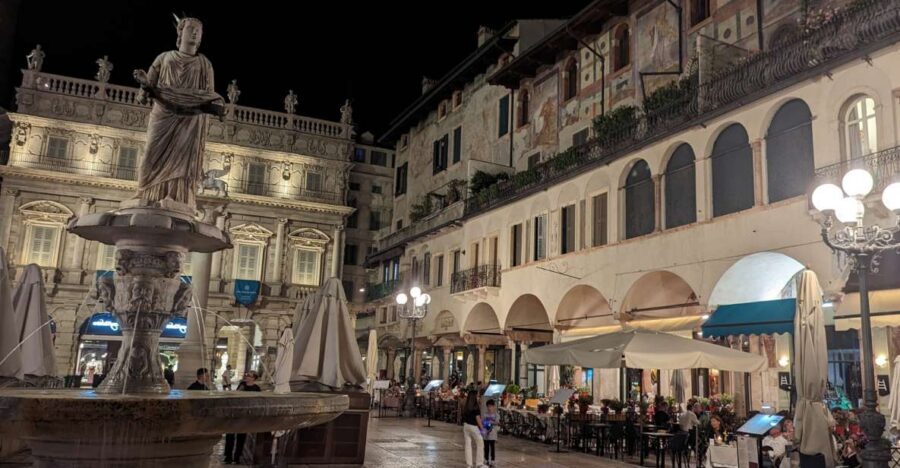
You meet the guide at Colonna di San Marco in Piazza Erbe (Piazza Erbe 38a). You’ll want to arrive about 5 minutes early so you’re not hunting while the group gathers.
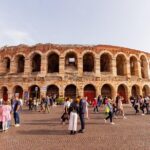
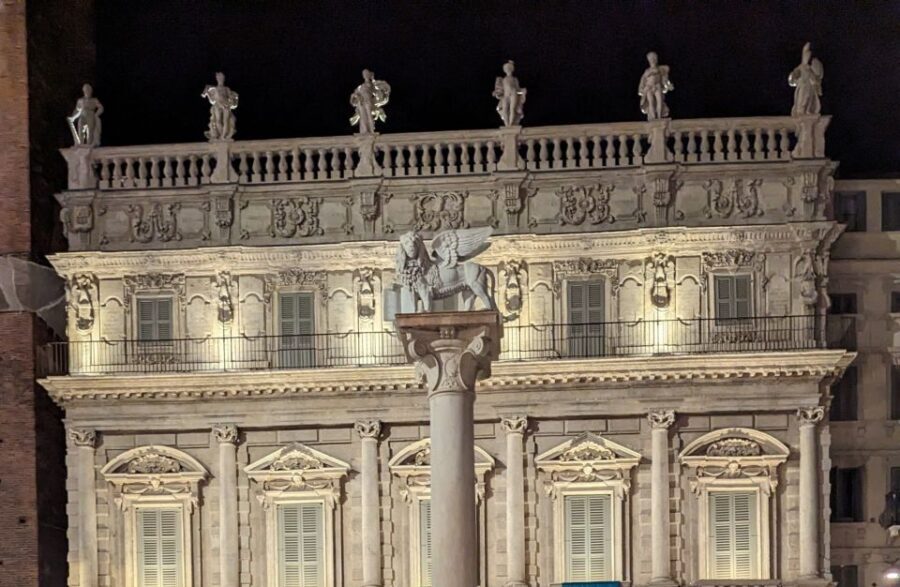
Look for the tall white column with a lion on top on the north side of the square—right opposite Juliet’s House. If you’re coming from the Arena area, it’s about a 10-minute walk. Getting this start right matters, because the tour is time-efficient and the early minutes set the tone for the rest of the route.
Practical tip: in Verona, streets can funnel you into crowds fast. Once you’re in Piazza Erbe, take a moment to orient yourself to the column before you scan for the group.
Piazza Erbe frescoes and the Roman forum vibe
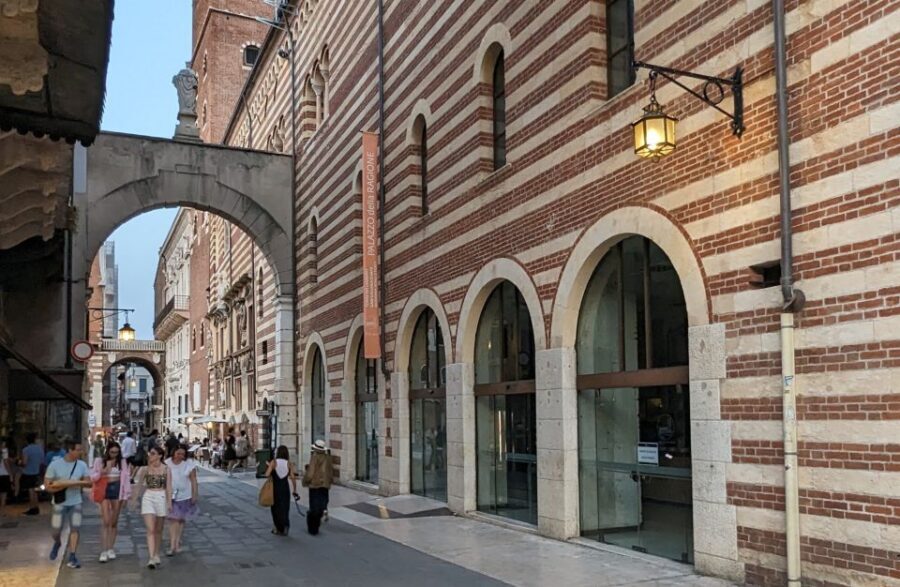
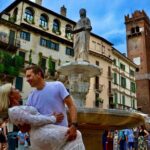
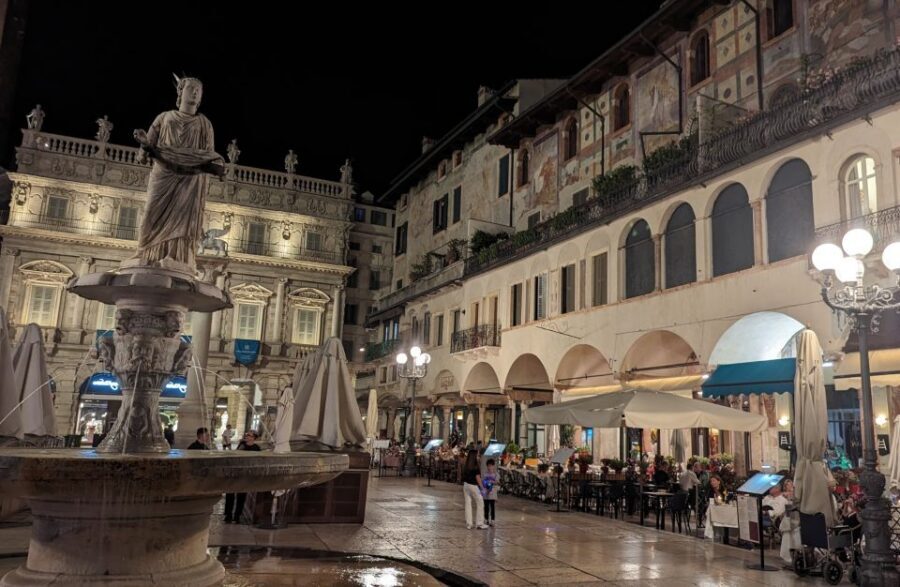
Your first major stop is Piazza delle Erbe, where the ancient Roman forum once thrived. That alone is a great shortcut for understanding the city’s layout. You’re standing in a place that has mattered for centuries, not just a modern meeting point.
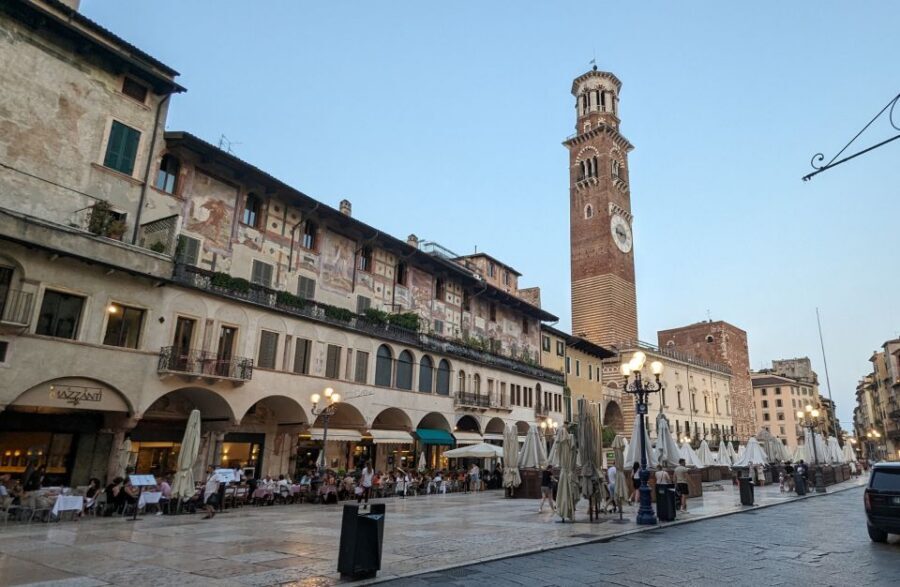
The guide focuses on the buildings around the square—especially the frescoes painted on facades. These aren’t random decoration. You’ll hear how the imagery reflects Verona’s later artistic energy, including Renaissance-era splendor. The effect is visual: the square becomes a timeline you can walk through.
This is one of the most praised parts of the experience because it’s where you get your bearings fast. Once the guide sets the context here, everything else you see feels more “placed” and less like separate postcard stops.
Juliet’s House, but with real-city context
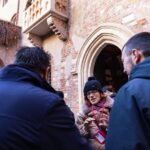
Next comes Juliet’s House for sightseeing. Even if you’re not there for the romance side of Verona, this is a smart use of time.
Why? Because you’re not viewing Juliet’s House like it’s floating in a vacuum. The tour’s pacing places it along the route so you can understand how legend fits into the actual street network and public spaces you’ll keep using across the city. It’s an easy stop—about 10 minutes—so you can look, take a couple photos, and move on without dragging the rest of the tour.
If you like your Verona focused on monuments and architecture, treat this as a quick culture bookmark. If you love the stories, you still get value because you’ll hear how the guide ties it back to the surrounding urban history.
Piazza dei Signori and Dante’s statue in the open air
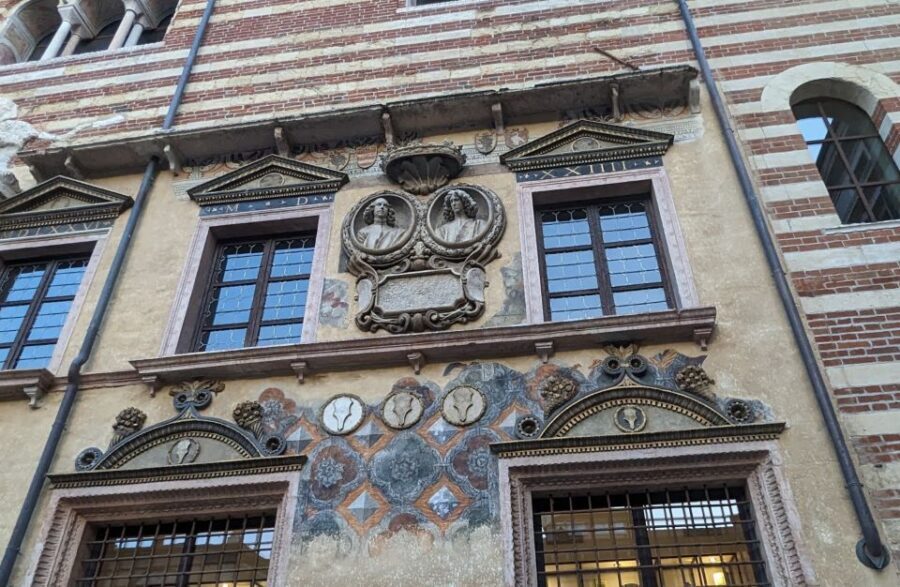
From there, the walk heads toward Piazza dei Signori, where you’ll see the Palazzo area and the statue of Dante Alighieri. This is where the tour shifts from art details to political stories.
The guide explains power and intrigue connected to Verona’s past, using the monuments as conversation starters. It’s a good reminder that squares are not just scenic. They were built for authority—where people gathered, where messages traveled, and where the city flexed its identity.
This stop is also a nice break in your mental load. You go from frescoes and legend into an outdoor “who had influence and why” moment, then you’re ready for the heavier history of the tombs.
You can also read our reviews of more guided tours in Verona



Arche Scaligere tombs: Scaligeri power carved in stone
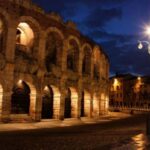
At Arche Scaligere, you’ll visit the monumental tombs of the Scaligeri dynasty. This is one of the most memorable stops on the route because tombs here aren’t quiet background. They’re designed to be seen and remembered.
A good guide at this stop will point out how the monument shapes the mood of the area and why it mattered to the people who commissioned it. Even in the short visit window, you’ll get a sense of how rulers projected legitimacy through architecture and sculpture.
If you enjoy funerary art, medieval symbolism, or just learning how cities used monumental buildings to manage reputation, this section delivers. It also sets you up for the next part of the walk, where you’ll look out over the city from a viewpoint.
Ponte Pietra and a Roman-bridge walk with big Verona views
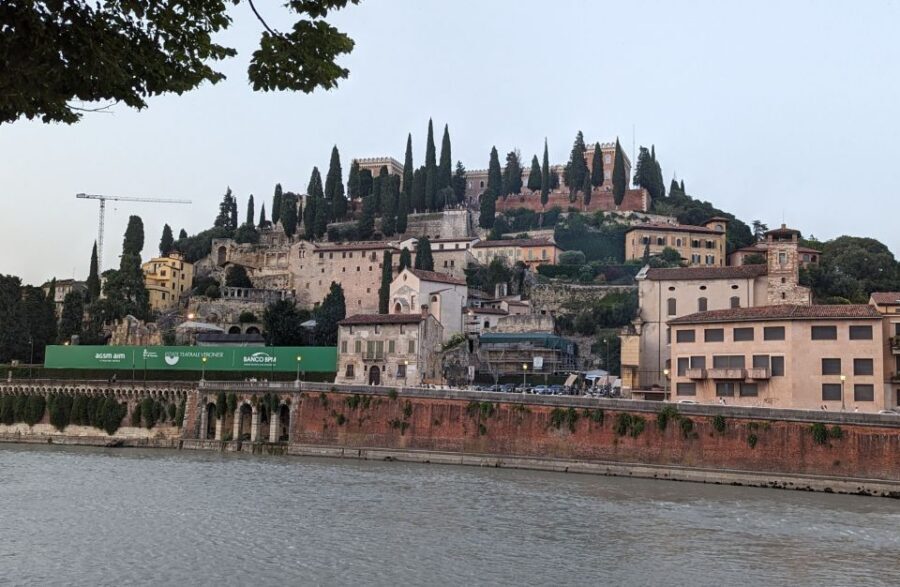
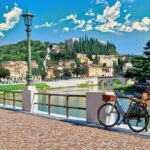
Then you head to Ponte Pietra, with a guided walk where you can appreciate its Roman connection. Bridges are great because they force you to move through space rather than just stand still. You also get that “Verona layers” feeling: the view in front of you looks modern, but the structure under the story goes back to older eras.
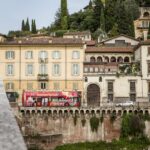
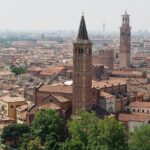
The route also includes a viewpoint stop. From there, you’ll take in panoramic views of Verona’s skyline, with sights referenced from the ancient Roman Theater area to an arch bridge crowning the hill. This is the part where the tour shifts from monument facts into visual geography.
Practical note: this is your cue to slow down for a minute. Look around before you start snapping photos. You’ll understand the city better once your brain can map what you’ve just heard.
Verona Cathedral (Duomo) and finishing at Cattedrale di Santa Maria Matricolare
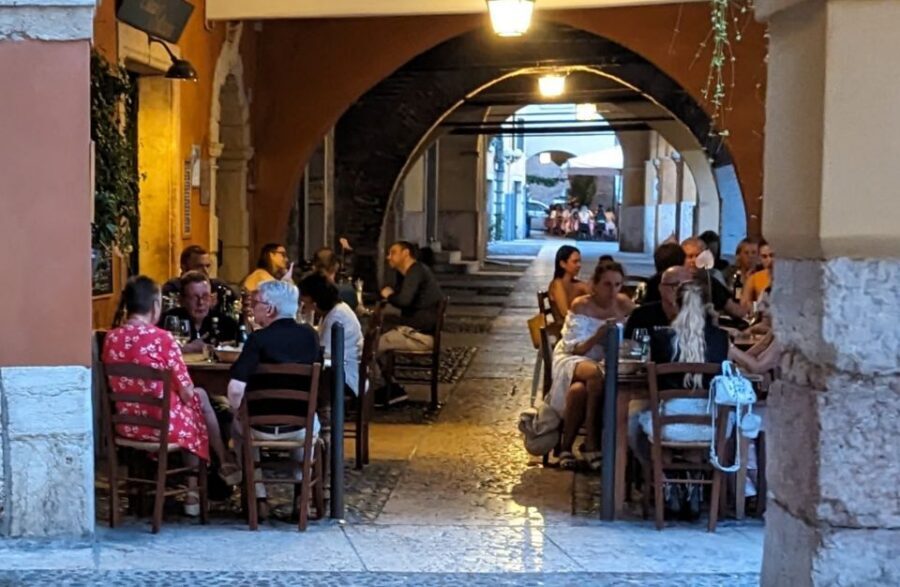
Your tour culminates at Duomo / Cattedrale di Santa Maria Matricolare, finishing back in the main cathedral area. This ending matters because it brings together two threads: the city’s spiritual center and its role as a hub for people and ideas.
In the tour description, you’ll also learn how this area sits near the Biblioteca Capitolare. That helps the cathedral feel less like a standalone church stop and more like part of Verona’s larger cultural core.
This finale also works well emotionally. After 1.5 hours of moving through squares, tombs, and bridges, it’s satisfying to end in a place that anchors the city. If you still have energy afterward, you’ll be well positioned to continue exploring nearby streets on your own.
Traditions you’ll hear about: Carnival to Christmas
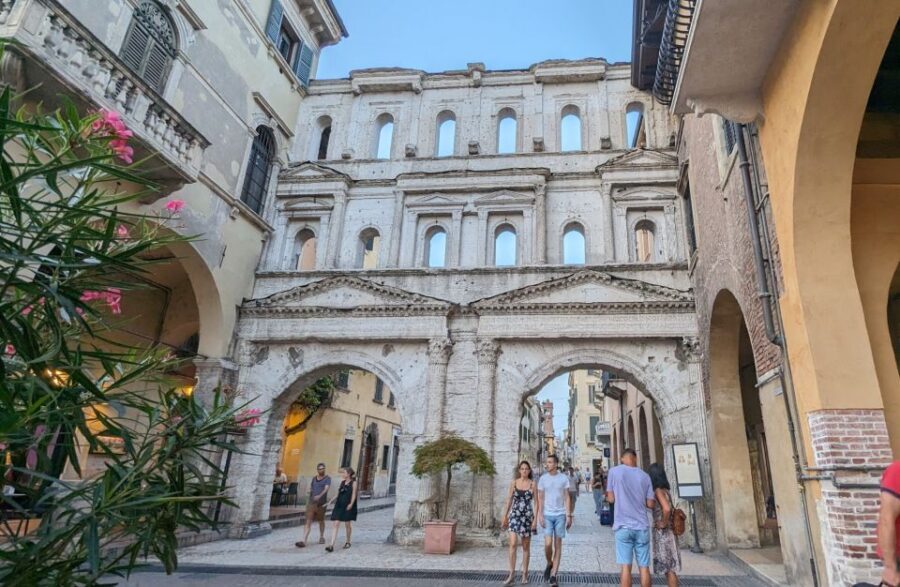
One of the nicest touches is that the guide brings in Verona traditions as you walk. You’ll hear local culture references spanning from Carnival to Christmas. That kind of storytelling is more than trivia. It gives you context for what you might see later—processions, seasonal decorations, and the way locals use public spaces.
The best part is how it’s tied to your surroundings. Instead of learning traditions in isolation, you hear them alongside squares and buildings you’ve just visited. It’s a small thing, but it sticks.
Price, pace, and who this tour fits best
For $40 per person over about 1.5 hours, the math works if you want an efficient overview of central Verona with a guide doing the interpretation. You’re not just buying access to landmarks. You’re buying time saved, plus the connecting threads that make the city feel coherent.
Pace-wise, expect short guided moments and then quick sightseeing time—10 minutes at each stop type experience. This format is ideal if you:
- like walking tours that keep moving
- want 9+ highlights in a short window
- prefer an English-speaking local guide to put the stories into order
It’s not ideal if you need frequent long breaks. Even though it’s wheelchair accessible, it’s still a compact walking loop, and the “short stops” rhythm might feel tight if you move slowly or need lots of rest.
Should you book this Verona guided walking tour?
Book it if you want a guided hits-and-stories version of Verona. This tour is a strong choice for first-time visits or for days when you only have a small slice of time but still want the big landmarks connected into one narrative.
Skip it if your priorities are very specialized (deep museum time, long interior stays) or if you know you won’t handle a steady walking format well. In that case, a slower, more flexible plan may suit you better.
If you do book, go with the right mindset: wear comfortable walking shoes, keep your phone charged for photos, and let the guide’s stories do the heavy lifting. In a short span, you’ll leave with a usable map of Verona—history and all.
FAQ
How long is the guided walking tour in Verona?
The tour lasts about 1.5 hours.
What is the price per person?
The price is $40 per person.
Where do we meet the guide?
Meet at Colonna di San Marco in Piazza Erbe 38a in Verona. It’s under the tall white column with a lion on top on the north side of the square.
Where does the tour end?
The tour ends back at the meeting point.
What language is the tour guide?
The live guide speaks English.
How many landmarks will we see?
You’ll visit 9+ iconic landmarks during the walk.
Is the tour wheelchair accessible?
Yes, it is wheelchair accessible.
Is the tour suitable for people with back problems?
No, it is not suitable for people with back problems.
Is there free cancellation and can I reserve without paying now?
Yes. There is free cancellation up to 24 hours in advance for a full refund, and you can reserve now and pay later.