REVIEW · PADUA
Padova Scavenger Hunt and Sights Self-Guided Tour
Book on Viator →Operated by Explorial · Bookable on Viator
Padua feels like a city you should slow down in, and this game makes that easy. This Padova scavenger hunt turns a walk through the center into a point-scoring adventure where you follow hints, solve questions at the sights, and do creative photo prompts as you go. You’ll start near Prato della Valle and work your way toward major landmarks like Basilica di Sant’Antonio, plus other stops such as Palazzo del Bo and Tomba di Antenore.
What I like most is the freedom to set your own pace. You can take breaks and linger, and the game is designed to run about 1–2 hours on average, with no strict time limit. I also like how the questions point you at details you might otherwise miss—answers are typically hidden in signs, pictures, or similar spot-on-the-spot clues. One possible drawback: the experience depends on the app working smoothly, and at least one user reported trouble starting and finding help when customer support wasn’t reachable.
In This Review
- Key Highlights Before You Go
- Padua at Your Own Tempo: How the Explorial Scavenger Hunt Works
- Starting at Prato della Valle: Easy Entry Without Waiting for a Group
- Basilica di Sant’Antonio: Your First Stop and What the Game Will Make You Notice
- Tomba di Antenore and Palazzo del Bo: Learning Fast at Big Landmarks
- Photo Tasks and Point Scores: How Creativity Fits Into a Walking Tour
- Route Length and Pacing: 1 to 2 Hours That Still Leaves Break Time
- Price and Value: Why $10.63 Can Be a Smart Use of Time
- Who This Works Best For (and Who Might Want a Different Style)
- Tech Check: If the App Glitches, What You Can Do
- Should You Book This Padua Scavenger Hunt?
- FAQ
- How long is the Padova Scavenger Hunt and Sights self-guided tour?
- Is this tour guided by a person?
- What language is the experience in?
- Where do I start, and where does it end?
- What do I get after booking?
- Do I need to download an app?
- Is the tour limited to a fixed time window?
- What sights might I reach during the game?
- Is free cancellation available?
Key Highlights Before You Go

- Self-guided format: You explore on foot at your own tempo, with breaks built in.
- Explorial app + access code: After booking, you get a code to start the game in the app.
- Task types that teach by doing: Find sights with hints, then answer sight-specific questions.
- Photo challenges for points: Creative snapshots can become a mini side-quest.
- Major Padua sights included: Examples named include Basilica di Sant’Antonio, Palazzo del Bo, and Tomba di Antenore.
Padua at Your Own Tempo: How the Explorial Scavenger Hunt Works
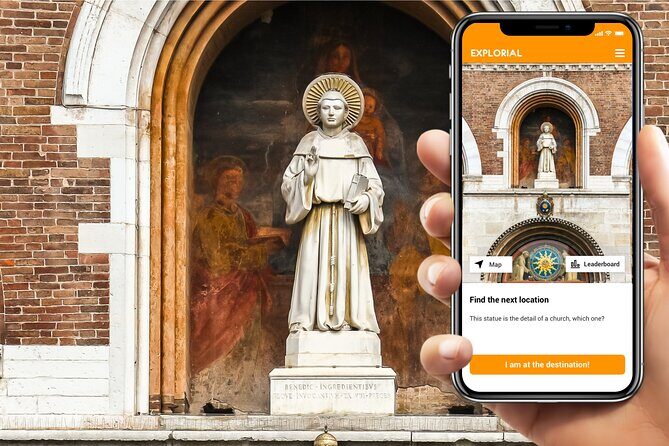
This tour is a self-guided walking game, not a guided lecture. Once you’ve bought the ticket, you receive an access code and you use it in the Explorial-App to begin at the starting point. From there, your route is driven by prompts: hints get you to the next place, and then your job is to solve tasks on-site.
The structure is simple and fun. First comes the “find” step, where you use clues and a map function in the app to navigate. Then you arrive and get questions about that sight. In many cases, the info is there for you—hidden on signs, in displayed images, or in similar visual elements you can notice while you’re standing in front of the landmark. That’s a smart way to learn without stopping every five minutes to read or listen.
Finally, there are photo tasks that ask you to use creativity. These aren’t just for entertainment; they’re how you earn points. If you like turning a normal walking afternoon into something playful, this kind of prompt is the main reason the experience feels different from a standard “see the monuments” stroll.
You can also read our reviews of more guided tours in Padua



Starting at Prato della Valle: Easy Entry Without Waiting for a Group
Your meeting point is Prato della Valle, 35141 Padova PD, Italy, and the activity ends back at the same place. That round-trip setup is practical in a self-guided format. You’re not trying to figure out how to get from a far-off finish back to your hotel at the end of a game.
The experience also lists long availability hours for the activity at the meeting point window (effectively 12:00 AM to 11:30 PM). In real life, individual sights may have their own opening hours, but the key point for you is simple: you’re not locked into a tiny time slot.
It’s also labeled as being near public transportation. That matters because even though you’re walking, you’ll probably appreciate easy bus or tram access to reach the start quickly.
Basilica di Sant’Antonio: Your First Stop and What the Game Will Make You Notice

Your tour’s itinerary begins at Basilica of St. Anthony, which corresponds to Basilica di Sant’Antonio in the experience description. If you’ve ever visited a major church in Italy and felt like you spent the whole time trying to catch up with the basics, this is a good workaround. The game pulls you toward specific things to look at.
When you reach the basilica, you’ll get tasks through the app—typically a question or two that point you to details around the site. The key idea is that you’re not just reading generic facts. You’re hunting for the answers that are already present where you’re standing: on-site signs, pictures, or other visual elements tied to what you’re seeing. That approach tends to make famous buildings feel personal, because your attention narrows instead of scattering.
The practical win here is pacing. You don’t need to rush. The game is set up so you can slow down and still make progress, which is especially helpful if you want time for a quick sit-down moment, a photo, or just watching people.
Tomba di Antenore and Palazzo del Bo: Learning Fast at Big Landmarks
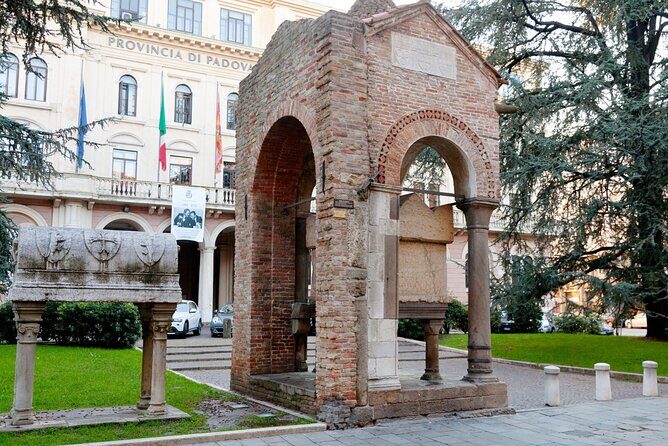
The experience description highlights a few standout places you’ll reach along the way, including Tomba di Antenore and Palazzo del Bo. Even if you don’t know what they are before you start, the scavenger format helps you connect name to place quickly.
At landmarks like these, the game does two useful things:
- It gives you a reason to look closely, not just look once.
- It supplies questions that nudge you toward interpretation—often grounded in what’s displayed at the site.
For you, that means fewer “I saw it, but I can’t remember it” moments. Instead, you’ll likely remember what you answered and what you had to spot to get there. That’s how a self-guided experience turns into real city knowledge without turning your walk into a worksheet.
And because the route isn’t locked to a strict timeline, you can adjust when a stop grabs your attention—or when it doesn’t. If one area feels slower, you can take your time. If another area is quick, you can keep momentum.
Photo Tasks and Point Scores: How Creativity Fits Into a Walking Tour

One of the most fun parts of this kind of activity is the inclusion of photo tasks. The idea is that at certain points you’ll be asked to take a creative snapshot to earn points. That shifts you from passive sightseeing into active noticing.
If you enjoy travel where you create little memories, photo prompts are a big value add. They keep your brain engaged when the walking starts to feel repetitive. Instead of walking from one landmark to the next, you’re watching for angles, scenes, and details that match the prompt.
A practical tip: keep your phone charged and ready. You don’t need pro photography. You just need the ability to stop, frame, and capture quickly. If you’re traveling with friends, this is also an easy way to break the “everyone takes a photo of everyone” pattern and turn it into a mini game.
You can also read our reviews of more tours and experiences in Padua



Route Length and Pacing: 1 to 2 Hours That Still Leaves Break Time
The tour lasts on average about 1–2 hours, but it explicitly says it’s not limited in time. That’s a big deal in a city like Padua, where you might spot a café and think, okay, just five minutes. This format won’t punish you for that.
Here’s how I’d plan it if you’re working around other activities:
- If you have a morning or afternoon block, you can fit the full game and still keep room for lunch or gelato.
- If you’re doing a heavier sightseeing day, treat this as your “light, fun centerpiece” that gets you moving while still helping you learn.
Because you’re exploring on foot, comfortable walking shoes matter. The tour is private for your group only, which means you don’t have to sync your pace with strangers. That’s one of those quiet advantages that makes self-guided travel feel less chaotic.
Price and Value: Why $10.63 Can Be a Smart Use of Time
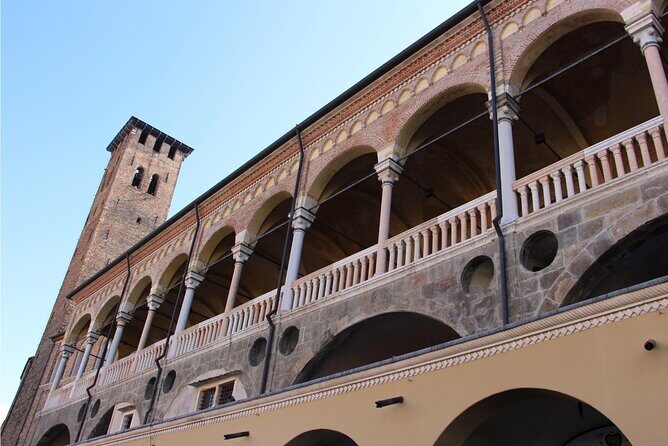
The price listed is $10.63 per person. For that, you’re not buying entry tickets. You’re buying a guided experience without a guide—an app-driven route that gives you structure, prompts, and on-the-spot learning tasks.
Value comes from three things:
- It gives shape to your walk so you don’t spend the whole time wandering.
- It teaches through observation—questions tied to what’s physically in front of you.
- It’s flexible—breaks and a self-paced route make it usable even if your energy level changes.
If you’re traveling solo or as a couple, it can be cheaper than hiring a guide for a short window. If you’re traveling with friends, the app tasks turn the city into an activity you can share, which can feel more worthwhile than a standard audio tour.
Who This Works Best For (and Who Might Want a Different Style)
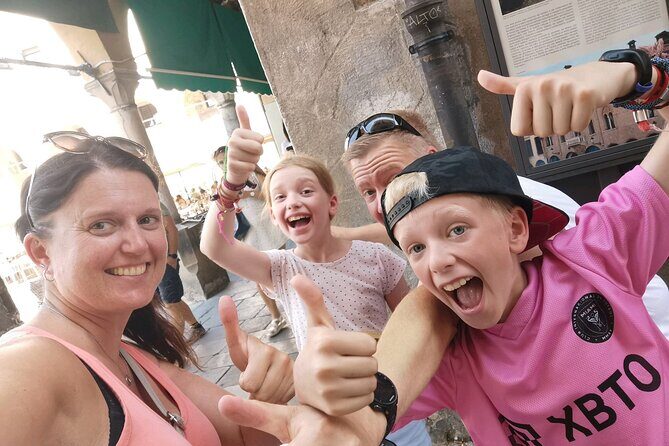
This is a good fit if you want:
- a self-guided option
- a structured route with playful tasks
- an easy way to focus on specific sights (like Basilica di Sant’Antonio and other named stops)
It’s also described as private, meaning only your group participates. That can be ideal if you don’t want to wait for a meeting time with other people.
It may be less ideal if you strongly dislike app-based travel or you need heavy-handed explanations. One negative experience reported unclear explanations and a lack of available customer service. That doesn’t mean everyone will have that problem, but it’s a reminder that the experience is app-led. If you’re the type who wants a human to solve issues fast, you might prefer a traditional guided tour.
Tech Check: If the App Glitches, What You Can Do
The experience depends on the Explorial app, and one person mentioned there were glitches, but restarting solved the problem. That’s the practical takeaway for you: if something feels off, don’t panic. A simple app restart is the first thing to try.
I’d also make sure you have your access code ready before you head out. The description is clear that you’ll receive an access code after purchase, and you’ll use it in the app to start.
One more note: the activity is marked as confirmation will be received at the time of booking. If you’re traveling on a tight schedule, double-check that everything is in place before you start walking—because you’ll be walking, not sitting down at a help desk.
Should You Book This Padua Scavenger Hunt?
Book it if you want a low-cost, flexible, interactive way to see Padua. It’s especially worth it if you like the idea of learning by answering questions where the information is right in front of you, and if you enjoy turning a walk into a game with points and photo prompts.
Skip it or think twice if you rely on perfect tech and you’re uncomfortable with app troubleshooting. The experience is clearly meant to run on your phone, and there’s at least one report of trouble that prevented the tour from working as expected.
If you’re choosing between this and a purely observational stroll, this one wins on structure. For $10.63, you’re paying for a route plan plus tasks that turn key Padua sights—starting at Prato della Valle and heading toward Basilica di Sant’Antonio—into something you’ll remember, not just something you passed by.
FAQ
How long is the Padova Scavenger Hunt and Sights self-guided tour?
The duration is about 2 hours. It also notes the experience lasts on average about 1–2 hours depending on your pace.
Is this tour guided by a person?
No. It’s a self-guided scavenger hunt walking tour using the Explorial app.
What language is the experience in?
It is offered in English.
Where do I start, and where does it end?
You start at Prato della Valle, 35141 Padova PD, Italy and the activity ends back at the meeting point.
What do I get after booking?
After you buy the ticket, you receive an access code to use in the app.
Do I need to download an app?
Yes. You need to download the Explorial-App and then start the game from the starting point.
Is the tour limited to a fixed time window?
No. It says the experience is not limited in time, so you can explore at your own pace and take breaks.
What sights might I reach during the game?
The description lists stops you may reach, including Tomba di Antenore, Palazzo del Bo, and Basilica di Sant’Antonio, plus many more.
Is free cancellation available?
Yes. You can cancel for a full refund up to 24 hours in advance of the experience start time.