REVIEW · PADUA
Small Group Market tour and Cooking class in Padua
Book on Viator →Operated by Cesarine: Cooking Class · Bookable on Viator
In This Review
- A market day, with dough on your hands
- Key Highlights You’ll Feel Right Away
- Market Shopping Meets Cooking Class in Padua
- Where the Day Starts: Meeting Point and Timing Reality
- The Market Walk: What You’re Actually Doing (and Buying)
- From Ingredients to Dough: How the Pasta Part Works
- Appetizers and Extras: Cicchetti, Cheese, and a Real Meal
- Dessert: Why Tiramisu Works So Well in a Small Class
- English, Group Size, and the Home-Kitchen Reality Check
- Price and Value: Is $179 Worth It?
- Who Should Book This (and Who Might Want a Different Style)
- Should You Book This Padua Market and Cooking Class?
- FAQ
- How long is the Padua market and cooking class?
- What’s the group size limit?
- Is the tour offered in English?
- What do we cook during the class?
- Where does the experience start and end?
- Is a mobile ticket provided?
- Is the meeting point near public transportation?
- Is free cancellation available?
A market day, with dough on your hands
This Padua experience mixes a small-group market walk with a hands-on cooking class in a local home. You’ll pick ingredients, learn how the meal comes together, then sit down to taste what you made—fresh pasta and classic tiramisu are the usual stars.
What I like most is the format: you’re not just watching cooking on TV. You’re shopping with a host, learning techniques for making pasta dough, and then eating an actual meal you helped build.
One thing to consider: this runs in a private home kitchen, so the space can be tight and the host’s English level may vary by day and household.
Key Highlights You’ll Feel Right Away
- Small group (max 12) keeps the day calmer and more personal than big-group tours
- Piazza Erbe-style market time helps you understand what to buy and why
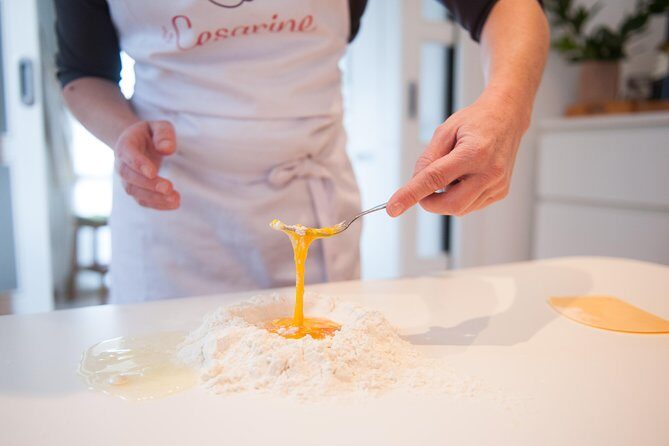
- Fresh pasta technique focus includes kneading and practical steps, not shortcuts
- Tiramisu at the end turns the class into a meal, not just a lesson
- Private home setting means real hospitality, but also smaller kitchens
You can also read our reviews of more tours and experiences in Padua.



Market Shopping Meets Cooking Class in Padua
This is the kind of day-trip you’ll actually remember. You start in Padua with a market visit, then you switch gears and get busy in a real home kitchen with a real cook (Cesarine runs the experience, and hosts can include people like Catia). It’s a simple idea: get the ingredients while they’re at their best, then turn them into food you can’t get in the same way at home.
The 5-hour length works because it balances two different kinds of fun. The market part gives you context—what’s in season, what locals buy, and how ingredients shape the meal. Then the cooking part gives you the muscle memory: kneading, shaping, and building a plate that tastes like the recipe is coming from someone’s family.
In other words, you come away with more than a dish. You come away with a better sense of Italian everyday food choices.
Where the Day Starts: Meeting Point and Timing Reality
The tour starts in Padua and ends back at the same meeting point area. It’s near public transportation, which helps if you’re chaining it with other sights.
Still, timing matters. The negative reviews weren’t about the food—they were about logistics: finding the correct meet-up spot, late arrivals, and last-minute walking that caused people to miss the market. The provider also notes that experiences happen in private homes, so the exact address may not be shared in advance for privacy reasons. That means your voucher details matter.
My practical advice:
- Plan to arrive early and double-check the meet-up instructions in your confirmation/voucher.
- If the meet-up happens near a landmark, use the on-the-ground cue you’ll be given, not guesswork.
- If you’re doing this on a day you already have plans later, leave a buffer. A private home dinner plan can run a little long.
If everything runs on time, you’ll love how the market sets the tone for the cooking. If it doesn’t, you’ll feel it fast—because the market window is real.
The Market Walk: What You’re Actually Doing (and Buying)
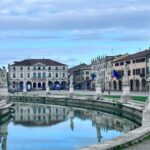
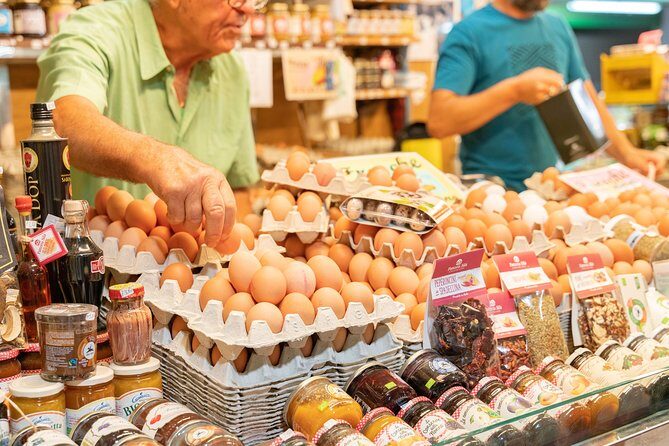
Your market portion is built around seeing and choosing ingredients. Multiple experiences center around Piazza Erbe and the surrounding market stalls—outside produce, plus indoor meat and cheese sections. The best part is how this turns shopping into learning.
You’re not just getting a photo op. You’re learning how ingredients connect to the food. That can include:
- spotting seasonal produce and understanding how that affects flavor
- choosing items like cheese and cured goods for starters
- getting advice on what makes a pasta dish work
Some hosts also build in small extras during the walk. In one experience, the group was treated to a cappuccino, and there were historical pointers connected to the buildings around the market area. Another highlight from multiple accounts: you’ll get technique and ingredient suggestions in plain, practical language, not just facts.
If you book on a Sunday, note this: one account specifically points out there isn’t a market that day. In that case, the host may swap the shopping portion for a short city walk, then move into the cooking class. It’s still the same overall vibe; the ingredients just get sourced differently.
From Ingredients to Dough: How the Pasta Part Works
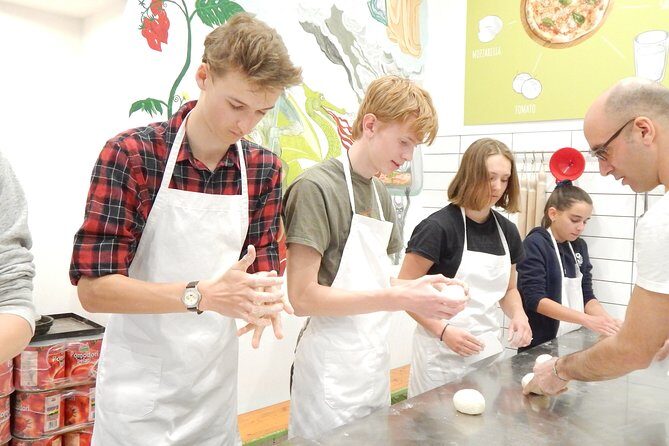
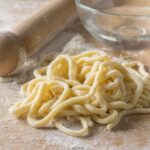
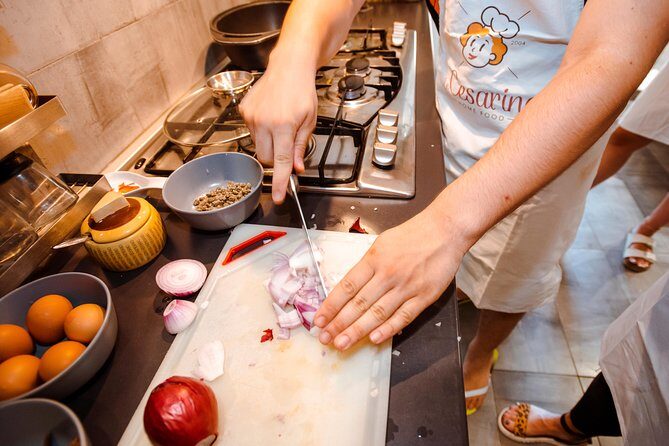
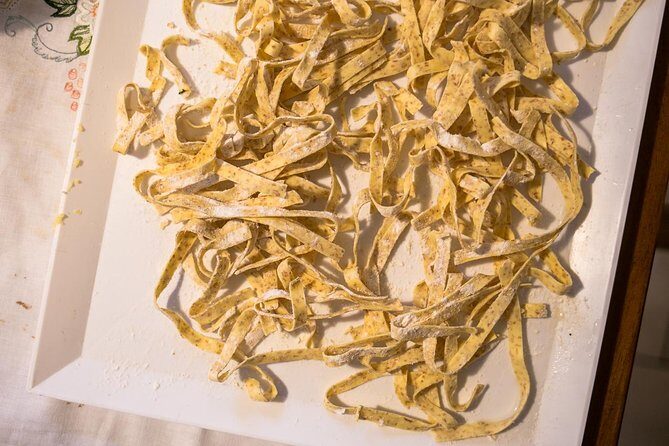
The main course is pasta, and you should expect to make fresh pasta dough and learn the hands-on process. In several accounts, the pasta style mentioned is Bigoli, a traditional Venetian-style pasta. Even if the exact shape differs depending on season and household, the structure of the class is similar: you’ll work dough, learn a technique, and then pair it with sauce.
What makes this valuable is the sequencing. Fresh pasta is fussy if you don’t know what to watch. So the class tends to focus on the steps that actually matter:
- getting dough to the right feel through kneading
- using the right approach to rolling and shaping
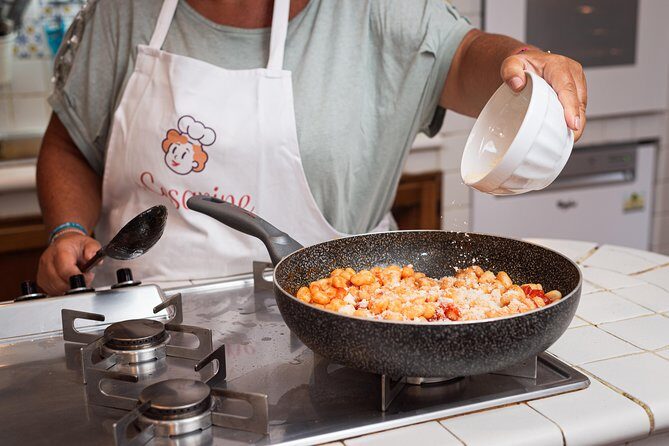
- understanding how the cooking and timing of sauce influences the final dish
You’ll also likely see a mix of teaching styles: some hosts explain techniques while you copy along. Others work with you step by step and correct your form with patience. One account praised very specific instruction on dough kneading and the proper methods to make the pasta.
One small heads-up: private home kitchens aren’t restaurant kitchens. In a negative review, the kitchen was described as so small that only a few people could work at once, and the room ran warm. That doesn’t mean the class will be bad. It just means the setup can affect how comfortable you feel during hands-on prep.
If you’re the type who loves working shoulder-to-shoulder in a big, open kitchen, adjust your expectations. Think more family kitchen than cooking show studio.





Appetizers and Extras: Cicchetti, Cheese, and a Real Meal
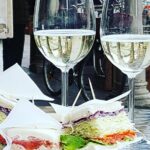
This isn’t just a pasta lesson. Several accounts describe building a plate with starters—often Venetian-style cicchetti, basically tapas-sized bites. You may also see a spread that includes things like meat, cheese, and other market finds, plus homemade touches prepared by the host.
Some hosts prep elements in advance. One negative account mentioned that the host had pre-made certain parts and that the long prep didn’t match expectations for variety. The positive accounts, though, suggest the prep timing often supports a smoother meal with multiple courses.
In practical terms, you should expect:
- some items you work on directly
- some starters and components that the host likely already has ready to keep the meal flowing
- time to sit down and actually eat what you made
And yes, there can be extra beverages. One account noted local wine (Cabernet Franc) with the meal. Another mentioned cappuccino earlier in the day. Don’t assume it’s guaranteed every time, but it’s a common feature of the hospitality style described.
The value here is simple: you learn cooking and then you enjoy it. Many cooking classes end with a snack. This one aims to end with a meal.
Dessert: Why Tiramisu Works So Well in a Small Class
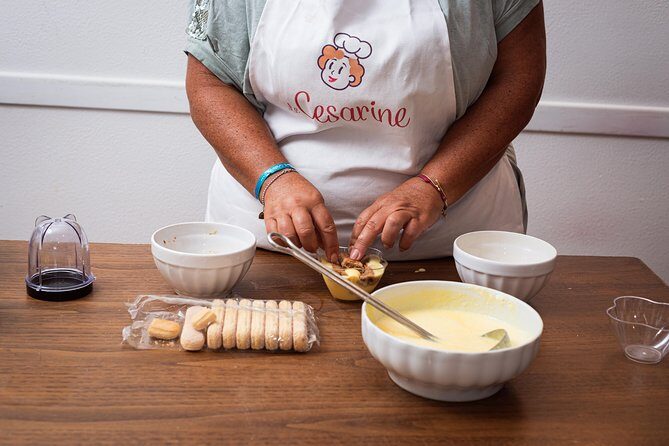
Tiramisu shows up as the dessert in the sample menu and in multiple experiences. The reason it’s a smart fit for this kind of class is that it’s hands-on but not brutally technical in the way some desserts can be.
In the best versions of the day, the host teaches you how to assemble it correctly and how to serve it. You’ll taste it at the end, which matters because tiramisu is easier to evaluate when it’s fresh and made by your own hands.
If you care about learning more than just ingredients, tiramisu is a great target. You get practice with texture, timing, and assembly—skills that travel well to your own kitchen later.
English, Group Size, and the Home-Kitchen Reality Check
The experience is listed as offered in English, and the group size is capped at 12 travelers. That’s a good sweet spot for a private home setting: small enough to feel connected, not so small that it becomes awkward.
Still, language can vary by host. One negative review described a host speaking little to no English and relying on a translation phone app. That made the day harder than it needed to be. Other experiences praised hosts like Catia for clear teaching and patient explanations.
So here’s my grounded recommendation:
- If English is important for your learning, keep your expectations flexible. You might get a very smooth English lesson with a host who teaches well, or you might rely on translation tools for key steps.
- Bring a humble attitude toward communication. Cooking is visual. You can learn a lot even when language is limited.
Also, because it’s capped at 12, you may be working in close quarters in a smaller kitchen. In one negative account, the class kitchen held only a few people comfortably. If you’re someone who gets stressed in tight spaces or needs a lot of personal room, plan for that.
Price and Value: Is $179 Worth It?
At $179.24 per person for about 5 hours, the price may look high compared with a typical guided tour. But this isn’t only a walking tour. It’s a combined market experience plus a private home cooking lesson where you eat the results.
Where the value really lands:
- You’re paying for the host’s time twice: first for market guidance, then for teaching in their home.
- You’re paying for ingredients and meal components as part of the class structure.
- You’re buying a meaningful experience: technique, not just sightseeing.
The strongest versions of this day include both a thoughtful market walk (often around Piazza Erbe) and a well-organized home meal. When the logistics work—meet-up spot correct, market time not lost, kitchen setup manageable—the overall value feels solid.
When logistics fail, you can end up missing the market window and dealing with discomfort from delayed timing. So the risk isn’t the pasta. It’s the coordination piece.
My advice: if you’re booking, pick a day that fits your schedule well, arrive early to the meeting area, and confirm the meet-up details so you can protect the heart of the experience.
Who Should Book This (and Who Might Want a Different Style)
This is best for you if you:
- want a Padua market tour plus cooking in one day, not two separate activities
- love hands-on food work (fresh pasta dough, assembly, and cooking technique)
- enjoy small-group days where you can ask questions and talk with your host
This is also a good fit for solo travelers who don’t want the awkwardness of a huge group. One experience described it as personalized and happening even when someone booked alone.
You might want to consider a different option if:
- you strongly depend on flawless English instruction
- you’re very sensitive to delays or tight spaces (private home kitchens can be small)
- your schedule is tight later the same day and you can’t handle a late return
The good news: when the host is organized and the group size is handled well, the day feels like a friend invited you for a cooking afternoon, not a production line.
Should You Book This Padua Market and Cooking Class?
Yes, with a smart bit of caution.
Book it if you want an authentic Padua food day where you shop, cook, and eat in the same flow. The combination of market learning, fresh pasta technique, and tiramisu at the end is exactly the sort of experience that sticks with you.
Just don’t treat the meet-up as casual. Private homes mean addresses can be handled carefully for privacy, and the exact start point needs attention. Your best strategy is simple: double-check meet-up instructions, arrive early, and give yourself time buffers.
If you do that, you’ll most likely leave with a full stomach and a new set of skills you can repeat at home.
FAQ
How long is the Padua market and cooking class?
The experience runs about 5 hours.
What’s the group size limit?
The maximum group size is 12 travelers.
Is the tour offered in English?
Yes, it’s offered in English.
What do we cook during the class?
You’ll use seasonal ingredients to make a pasta dish, and dessert is typically tiramisu.
Where does the experience start and end?
It starts in Padua, Province of Padua, Italy, and ends back at the meeting point.
Is a mobile ticket provided?
Yes, you’ll use a mobile ticket.
Is the meeting point near public transportation?
Yes, it’s listed as near public transportation.
Is free cancellation available?
Yes, you can cancel up to 24 hours in advance for a full refund.