REVIEW · VERONA
3 Hour Walking tour of Verona and Arena
Book on Viator →Operated by VENEZIA TOUR ITALY · Bookable on Viator
Verona, all in three hours. This walking tour strings together the city’s major layers fast: Roman walls and arches, medieval Scaliger power, and the famous Arena. You cover a lot of ground without feeling like you’re sprinting, and the stops keep making the same point from different angles—who built, who ruled, and why it mattered.
I especially like the mix of eras you see in one route. I also like that you get an actual Arena museum ticket while most other stops are free to enter, so your money goes toward the guide and the key interior access. The tour’s short window means you’ll see highlights, not deep museum time, so it’s not ideal if you want to linger.
You’ll meet at Via Teatro Ristori, 7 (near public transit) and keep moving through Verona’s historic center for about three hours. It’s shared, max 16 people, and it runs in all weather—so bring water and dress for sun or rain. In past departures, guides like Frank and Maddy impressed people for giving clear context without drowning you in facts, which is exactly the sweet spot for a first pass at a complicated city.
In This Review
- Key Things I’d Focus On
- A Three-Hour Route Through Verona Layers
- Meeting Point, Shared Group, and the Pace at 10:00
- Castelvecchio Museum: Scaliger Power You Can Touch
- Ponte Scaligero: The Adige Crossed with Medieval Confidence
- Arco dei Gavi: A Roman Honor Arch for a Private Family
- Porta Borsari: One Roman Gate Still Doing Its Job
- Piazza delle Erbe and Torre dei Lamberti: Verona’s Oldest Square
- Piazza dei Signori: Where Power Looked Monumental
- Arena di Verona: The Roman Amphitheater Stop That Gets an Entry Ticket
- Price and Value: What You’re Paying For at $171.52
- Who This Tour Suits Best (and Who Might Prefer Something Else)
- Practical Tips for a Smoother Walk in Verona
- Should You Book This 3-Hour Verona and Arena Walking Tour?
- FAQ
- How long is the Verona and Arena walking tour?
- What time does the tour start and where does it meet?
- Is the tour offered in English?
- What’s included in the price?
- Are tickets needed for the other stops like Castelvecchio or Piazza sites?
- Does the tour run in bad weather?
Key Things I’d Focus On
- A tight 3-hour loop that covers Roman, medieval, and Arena sights without hopping all over town
- Arena museum entry included, while other major stops are free to visit
- Mostly level walking, so it feels manageable for most people who can do a city walk
- Small group (up to 16), which helps questions and keeps the pace from going feral
- Guides that balance facts and flow, with examples like Frank and Maddy from earlier departures
A Three-Hour Route Through Verona Layers
Verona is one of those cities where history doesn’t sit politely behind glass. It’s in the streets, the stones, and the shapes of the buildings you pass every day. This tour takes advantage of that by building a simple storyline as you walk: Roman Verona built the bones, the Scaligers turned the screws, and later generations kept reusing the stage.
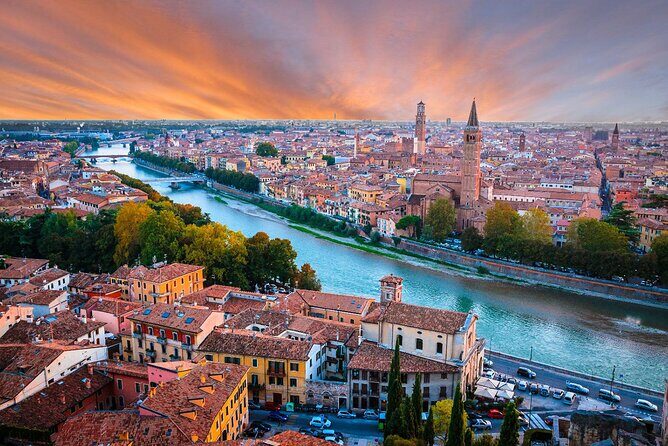
The route is designed like a highlight reel with continuity. You start in the area tied to the Scaliger era, cross a dramatic river bridge connected to the fortress, then move into Roman monuments that still punctuate the city plan. After that, you land in the civic heart of Verona—squares where power and public life played out—then finish with the Arena, the big Roman set-piece still pulling crowds.
This is a great choice if you want the essentials and some context fast. It’s also a good way to orient yourself before you start wandering on your own. If you come in with only a vague idea of Verona (Romeo and Juliet, maybe some postcards), you’ll leave with a clearer sense of why these spots connect.
You can also read our reviews of more walking tours in Verona

Meeting Point, Shared Group, and the Pace at 10:00
The tour starts at 10:00 am at Via Teatro Ristori, 7, Verona. It ends back at the meeting point, so you don’t have to worry about last-minute navigation through crowded streets when you’re tired.
Because it’s a shared experience (max 16 people), the timing is practical and structured. Each stop is brief—often around 20 to 25 minutes—so expect a quick visit with commentary rather than long self-guided wandering. That’s not a flaw; it’s the whole value of the tour. You get the guided connections that most people miss when they’re just clicking photos.
The walk is described as mostly level, which matters in Verona where cobblestones can punish you fast. Comfortable shoes are a must. Also, since it runs in all weather, plan to bring a small umbrella and sunscreen, and carry water. If you’re visiting in warmer months and plan to go into churches, bring a light layer that works as shoulder coverage.
Castelvecchio Museum: Scaliger Power You Can Touch
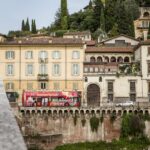
Stop one is the Museo di Castelvecchio inside the Castelvecchio fortress. Even if you don’t go deep into every gallery, the setting does the teaching. Castelvecchio—originally known as the Castle of San Martino in Aquaro—is a medieval fortress tied to the Scaliger signoria. In plain terms: this was a statement of military muscle and political control.
This stop tends to be a good warm-up because it explains the logic behind what you’ll see next. If you understand the fortress, the nearby bridge makes more sense. And if you understand the fortress, you’ll read the rest of Verona differently as you walk—less like a set of monuments and more like a connected defensive and administrative system.
You’ll have about 25 minutes here, and the admission is listed as free for this stop. That’s a strong practical detail: you can spend your time where it matters—listening to the guide, noticing architectural features, and getting oriented—without worrying about an entrance fee adding up.
Ponte Scaligero: The Adige Crossed with Medieval Confidence
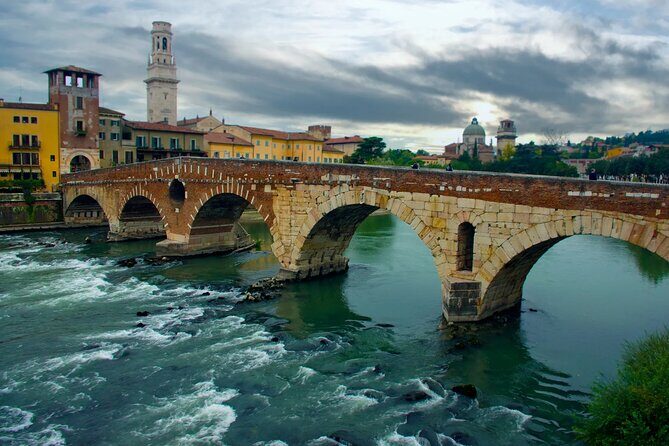
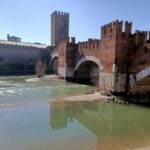
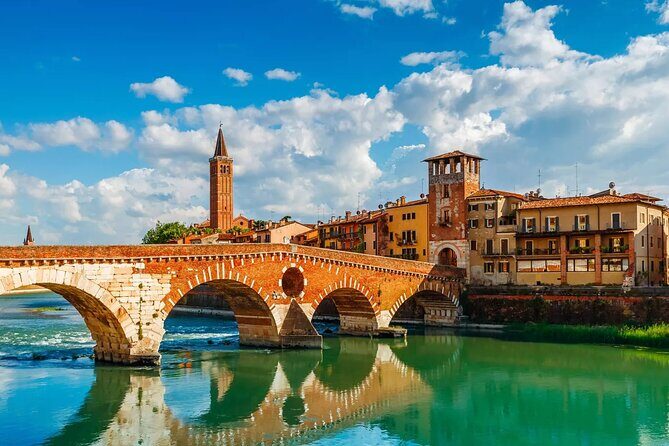
Next comes Ponte Scaligero (the Scaliger Bridge), connected to the Castelvecchio fortress and spanning the Adige River. The bridge isn’t just a nice photo spot. It’s framed here as a daring piece of medieval engineering—one of the most admirable works from Veronese times.
This is the kind of stop that turns a city map into a real place. From the bridge, you get a strong sense of how the fortress relationship to the river would have worked. It’s also a reminder that medieval power wasn’t only about castles and towers. It was about controlling movement and routes.
The visit is short (around 25 minutes), so you’ll likely get a focused explanation plus time to look. The value is the commentary: how this bridge fits into the broader military and infrastructural story of the city. And since admission is free here too, you’re paying for the guide’s interpretation, not another ticket.
Arco dei Gavi: A Roman Honor Arch for a Private Family
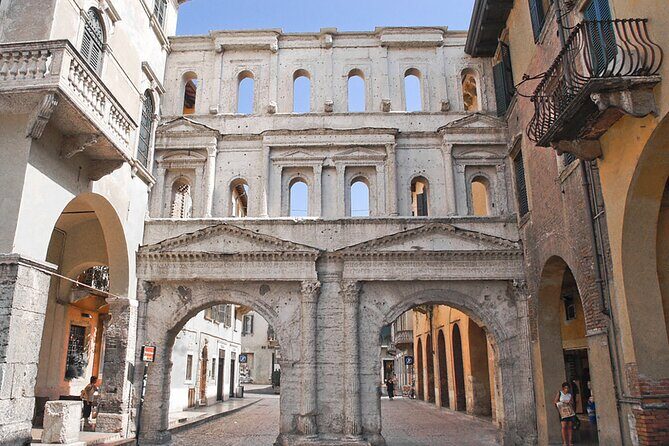
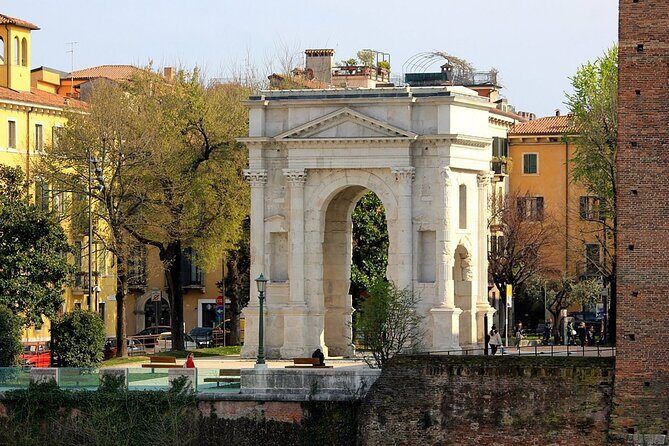
Stop three is Arco dei Gavi, a lesser-known Roman monument compared to the big-ticket Colosseum-style ruins, but it’s fascinating for a specific reason: it’s a rare example of an honorary monumental arch for private use in Roman architecture.
This one was built around the middle of the 1st century to celebrate the Gavia family. It sits along the ancient Via Postumia, just outside the walls of Roman Verona. So while you’re standing in the modern city, you’re also stepping into the edge of the Roman world—where the city boundary once was.
You’ll get about 25 minutes here. That’s enough time to understand what it is and why it’s unusual, without turning it into a long detour. If you enjoy Roman details and want a break from the big-spectacle sites, this is a smart stop.
You can also read our reviews of more tours and experiences in Verona

Porta Borsari: One Roman Gate Still Doing Its Job
Then you’ll reach Porta Borsari, a World Heritage Site gate along Verona’s Roman walls. In antiquity it was called Porta Iovia, tied to a nearby temple dedicated to Jupiter Lustralis.
This is one of those stops where the guide’s words really matter. Gates are easy to gloss over when you’re walking fast, but here you get the sense of how Verona’s Roman boundaries shaped the city’s growth. Porta Borsari is proof that the Roman city plan didn’t vanish—it got absorbed and repurposed as Verona evolved.
Admission for this stop is listed as free. Expect a short, focused visit (about 25 minutes) where you’ll learn the name layers and see how the gate anchors the surrounding streets.
Piazza delle Erbe and Torre dei Lamberti: Verona’s Oldest Square
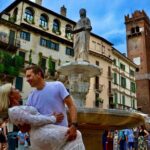
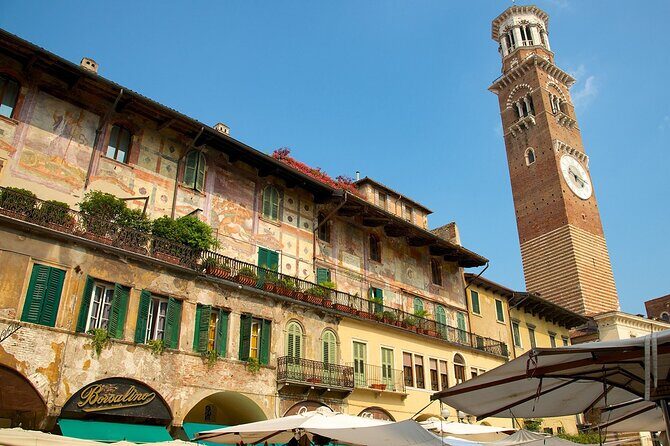
After the Roman gate, you shift to the civic center with Piazza delle Erbe (Piazza Erbe). This is Verona’s oldest square, located above the area of the Roman Forum. In Roman times, it was the hub of political and economic life. Over time, the Roman buildings gave way to medieval ones.
The guide’s job here is to help you read the square as a timeline. You’re not just standing in a pretty plaza; you’re looking at layers of public life—markets, politics, and everyday crowds. It was even listed as the most beloved Italian square in the world in 2012, which is the kind of modern nod that helps you understand why people keep coming back for a reason beyond history lectures.
Nearby is Torre dei Lamberti, a medieval tower close to Piazza Erbe. This stop pairs well with the square because it gives vertical scale to the city center. You’ll get about 20 minutes total across these two stops, with free admission noted.
Piazza dei Signori: Where Power Looked Monumental
Next up is Piazza dei Signori (also known as Piazza Dante). This square grew in the Middle Ages alongside the development of the Scaliger palaces. It kept political, administrative, and representational functions—meaning it wasn’t just for strolling. People came here because this is where decisions and authority played out in public.
The buildings around the square are framed by monumental architecture and connected by arches and loggias. In other words, it’s a showpiece space designed to make power visible. You’ll also feel it visually: it’s harder to treat the place as scenery when the surrounding facades look built for official display.
You’ll spend about 20 minutes here, and admission is listed as free. This is a great stop for anyone who wants to understand Verona beyond the postcard level—how squares and palaces work together to project control and legitimacy.
Arena di Verona: The Roman Amphitheater Stop That Gets an Entry Ticket
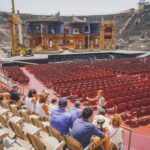
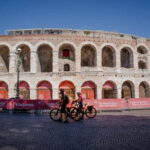
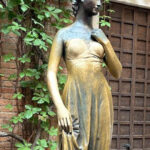
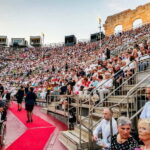
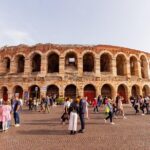
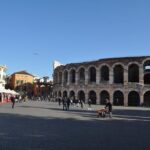
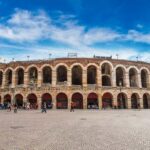
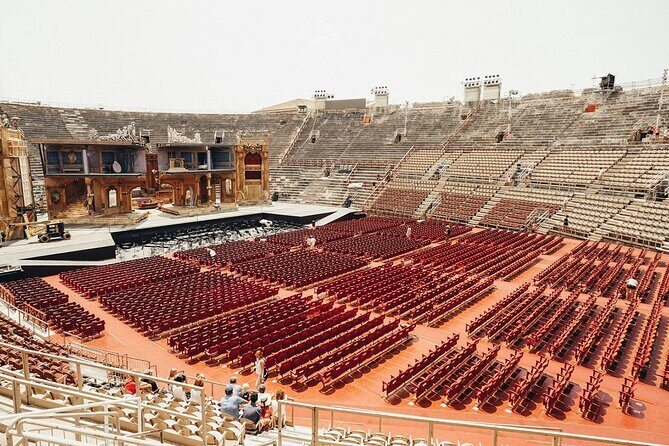
The tour finishes at the Arena di Verona, the Roman amphitheater in the historic center. It’s famous not just as a ruin, but as an active cultural icon that often gets paired in people’s minds with Romeo and Juliet.
The important practical detail: the Arena museum entrance ticket is included. That means your price isn’t just paying for the exterior photo moment. You also get access tied to the Arena experience.
You’ll have about 20 minutes for this stop, including museum entry. That’s short, but it’s usually enough for a first look plus the key context the guide provides. If you’re the kind of person who wants to study inscriptions and architectural details for an hour (totally fair), you’ll want to plan extra time on your own afterward.
This is also a good place to slow down mentally. Roman Verona and medieval Verona hit different emotions: fortress strength versus public authority versus sheer building ambition. The Arena is the place where the Roman side of the storyline feels most immediate.
Price and Value: What You’re Paying For at $171.52
At $171.52 per person, you’re paying for a guided walk that stitches together eight stops and includes the Arena museum ticket plus a licensed guide. Most other sites on the itinerary are listed as free for this tour, so the value isn’t in collecting paid entrances—it’s in getting context and saving time figuring things out yourself.
That matters because Verona’s historic center is compact, but it’s also full of small monuments that can feel disconnected if you don’t know what to look for. A guide earns their fee when you start noticing patterns: Roman gates tied to temple names, medieval squares tied to Scaliger power, and river infrastructure tied to fortress strategy.
One caution: since the stops are short and several are free, the tour may not satisfy you if you expected a heavy museum-only experience. If you want maximum time inside buildings, you may feel rushed. If you want a smart overview and then freedom to linger later, it’s a strong value.
Who This Tour Suits Best (and Who Might Prefer Something Else)
This tour is a great fit for:
- First-timers who want a guided orientation through major Verona sights
- People who like concise explanations rather than long lectures
- Anyone who wants to finish with the Arena museum entry included
- Travelers who prefer a mostly level walk and a small shared group pace
It may not be the best fit if:
- You want long visits and deep museum time at each stop
- You dislike group tours and fixed timing
- You already have a strong knowledge of Roman and Scaliger Verona and just want to explore independently
- You’re sensitive to price-per-time and would rather spend the money on longer standalone tickets
And one extra note from real-world feedback: some people were happy with the balance of information, naming guides like Frank and Maddy for being clear and engaging without overwhelming. On the flip side, at least one person felt the outcome didn’t match the price, so it’s smart to know what you’re buying—interpretation plus Arena museum access, with most other stops free.
Practical Tips for a Smoother Walk in Verona
Here’s how to make this tour feel easy instead of tiring.
First, wear comfortable shoes. Verona’s streets are a mix, and even mostly level routes can still be rough underfoot.
Second, bring a hat, sunscreen, water, and an umbrella. The tour runs in all weather, so you don’t want to gamble with a sudden rainstorm.
Third, pack a light layer for church coverage when needed. In warmer months, you’ll want something that can cover bare shoulders for indoor spaces.
Fourth, don’t overbook your day. The tour advice is to avoid scheduling another close-by tour. Three hours passes faster than you think once you factor in group timing.
Finally, if you’re booking multiple tours, leave breathing room. Verona rewards wandering, but only if your feet aren’t already mad.
Should You Book This 3-Hour Verona and Arena Walking Tour?
Book it if you want the smartest first pass through Roman Verona + Scaliger Verona + Arena di Verona in a compact route. The pacing, small group size, and inclusion of the Arena museum ticket make it a practical way to get value without turning your day into a checklist.
Skip it or consider a different option if you’re the type who needs long museum stays or you’re very price-sensitive and expecting paid-entry value at every stop. In that case, you might prefer designing your own route and spending money only where you’ll linger.
FAQ
How long is the Verona and Arena walking tour?
The tour lasts about 3 hours.
What time does the tour start and where does it meet?
It starts at 10:00 am at Via Teatro Ristori, 7, 37122 Verona VR, Italy, and it ends back at the meeting point.
Is the tour offered in English?
Yes, it’s offered in English.
What’s included in the price?
The price includes a licensed tour guide, a mobile ticket, and an entrance ticket to the Arena museum.
Are tickets needed for the other stops like Castelvecchio or Piazza sites?
The stops listed in the itinerary show admission ticket as free for those locations, while the Arena museum entrance ticket is included.
Does the tour run in bad weather?
Yes, the tour continues in all weather conditions, so it’s recommended to bring water, sunscreen, a hat, and an umbrella.